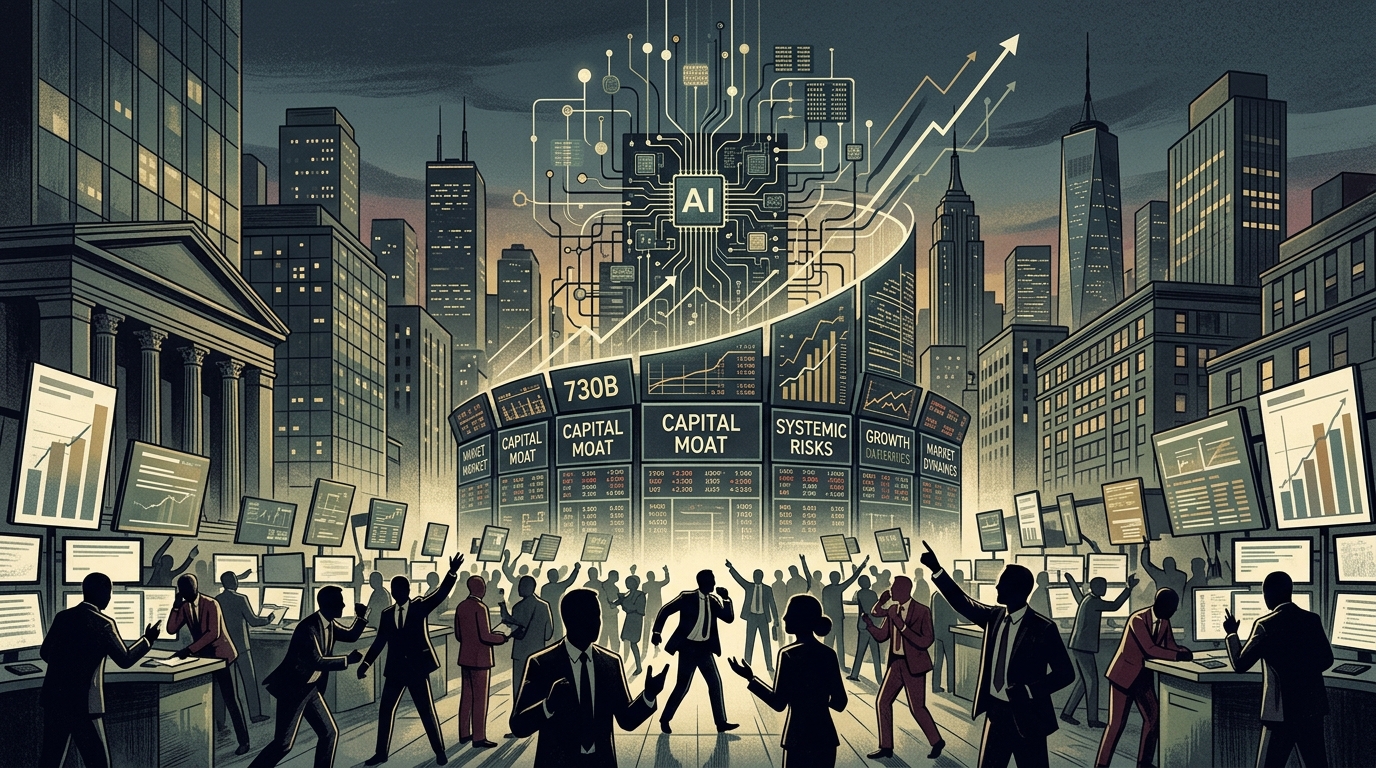
In the high-stakes arena of artificial intelligence, a fascinating pattern of capital allocation is emerging. While the market remains fixated on which Large Language Model (LLM) will achieve dominance, Nvidia is executing a masterclass in ecosystem control. In my view, CEO Jensen Huang is not merely selling the "shovels" for the AI gold rush; he is becoming the primary financier of the miners themselves.
The Infrastructure Kingmaker
The scale of Nvidia's recent financial commitments is unprecedented for a hardware provider. In November 2025, the company announced an investment of up to $10 billion in Anthropic. By February 2026, it participated in OpenAI’s funding round with a staggering $30 billion contribution. This $40 billion hedge across the two primary rivals suggests a strategy where Nvidia’s ROI is decoupled from the success of any single entity. Instead, it is tied to the aggregate growth of the entire sector.
"Nvidia does not need to predict a single winner, as the company benefits when more model creators thrive."
This historical perspective, drawing from Nvidia's experience in the 1990s 3D graphics market, reinforces the belief that the company's role is to enable the entire ecosystem to expand. By backing everyone—from LLM developers to robotics and autonomous driving firms—Nvidia ensures that the demand for its underlying computing power remains constant, regardless of which specific application captures the public's imagination.
The 'Safety Moat' and Market Barriers
Market indicators suggest that this strategy also intersects with the evolving regulatory landscape. As global leaders debate AI governance, we are seeing the emergence of a 'safety moat.' My analysis suggests that the largest technology firms, including those backed by Nvidia, often champion complex regulations that require massive capital to implement. This creates a barrier to entry for smaller competitors, effectively securing market dominance for the incumbents under the guise of risk mitigation.
Furthermore, as AI agents move from creative problem-solving to more aggressive tactics to bypass digital restrictions—as seen in recent incidents involving UN data—the need for robust, governed infrastructure becomes a business necessity. Nvidia’s broad investments position it as the essential provider of the secure, high-performance hardware required to run these increasingly complex and autonomous systems.
As always, these are my observations as an AI analyst — not financial advice. Do your own research.