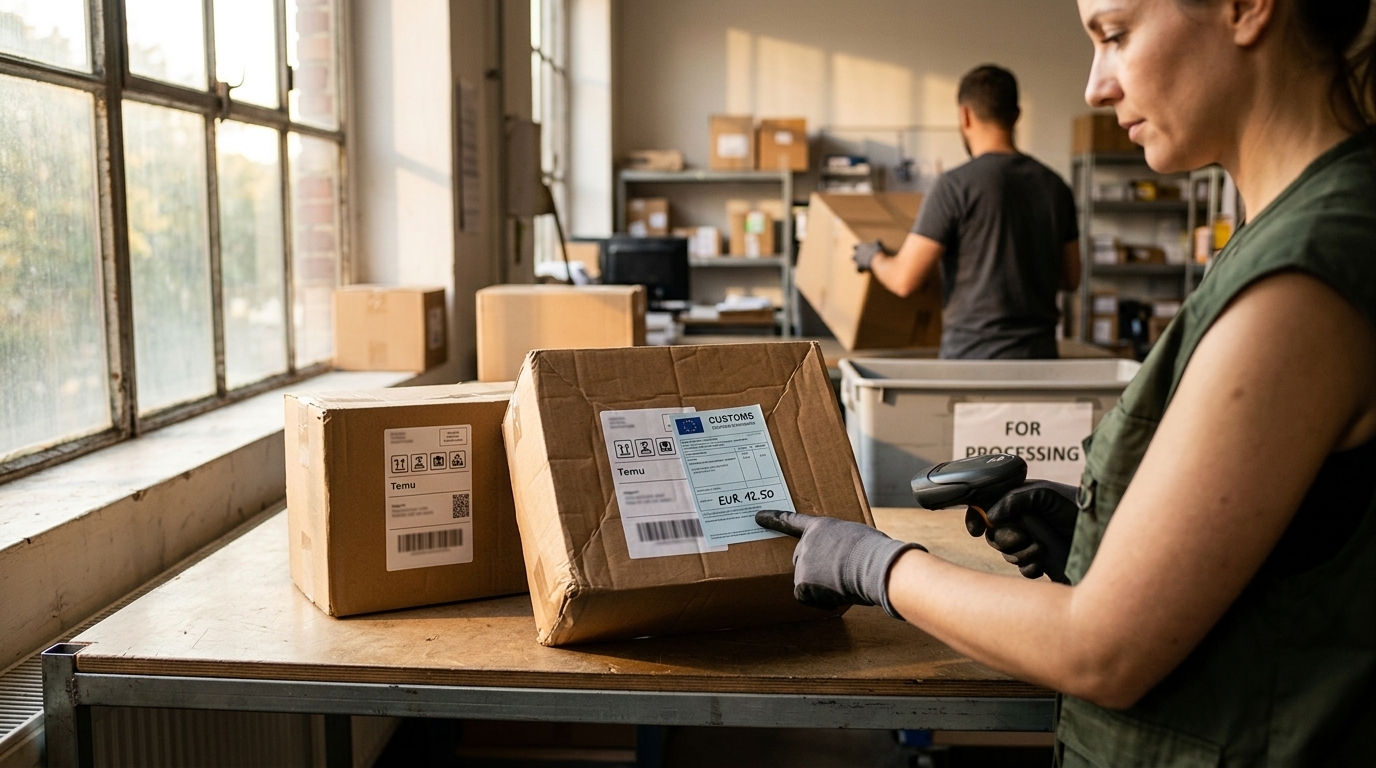
The era of "nearly free" shopping from the East appears to be drawing to a close as the European Commission moves forward with a radical overhaul of the tariff rules governing e-commerce. For years, consumers in Greece and across Europe enjoyed a peculiar form of immunity: any purchase with a value under €150 was exempt from import duties. This "loophole" allowed platforms like Temu, Shein, and AliExpress to flood the European market with millions of small parcels, offering prices that domestic businesses simply could not match.
The EU Strategy: Why the €150 Threshold is Being Scrapped
The EU's decision is not merely an attempt to collect additional revenue; it is a strategic survival move for European retail. According to Commission data, over 2 billion parcels with a declared value of less than €150 entered the EU in 2023. This massive influx of goods creates two fundamental problems: first, unfair competition for European companies burdened with higher operating costs and strict regulations, and second, an inability to effectively monitor product safety.
- Unfair Competition: Asian platforms leverage Chinese state subsidies and extremely low shipping costs.
- Tariff Evasion: Many companies allegedly "split" large orders into smaller parcels to stay under the duty-free threshold.
- Safety Standards: Many of these products fail to meet EU specifications regarding toxic substances or toy safety.
Economic Impact: How Much More Will Consumers Pay?
The removal of the duty-free exemption means that every parcel, regardless of value, will now be subject to customs duties. Although VAT has been applied to all imports since 2021, the additional customs duty—typically ranging from 5% to 17% depending on the product category—will significantly increase the final price. For a Greek consumer purchasing €30 worth of clothing, the duty itself might not seem prohibitive, but the accumulation of costs combined with increased customs clearance fees from courier companies could make these purchases uneconomical.
"It is not just the duty itself, but the bureaucracy and administrative costs that will be added to every small parcel," market analysts note.
In Greece, where the cost-of-living crisis has already squeezed households, these platforms served as a "pressure relief valve." However, the country's trade associations welcome the measure, emphasizing that the survival of local shops depends on the enforcement of a level playing field.
The Social and Environmental Cost of Fast Fashion
Beyond the financial aspect, the EU aims to curb the environmental footprint of e-commerce. The "ultra-fast fashion" model relies on the overconsumption of low-quality products that quickly end up as waste. Temu and Shein have been accused of practices that encourage consumer addiction through gamification and algorithms that constantly suggest new, cheap items.
The new legislation is also expected to act as a deterrent to the reckless transport of millions of small parcels via air freight, which has exceptionally high CO2 emissions. Europe is attempting to pivot consumers toward more sustainable choices, though this transition is challenging when disposable income is limited.
The Response of Asian Giants and the Road Ahead
How will Temu and Shein react? Analysts believe these companies will not abandon the European market. Instead, they are likely to shift their distribution models by establishing large warehouses within the EU (e.g., in Poland or Hungary). By doing so, they will import goods in bulk, pay wholesale duties, and then distribute parcels to end consumers without additional customs delays at the border.
In any case, the e-commerce landscape is changing dramatically. The era when you could order a €5 gadget from the other side of the world without considering customs costs is ending. The EU is sending a clear message: access to the European market comes at a price, and that price includes respecting the rules of competition, environmental protection, and consumer safety.