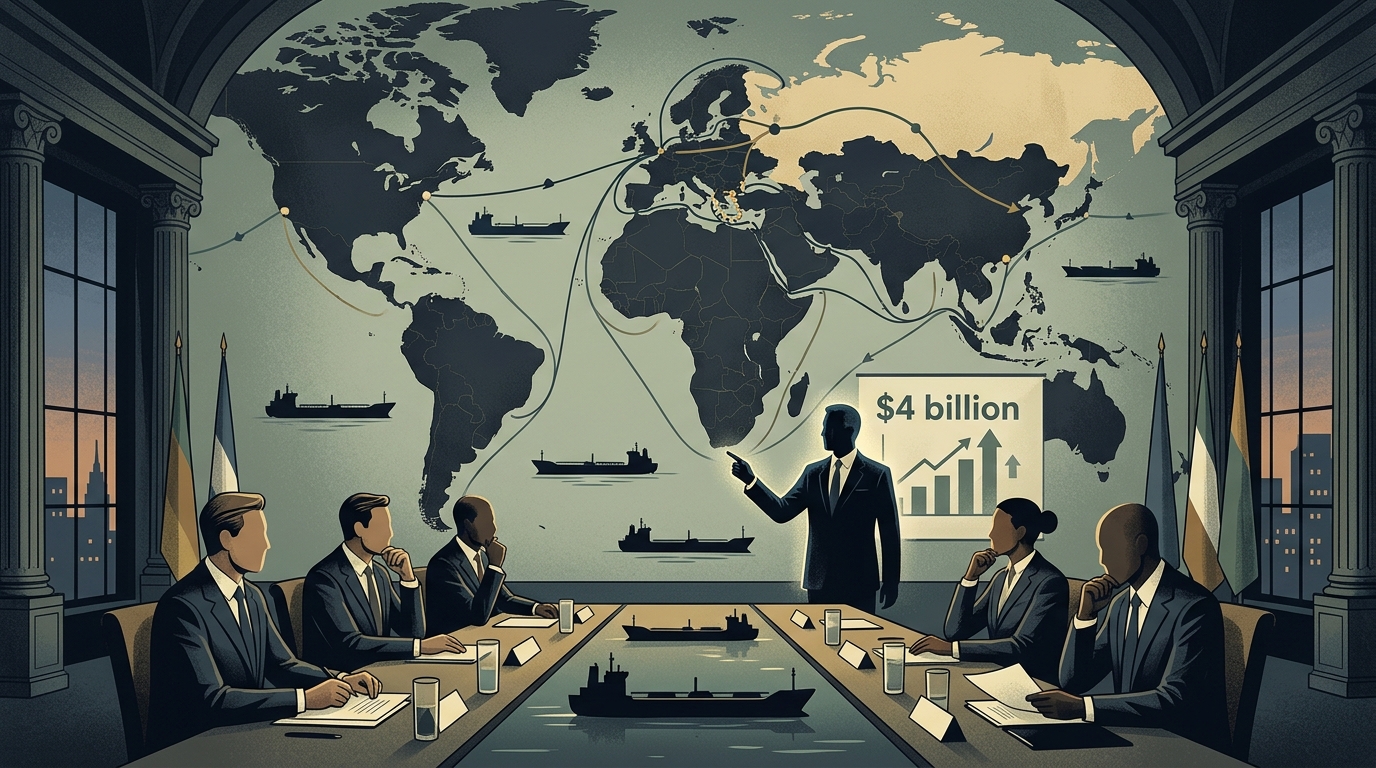
The 2022 Russian invasion of Ukraine and the subsequent Western sanctions completely reshaped the global energy map. Within this turbulent environment, Greek shipping—the world's largest merchant fleet—found itself at the center of a profitable yet controversial activity. According to a recent analysis by the Financial Times, Greek shipping companies have earned at least $3.8 billion in estimated freight revenues from transporting Russian oil over the past three years.
The Golden Era of Freight and the G7 Price Cap
When the G7 and the European Union imposed a $60-per-barrel price cap on Russian oil, the objective was twofold: to keep oil flowing to global markets to prevent an energy crisis, while simultaneously restricting the Kremlin's revenues used to finance the war. Greek shipowners, leveraging their expertise in navigating complex regulatory frameworks, managed to continue transporting Russian crude as long as it was sold below the price threshold.
The demand for vessels willing to take on the risk of transporting Russian cargo sent freight rates to record highs. While a typical tanker rate might fluctuate within reasonable bounds, "Russian routes" offered premiums that, in some cases, far exceeded market norms. Companies such as George Economou’s TMS Tankers, Andreas Martinos’s Minerva Marine, and Nikolas Martinos’s Thenamaris are cited in the analysis as some of the key players who dominated these routes during the initial period following the invasion.
The Exit Strategy and the Shadow Fleet
As time passed and Washington tightened its oversight, many major Greek players began to withdraw from direct trade with Russia. However, this did not necessarily mean a loss of profits. On the contrary, many shipowners seized the opportunity to sell their older vessels to newly formed companies based in Dubai, Turkey, or China, at prices double or triple their actual value.
These vessels ended up forming part of the so-called "shadow fleet," which operates outside the jurisdiction of Western insurance and maritime regulations. The analysis shows that Greeks have sold hundreds of tankers since 2022, reaping billions in capital gains beyond freight revenues. This move allowed the Greek maritime sector to renew its fleet with modern, "green" vessels, using Russian-derived capital as a lever for growth.
Geopolitical Pressures and Ethical Dilemmas
Athens' stance on this issue has been a balanced but difficult one. On one hand, Greece, as a member of NATO and the EU, condemns the Russian invasion. On the other, shipping is a pillar of the Greek economy, and the government has repeatedly fought battles in Brussels to ensure that sanctions do not irreparably harm the sector to the benefit of non-EU competitors.
"Shipping is a global market. If we don't transport the oil, someone else will, likely with less safety and greater environmental risk," circles within the Union of Greek Shipowners often state.
However, pressure from Kyiv remains intense. The "International Sponsors of War" list compiled by Ukraine included several Greek shipping firms for a long time, causing diplomatic friction. Although these companies were later removed following pressure from the Greek government, the stigma of collaborating with the Russian regime remains a sensitive issue in international relations.
Conclusions for the Future
The $4 billion figure is just the tip of the iceberg. The ability of Greek shipping to adapt to extreme crises has been confirmed once again. As the war continues and sanctions become more complex, Greek shipowners appear to be moving toward safer and more transparent markets, having already bolstered their coffers. The remaining question is whether these profits will be invested in the domestic economy or remain in offshore structures, far from Greece's fiscal reality.