

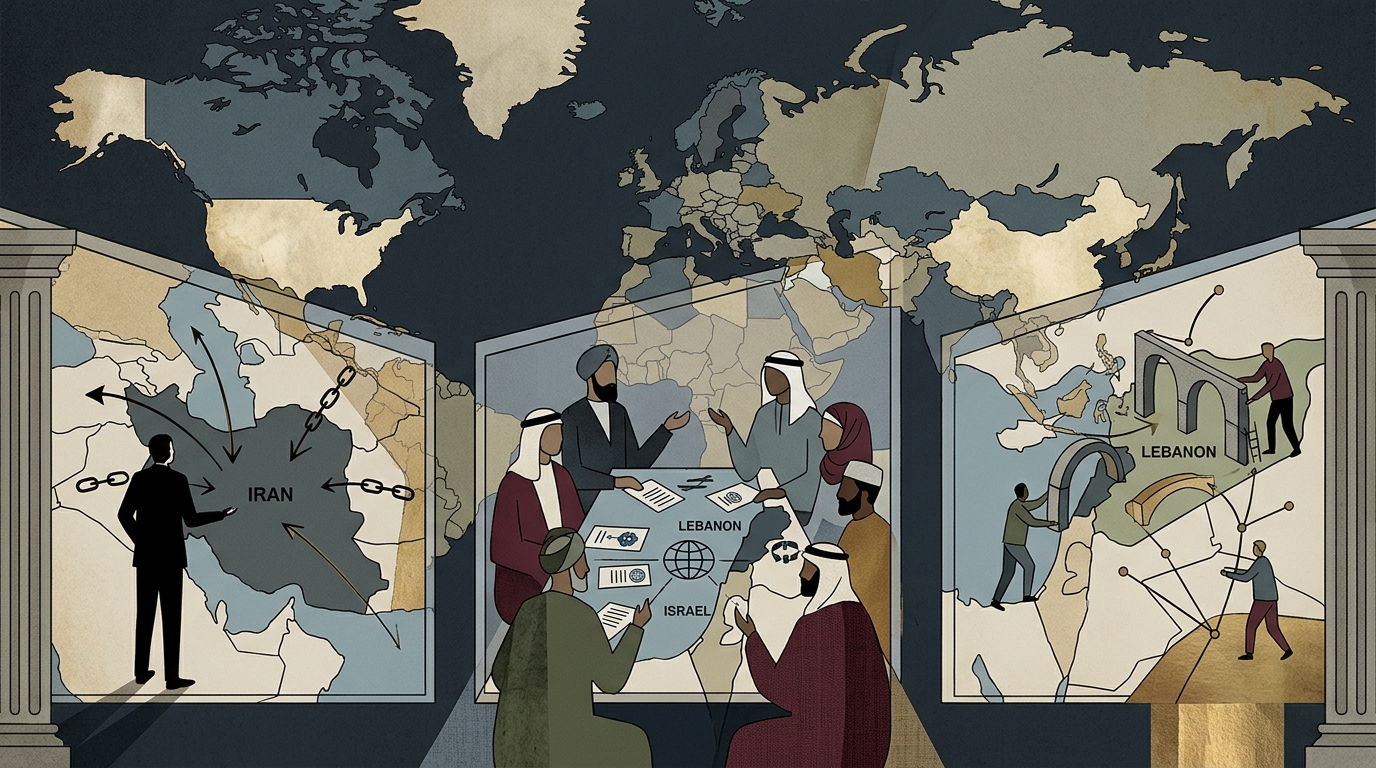
The recent ceasefire agreement between Israel and Lebanon represents more than a mere cessation of hostilities; it is, according to Benjamin Netanyahu, a fundamental shift in the geopolitical landscape of the Eastern Mediterranean. In a speech marked by strategic confidence, the Israeli Prime Minister sent a definitive signal to Tehran: Lebanon is no longer the 'forward operating base' of the Islamic Republic. The framework agreement, reached after months of intensive diplomacy mediated by the United States and France, is being presented by Jerusalem as the end of Iranian hegemony via Hezbollah.
The Strategic Decoupling of Beirut and Tehran
The central pillar of Netanyahu’s rhetoric focuses on the weakening of the so-called 'Axis of Resistance.' For decades, Hezbollah has functioned as Iran’s long arm on Israel’s border, providing Tehran with the capability to exert pressure without engaging in direct conflict. With the new agreement—which mandates the withdrawal of Hezbollah forces north of the Litani River and the deployment of the Lebanese Armed Forces (LAF) in the southern zone—Israel aims to create a 'dead zone' for Iranian influence.
Analysts suggest that Netanyahu's emphasis on the 'message to Iran' serves dual purposes. First, it aims to reassure a domestic audience that remains deeply skeptical about Hezbollah’s compliance. Second, it signals to the international community that any future violation will be viewed as a direct provocation by Iran, granting Israel the 'legitimate right' to immediate military retaliation. This narrative seeks to isolate Lebanon from the broader regional conflagration, attempting to transform it from a proxy battlefield into a sovereign state capable of controlling its own territory.
Domestic Political Calculus and Netanyahu’s Survival
Despite the triumphalist rhetoric, Netanyahu faces significant internal pressure. Residents of northern Israel, many of whom have been displaced for months, fear the agreement is merely a tactical pause allowing Hezbollah to regroup. In this context, framing the deal as a 'historic achievement' is vital for the Prime Minister’s political survival. By focusing on Iran, he shifts the conversation from the tactical grinds of the war to a grand strategic vision where he is the architect of a 'New Middle East.'
'We are not just stopping a war. We are changing the destiny of the region, severing the chains that held Lebanon hostage to Tehran’s ambitions,' the Israeli leader asserted.
The agreement includes robust monitoring mechanisms with US participation, providing an additional layer of security assurance. However, the effectiveness of the Lebanese Armed Forces remains the primary variable. Without significant funding, training, and equipment, Beirut will struggle to impose its authority on regions traditionally dominated by Hezbollah’s social and military infrastructure.
The Challenges of the Day After
Implementing the agreement is a process fraught with risks. Iran, while officially stating its support for the Lebanese government, is unlikely to relinquish its influence without a fight. Hezbollah remains a potent political and social force within Lebanon, and its total disarmament—the ultimate goal of UN Resolution 1701—remains a distant prospect. Israel, for its part, has made it clear that it retains 'freedom of action' if it detects weapon transfers from Syria into Lebanon.
- Full withdrawal of Israeli forces within a 60-day window.
- Deployment of 5,000 Lebanese soldiers to the southern border region.
- Establishment of an international monitoring committee led by the US.
- Commitment to prevent the re-arming of non-state actors.
In conclusion, the agreement is a high-stakes gamble. If successful, it could serve as a blueprint for a broader regional settlement, isolating Hamas in Gaza and containing Iran within its natural borders. If it fails, it will be remembered as a mere prelude to an even more devastating conflict, as Iran seeks ways to reclaim its lost strategic depth.




