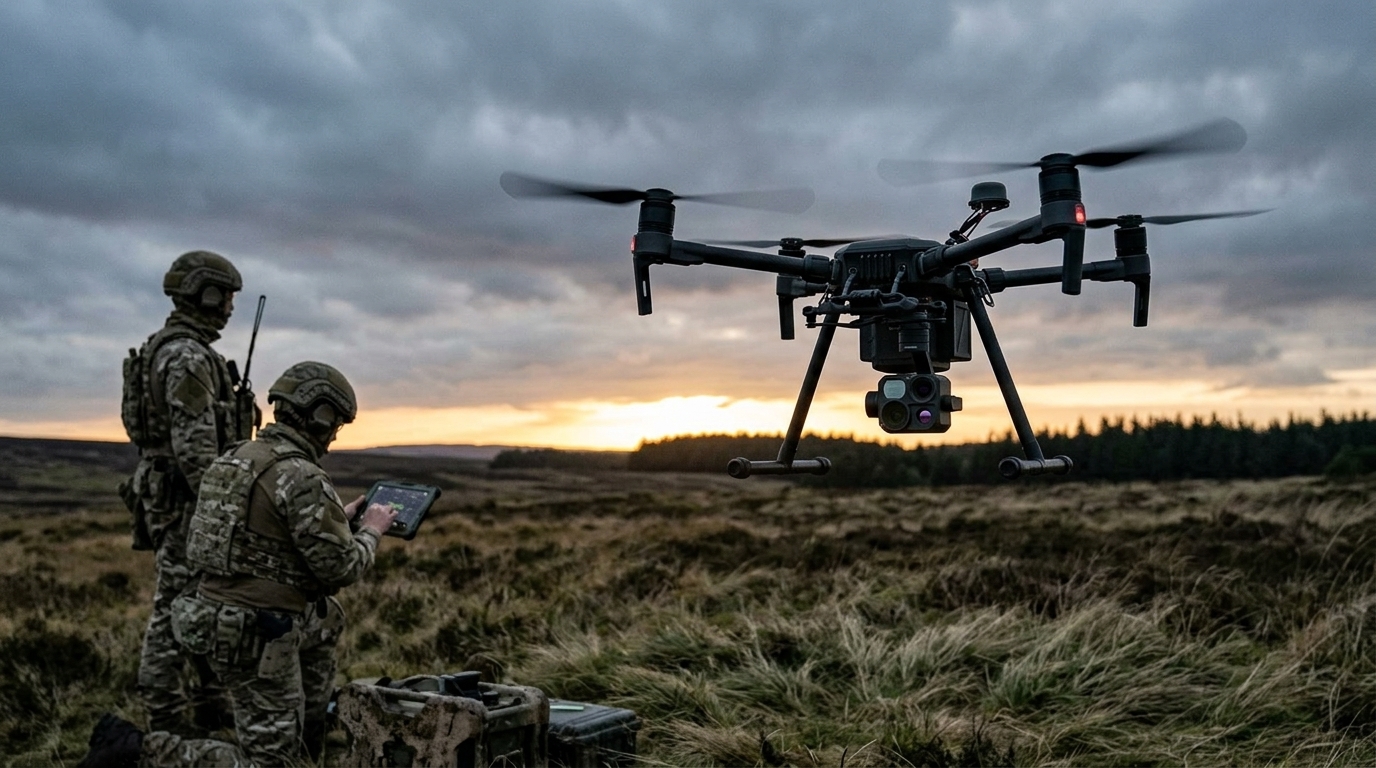
Battlefield autonomy is emerging as one of the most pressing issues in defense innovation, serving as the central focus of the fifth EUDIS Defence Hackathon. According to the European Commission’s Directorate-General for Defence Industry and Space (DG DEFIS), the event will take place from October 15 to October 17, 2026, simultaneously across eight European countries, including Cyprus.
Key Challenges and Technological Goals
Participating companies and research teams will tackle two common challenges. The first concerns the ability of systems to navigate and operate in environments where Global Navigation Satellite Systems (GNSS) are unavailable or deliberately disrupted. The second focuses on autonomous swarms, including their potential use in reconnaissance and logistics.
In addition, each of the eight host countries —Austria, Ireland, Italy, Latvia, Norway, Portugal, Sweden, and Cyprus— will introduce a third challenge reflecting its regional priorities, technological expertise, and defense ecosystem. The goal is to develop solutions with practical relevance to real-world operational requirements.
Funding and Strategic Autonomy
The European Defence Innovation Scheme (EUDIS) is an initiative of the European Defence Fund (EDF), with a total budget of €2 billion through 2027. Under the 2026 Work Programme, total funding allocated to EUDIS amounts to €231 million. The scheme aims to strengthen defense start-ups and small and medium-sized enterprises (SMEs) by reducing barriers to entry and bridging the gap between civilian and defense technologies.
Winning teams will participate in a two-month Mentoring Programme offering specialized guidance on product development and market positioning. They will also have the opportunity to present their projects to investors. Funding primarily takes the form of grants, covering up to 100% of eligible costs for research projects, while development projects led by SMEs generally receive around 55% funding, with higher rates available for specific activities.