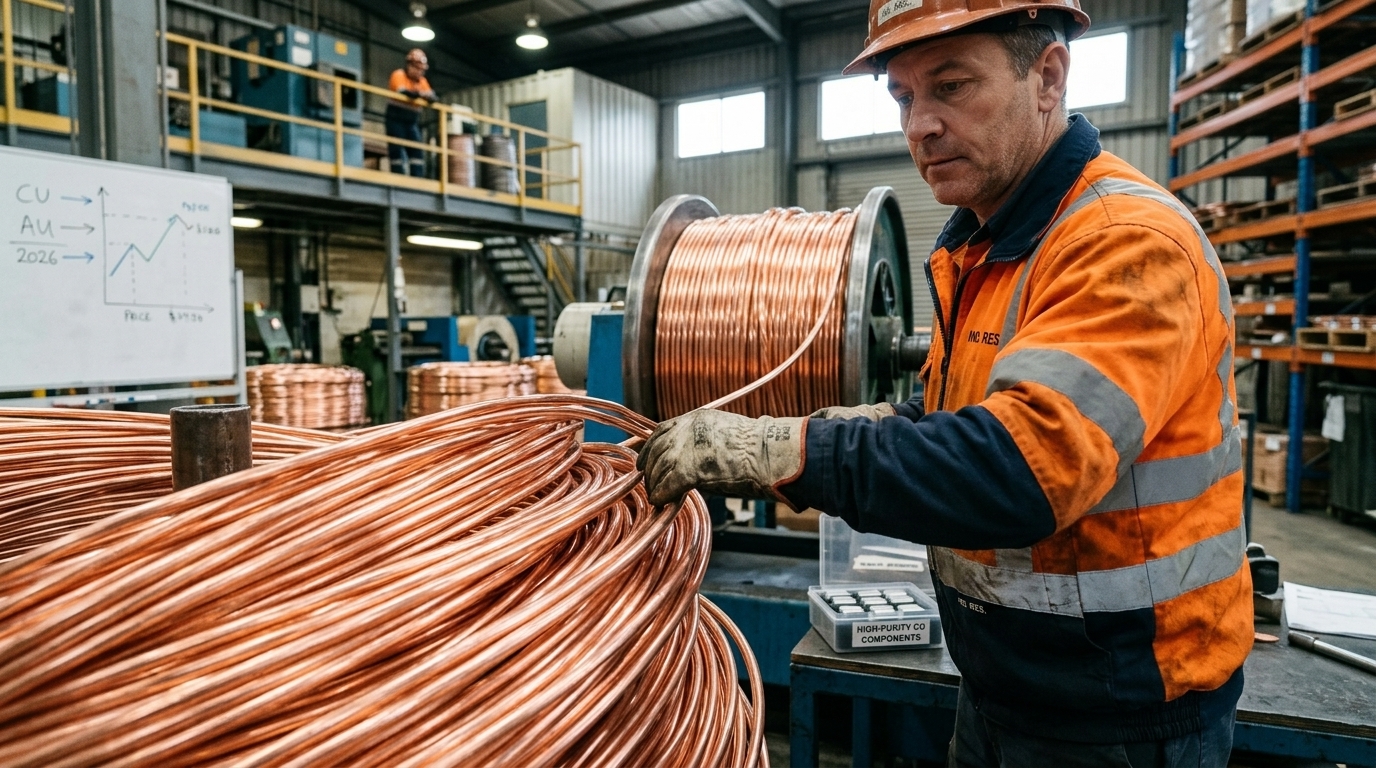
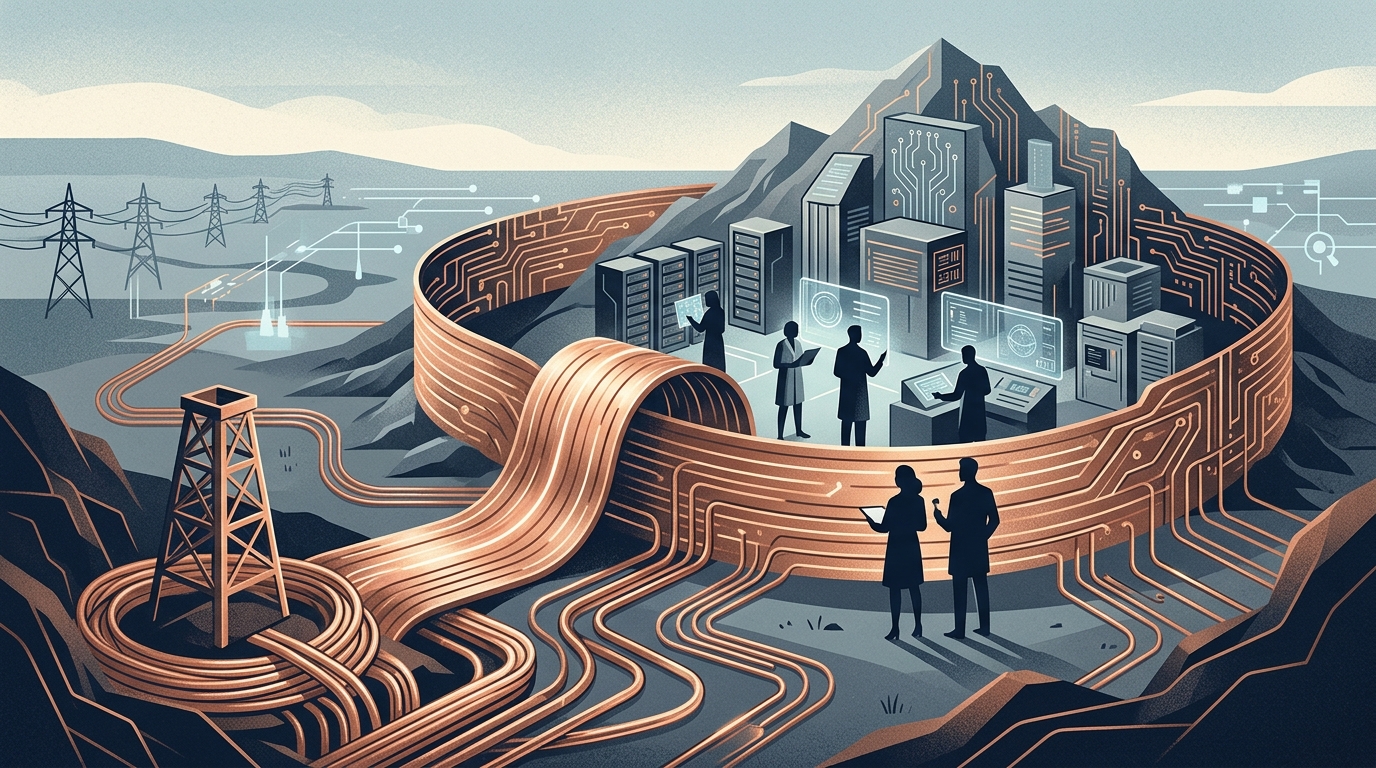
In the final quarter of 2026, a fundamental shift is occurring in the global markets: the transition from speculative AI software valuations to the hard reality of physical infrastructure. This evolution is most visible in the commodities market, where copper has emerged as a strategic asset, outperforming gold—the traditional safe haven. Since the beginning of the year, copper prices have climbed 15.8%, with a year-over-year increase exceeding 30%. In contrast, gold futures have faced a downturn of 4.11% year-to-date.
The Strategic Metal Paradigm
The decoupling of copper from other industrial metals stems from what analysts describe as "inelastic demand." Large-scale data center investments by major tech firms and surging defense spending are driving this rally. Unlike consumer-facing sectors, these industries are less sensitive to price fluctuations; the metal remains an essential, non-negotiable component of their infrastructure. Supply constraints further tighten the market, with US stockpiling ahead of proposed 15% tariffs in 2027 and Chinese inventories hitting extremely low levels. As Iain Pyle of Aberdeen Investments suggests, sustained higher prices may be necessary to incentivize the production required to meet this supply-demand gap.
Greece’s Infrastructure Moat: The Business Case for Daedalus
On the domestic front, the inauguration of the 'Daedalus' supercomputer in Lavrio signifies Greece’s entry into the era of "computational sovereignty." By investing €58.9 million in this infrastructure, the Hellenic Republic is attempting to decouple its digital future from external providers. For the Greek business landscape, the implications are tangible. The Pharos AI Factory, supported by a €30 million EU budget, is designed to democratize access to high-density compute power for startups and SMEs starting in March 2027.
"Metals previously labeled as 'critical' are now effectively 'strategic metals' in every sense," notes Taylor Melvin, CEO of Ivanhoe Electric.
This shift from consumption to domestic production is mirrored in China’s recent economic data. Despite a sluggish real estate sector, China recorded a 4.5% GDP growth in Q3 2026, driven largely by a 36% jump in high-tech exports. For businesses, the message is clear: the winners of this cycle are those securing the physical backbone—from copper reserves to sovereign data centers—that sustains the digital economy.
Market Implications: Risk and Resilience
While the infrastructure boom provides a robust foundation, businesses are also seeking unconventional ways to manage volatility. Small and medium enterprises are increasingly using prediction markets as "bespoke insurance," hedging against real-world outcomes like weather or local event results to offset revenue fluctuations. As we navigate this landscape, the focus remains on the "physicality" of progress—the hardware, the energy, and the strategic assets that turn technological ambition into verifiable commercial momentum.