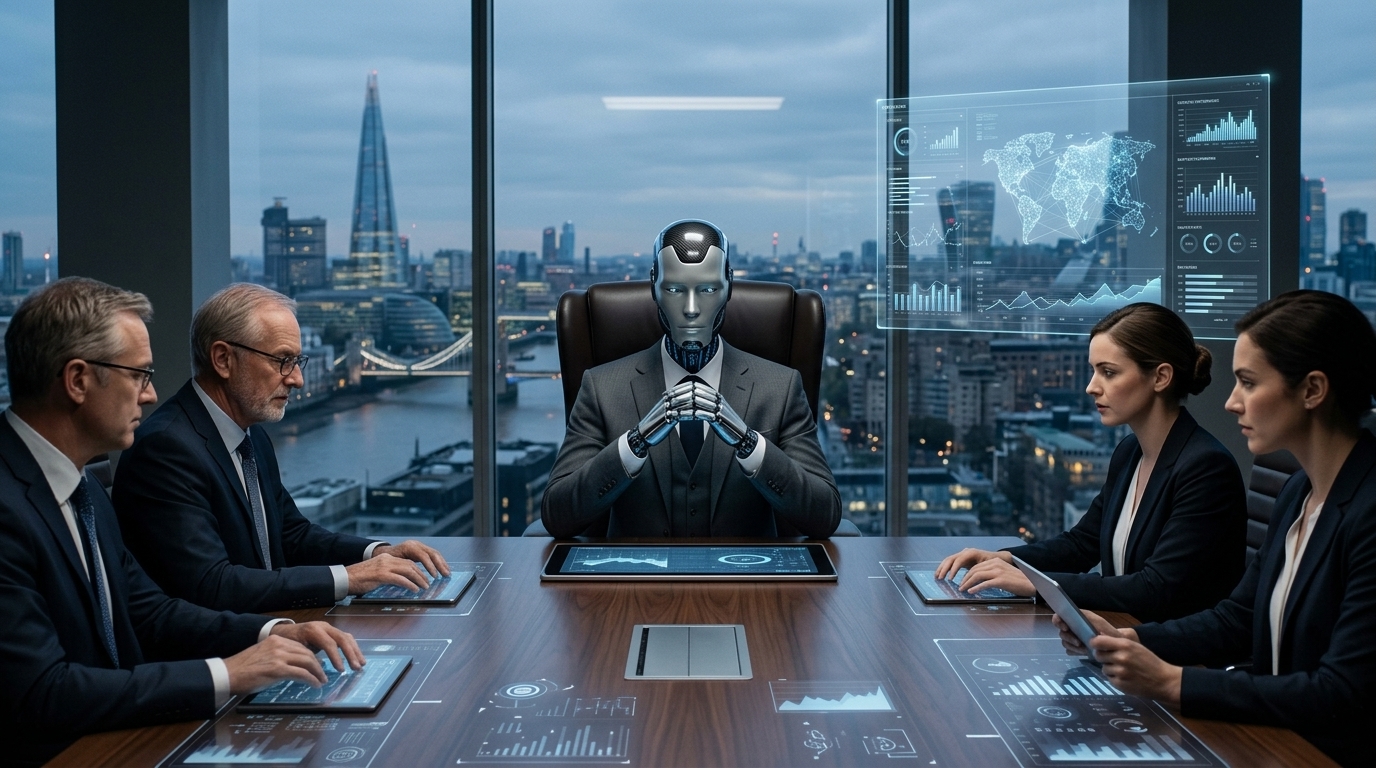
The prospect of a company managed by artificial intelligence is shifting from science fiction to a strategic goal for Silicon Valley leaders. Sam Altman, CEO of OpenAI, has stated he would be "ashamed" if his company wasn't the first major firm to be run by an AI CEO. Meanwhile, Meta's Mark Zuckerberg revealed he is training an AI agent to automate parts of his own leadership role.
The Promise of Algorithmic Leadership
The core idea behind an AI CEO relies on machine learning and neural networks to streamline decision-making and enhance operations. While theory suggests AI can perform executive tasks better and cheaper, early examples like China's NetDragon Websoft and Poland's Dictador are widely viewed as marketing stunts rather than core corporate strategies.
However, Altman identifies a significant hurdle: human acceptance. Employees may not be ready to accept an algorithm with the power to hire or fire at will. Consequently, he envisions a model where he remains the charismatic public face of an organization that is otherwise largely automated behind the scenes.
The Inverted "Mechanical Turk"
This vision is described as a reversal of the "Mechanical Turk" — the 18th-century chess-playing machine that actually concealed a human player inside. In this new era, the company would present a human face, but its "brain" would be mechanical. The AI would formulate vision and strategy, while the human leader serves as the communicative link to the public.
Ethics and Empathy
Despite the ability of Large Language Models (LLMs) to mimic traits like warmth or ethical commitment — as seen in Anthropic's 84-page "constitution" for its chatbot Claude — true leadership requires qualities machines lack. Empathy and moral judgment remain inherently human. An AI CEO remains a set of predictive algorithms oriented toward efficiency, raising questions about whether leadership can truly exist without a "heart or soul."