Jeff Bezos has predicted a radical shift in household economics, suggesting that Artificial Intelligence (AI) could end the necessity of dual-income households. Speaking on Fox News, the Amazon founder argued that the increased efficiency provided by automation might allow workers to meet their financial needs while working as little as three days a week.
Choice Over Necessity
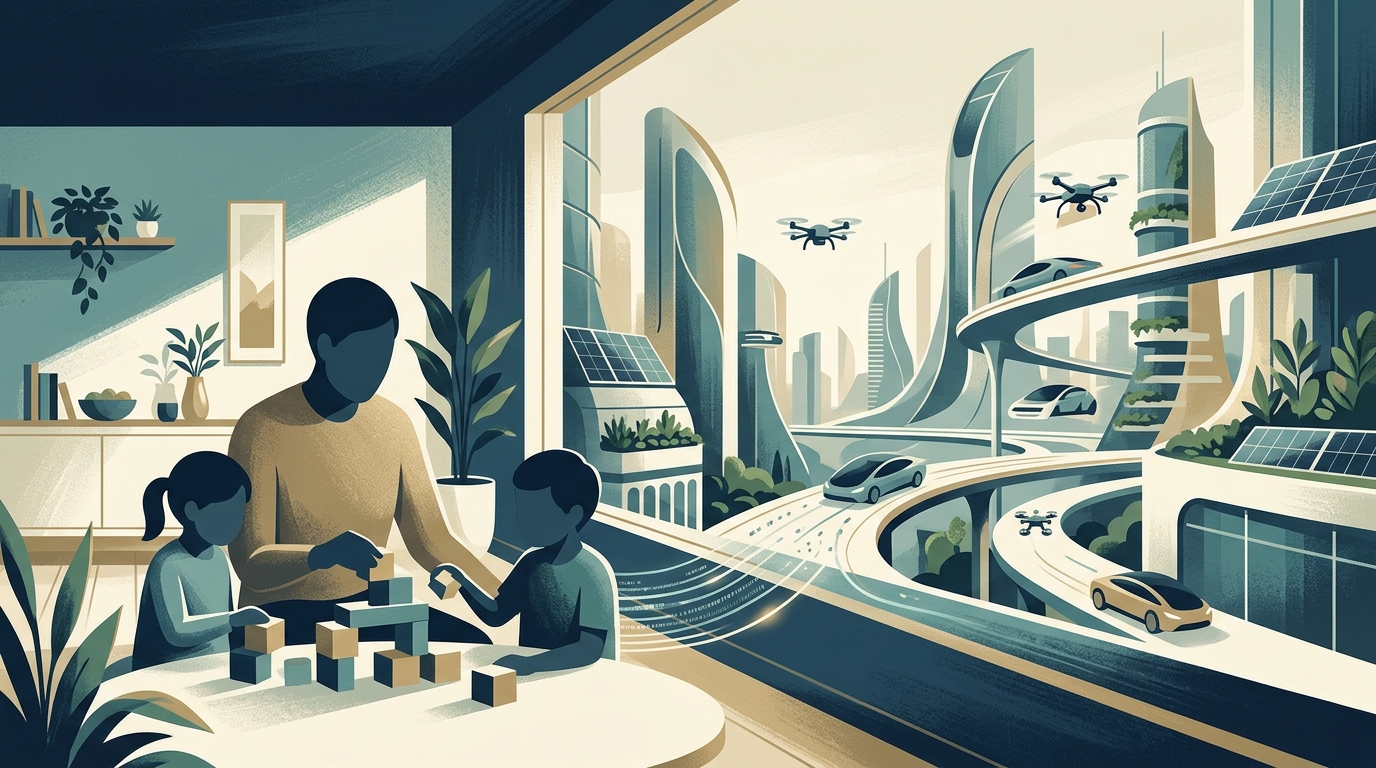
According to Bezos, this evolution does not imply that couples will stop working together by choice, but rather that they will no longer be forced to do so for survival. "You won't have to have a two-income household," he stated, noting that the AI-driven economy will offer the flexibility for one partner to exit the workforce or drastically reduce their hours.
However, the billionaire warned that this potential "abundance" of free time and financial comfort could pose new challenges for the labor market. Businesses may find it increasingly difficult to recruit staff, as individuals will lack the incentive to hold second jobs or maintain grueling work schedules.
The 'Age of Abundance' vs. Market Reality
Bezos' views partially align with those of Elon Musk, who recently spoke at the White House about a "universal high income" rather than a mere basic allowance. Despite these optimistic forecasts, concerns regarding mass job displacement remain significant.
Nevertheless, recent data from the Yale Budget Lab (June 2026) indicates that AI's impact on the U.S. labor market has remained limited so far. Unemployment rates have held steady between 4.1% and 4.5%, suggesting that technology is currently transforming how tasks are performed rather than leading to wholesale job elimination.