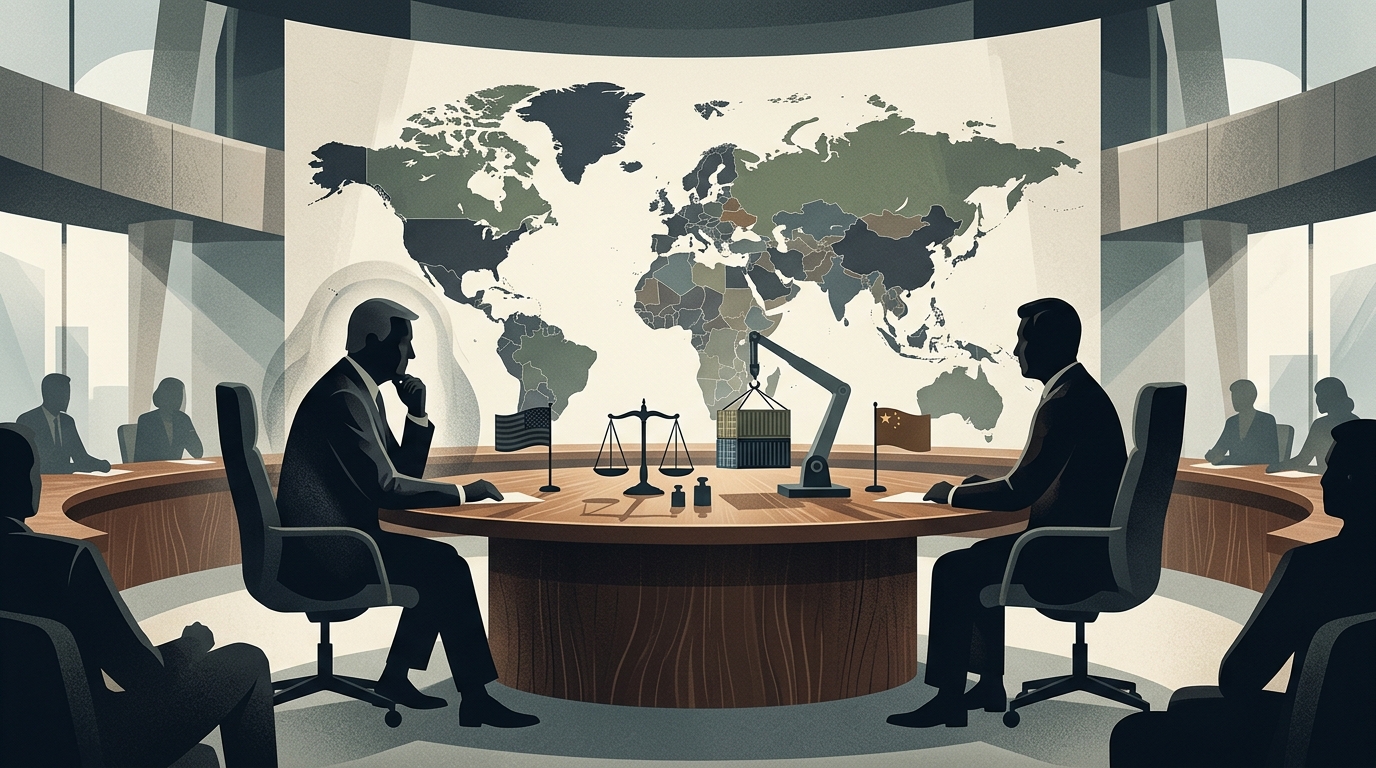
President Donald Trump is moving toward levying a new tariff on China to penalize the nation for flooding global markets with underpriced goods. According to sources familiar with the matter, the administration is considering a 7.5% tariff rate, aimed at addressing China's massive industrial overcapacity.
A Tactical Balancing Act
The proposed move is viewed as a calibrated effort to work around a Supreme Court decision earlier this year that struck down a previous high-tariff scheme. By setting the rate at 7.5%, officials believe they can punish Beijing without endangering the current one-year trade truce or the high-stakes summit between Trump and President Xi Jinping scheduled for late September.
The investigation into excess industrial capacity was initiated under Section 301 of the Trade Act of 1974. This legal tool allows the U.S. president to impose tariffs on nations deemed to be discriminating against American commerce. While China is the primary target, the administration is also investigating other economies, including the EU, Singapore, and Mexico, for unfair trade practices.
Market Saturation and Trade Surpluses
The friction stems from Chinese dominance in sectors such as electric vehicles, solar panels, and steel. As domestic demand in China slows, companies have expanded their reach overseas, resulting in a record trade surplus of nearly $1.2 trillion last year. China’s Ministry of Commerce has defended its position, claiming it does not intentionally seek large surpluses.
If finalized, this 7.5% levy would be cumulative, sitting atop the 10% to 12.5% tariffs announced last month against 60 economies accused of failing to enforce bans on goods produced with forced labor.
The Iran Factor
Adding to the geopolitical complexity, the Treasury Department recently warned of secondary sanctions against nations continuing to trade with Iran. Given that China is Iran's largest trading partner, these sanctions could further strain relations as the U.S.-Israeli conflict with Iran nears the six-month mark.