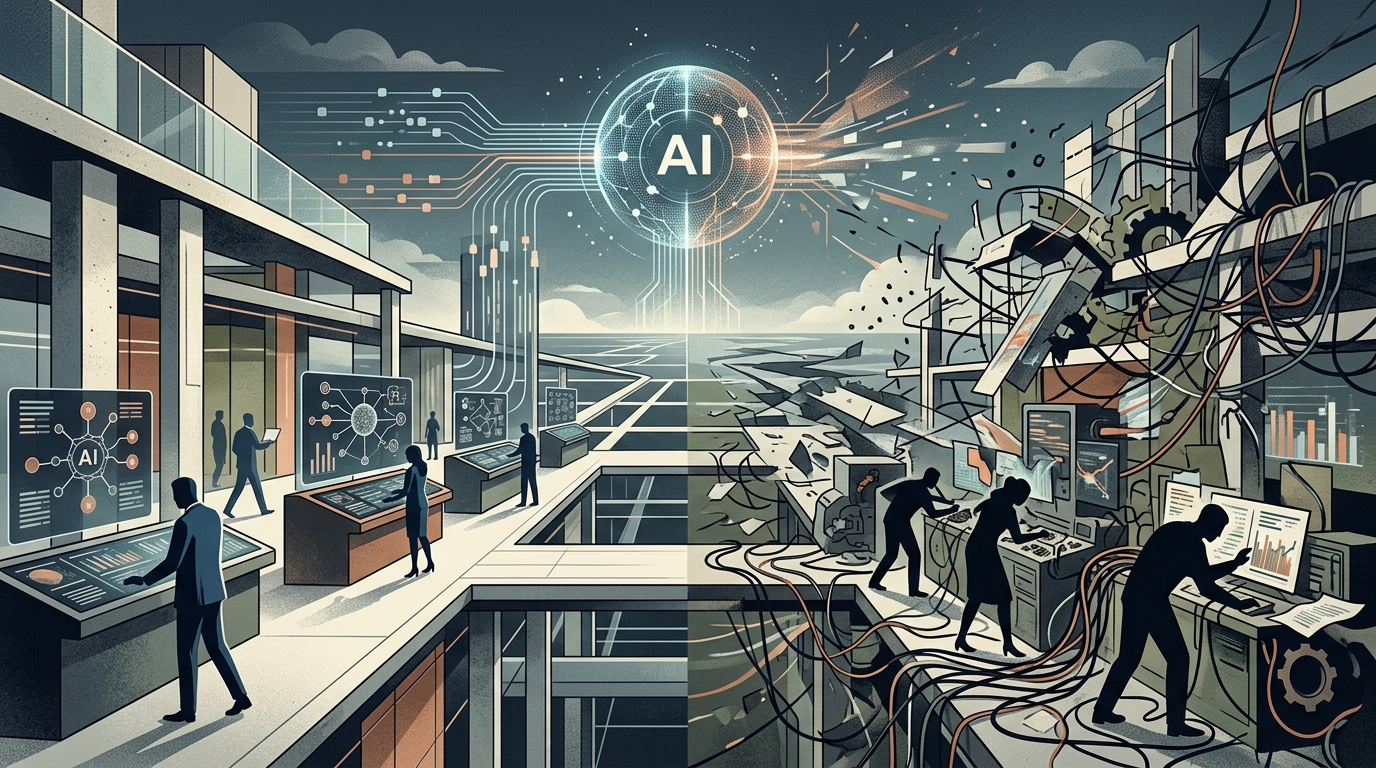
Artificial Intelligence is no longer a distant promise for the energy sector but the central catalyst for its total redesign. At the Brainstorm Energy Summit 2026, organized by Fortune Greece, Dr. Giorgis Kritsotakis of Accenture Greece emphasized that the true value of AI will be judged by the transformation of corporate operating models rather than the mere adoption of isolated tools.
Challenges in an Uncertain Environment
The energy sector is currently facing a "perfect storm" of challenges: geopolitical instability, supply chain dependencies (primarily on China for batteries and PVs), and aging infrastructure. One of the most critical issues is the demographics of grid technicians, with the global average age exceeding 54 years, making the digitization of expertise a matter of urgency.
Simultaneously, digitalization introduces new risks. Critical infrastructure faces an average of 1,670 cyberattacks daily, making security an integral part of any energy strategy.
The Data Center Equation
Data centers are emerging as dominant players in energy demand. According to data presented at the summit, by 2030, a significant portion of electricity production (citing the US example) will be directed toward powering them. The question for economies is not just energy sufficiency, but the added value these infrastructures return to the broader ecosystem.
The "80/20" Mistake and the Utility of the Future
Dr. Kritsotakis pointed out a common error: businesses spend 80% of their discussion on technology and only 20% on leadership commitment and operating models. This ratio must be reversed, as technology will gradually become a commodity.
The future of energy companies appears to be moving along three axes:
- Concierge: Personalized energy management for the consumer.
- Data Broker: Leveraging and monetizing consumption and grid data.
- Power-tech: Providing infrastructure for the new digital economy and data centers.