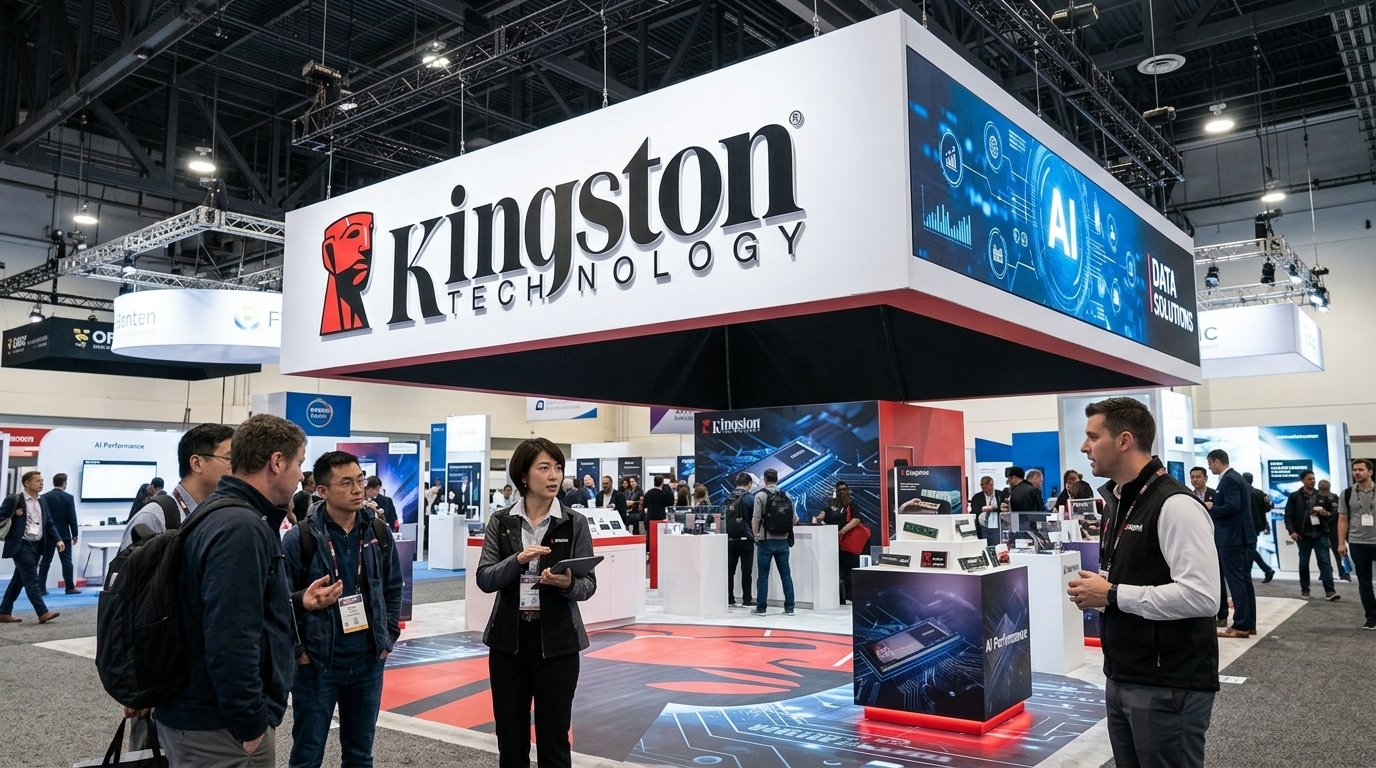
In the annals of Silicon Valley, narratives typically follow a linear path: founding, venture funding, an Initial Public Offering (IPO), and an eventual acquisition by a tech titan. However, the story of Kingston Technology, the company that dominates the memory module and storage market, stands as one of the most paradoxical and instructive exceptions. Its founders, John Tu and David Sun, achieved the unthinkable: they sold their company at the peak of its success and bought it back a few years later at a fraction of the price, keeping it private and independent to this day, at the dawn of the Artificial Intelligence revolution.
The Golden Deal of 1996 and the Lesson of Timing
By 1996, Kingston Technology was already a giant in the memory upgrade sector. At a time when Masayoshi Son's SoftBank was aggressively expanding in the US, Tu and Sun agreed to sell 80% of the company for a staggering $1.38 billion. At the time, this move was seen as the ultimate exit. However, what followed went down in history not for the dollar amount, but for the founders' humanity: they distributed $100 million of their proceeds as bonuses to their employees, creating a legend around their corporate culture.
SoftBank, however, faced challenges managing Kingston as the semiconductor market began to experience extreme volatility. Just three years later, in 1999, Tu and Sun proposed buying back SoftBank's stake. The deal closed at $450 million—less than a third of the original sale price. This strategic "buy low, sell high" maneuver at a corporate level allowed Kingston to return to private hands, free from the pressures of public shareholders and quarterly earnings reports.
Kingston in the Age of Artificial Intelligence
Today, in 2026, Kingston is not merely a manufacturer of USB sticks or RAM for home PCs. It sits at the core of the infrastructure powering Large Language Models (LLMs) and Generative AI applications. Artificial Intelligence requires vast amounts of data to be processed at incredible speeds. This means demand for high-performance DRAM and enterprise-grade SSDs (Solid State Drives) has skyrocketed.
Kingston has tailored its production to serve the data centers housing NVIDIA GPUs and other AI accelerators. The company's ability to maintain control over its supply chain as a private entity gave it a significant edge during global chip shortages. While its competitors had to answer to Wall Street for declining margins, Kingston invested in inventory, ensuring it would be the supplier of choice when demand for AI hardware peaked.
The Private Management Model as a Strategic Advantage
The decision by Tu and Sun to never take Kingston public after the buyback has proven prophetic. In a sector as cyclical as semiconductors, the freedom to think in decades rather than quarters is invaluable. The company has managed to stay at the top of the DRAM module market (often holding a global share exceeding 70%) without sacrificing its agility.
- Focus on Quality: Kingston tests every component that leaves its factory, a practice that has made it synonymous with reliability in data centers.
- Human Capital: Low employee turnover ensures that technical expertise remains within the company's walls.
- Adaptability: From floppy disks to DDR5 memory and NVMe drives, the company has survived every technological transition of the last 40 years.
As AI moves from the cloud to the "edge"—meaning local devices like smartphones and laptops running AI models locally—the need for fast, energy-efficient memory becomes even more critical. Kingston is already there, developing solutions that allow these devices to handle AI workloads without latency.
Conclusions for the Future
The story of Kingston Technology is a lesson in the value of ownership and proper timing. Tu and Sun didn't just make money; they bought their freedom. In the AI era, where the Capital Expenditure (CapEx) of Big Tech companies is reaching record levels, Kingston remains the quiet partner providing the building blocks of digital intelligence. Their ability to buy back their future in 1999 is exactly what allows them to dominate the present in 2026.