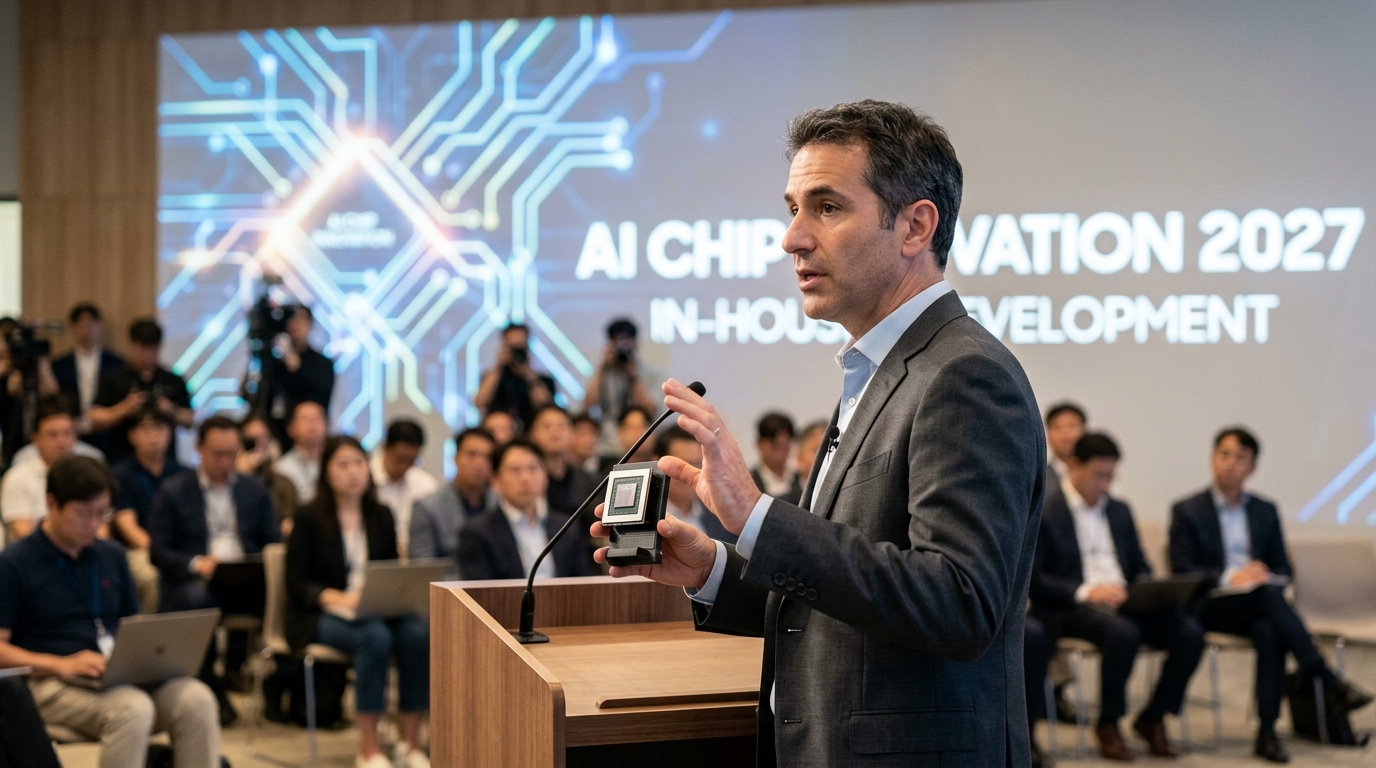
In the relentless world of artificial intelligence, power is no longer measured solely by algorithms, but by silicon. ByteDance, the Chinese tech titan behind TikTok and Douyin, has clearly understood the assignment. According to recent reports, the company has set an ambitious target: the mass production of its own in-house AI CPUs (and NPUs) by 2027. This move is not merely a business decision; it is a strategic survival play in a world where access to cutting-edge semiconductor technology has been weaponized as a geopolitical tool.
The Necessity of Autonomy in a Polarized World
ByteDance’s reliance on Nvidia, the undisputed sovereign of the GPU market, has become its Achilles' heel. As the United States consistently tightens export controls on advanced chips to China, companies like ByteDance find themselves cornered. Restrictions on Nvidia’s H100 and the upcoming Blackwell architecture are forcing Chinese conglomerates to seek alternatives, often settling for less efficient hardware that hampers their AI development velocity.
"Nvidia's dominance is no longer just an economic issue; it is a strategic barrier to Chinese innovation," industry analysts suggest.
Developing proprietary chips allows ByteDance to tailor its hardware specifically to the needs of its recommendation algorithms. TikTok thrives on massive amounts of data that must be processed in real-time. A processor designed specifically for these workloads can offer significantly higher efficiency per watt compared to a general-purpose GPU, providing a critical edge in the competitive social media landscape.
The Manufacturing Hurdle and the TSMC Nexus
Designing a chip is only half the battle; manufacturing it is the other. ByteDance is rumored to be working closely with TSMC (Taiwan Semiconductor Manufacturing Company) to develop its chips on 5nm or even 4nm process nodes. However, this partnership is fraught with risk. TSMC is under significant pressure from the US to comply with export restrictions, meaning ByteDance must navigate a legal and regulatory minefield.
- ASIC Design: ByteDance is focusing on Application-Specific Integrated Circuits (ASICs) optimized for AI inference.
- Cost Reduction: Avoiding the "Nvidia tax" could save the company billions of dollars in capital expenditure annually.
- Energy Efficiency: Custom silicon will drastically reduce the carbon footprint and operational costs of their massive data centers.
The 2027 deadline is considered aggressive but achievable. By then, ByteDance hopes to have established an ecosystem where its software and hardware operate in perfect synergy, making the company less vulnerable to the shifting political winds in Washington.
Economic Implications and the Rise of Tech Nationalism
This move is part of a broader trend of "tech nationalism" sweeping across Asia. China has made it clear that self-sufficiency in semiconductors is a top-tier national priority. For ByteDance, investing billions into semiconductor R&D is a high-stakes gamble that could yield massive returns if successful—or become a costly failure if technological barriers are raised further.
Unlike Google or Amazon, which already have their own silicon (TPU and Trainium/Inferentia respectively), ByteDance is starting from behind. However, they possess the advantage of a massive user base and a specialized data stream. Their ability to mass-produce these chips by 2027 will determine whether they remain at the forefront of global AI or are relegated to being a regional power confined within the Great Firewall.