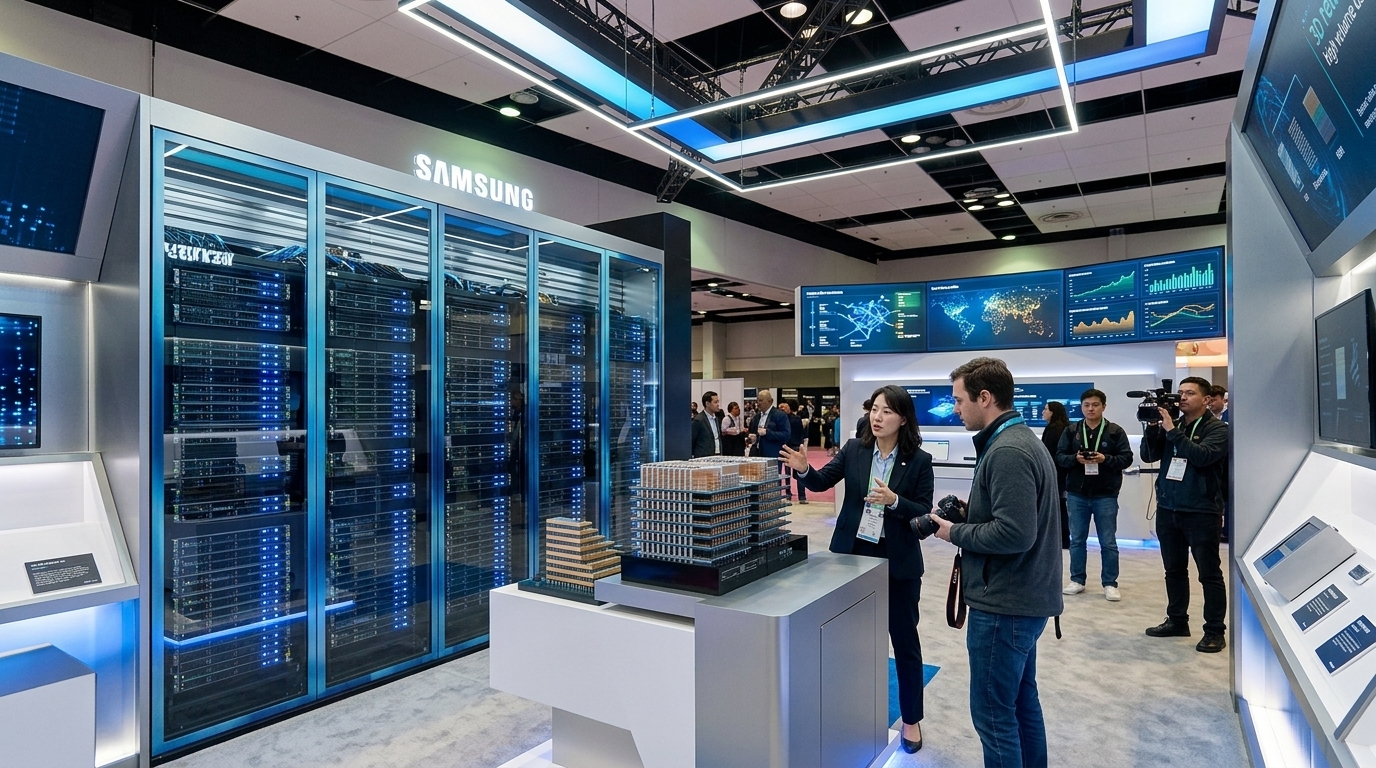
The global race to build artificial intelligence infrastructure is translating into historic financial figures for Samsung Electronics. According to the South Korean giant's preliminary announcement for the third quarter of 2026, operating profits are estimated at 107.4 trillion won (approximately $80 billion), marking a staggering 782.5% increase compared to the previous year.
The Dominance of Memory Chips
This explosive growth in profitability is attributed to the surging demand for data centers and AI systems, which require vast quantities of memory chips. High Bandwidth Memory (HBM) is at the core of this demand, as it is essential for the operation of AI accelerators. Concurrently, Samsung maintains a strong position in the broader DRAM market, holding a 38% share in Q2 2026, significantly ahead of competitor SK Hynix (25%).
Strategic Investments
Beyond hardware manufacturing, Samsung is taking a leading role in the AI software ecosystem. The group recently led a €3 billion funding round for Mistral, a move that propelled the company's valuation to over €21 billion.
Challenges and Uncertainties
Despite the triumphant figures, the industry remains exposed to significant challenges. Analysts and investors are questioning the sustainability of this high demand, as the memory market is traditionally characterized by intense fluctuations in supply and pricing. Furthermore, while high chip prices boost group profits, they also increase component costs for other Samsung products, such as smartphones. Detailed financial results are expected on October 29, which will clarify the exact contribution of each sector to the overall profitability.