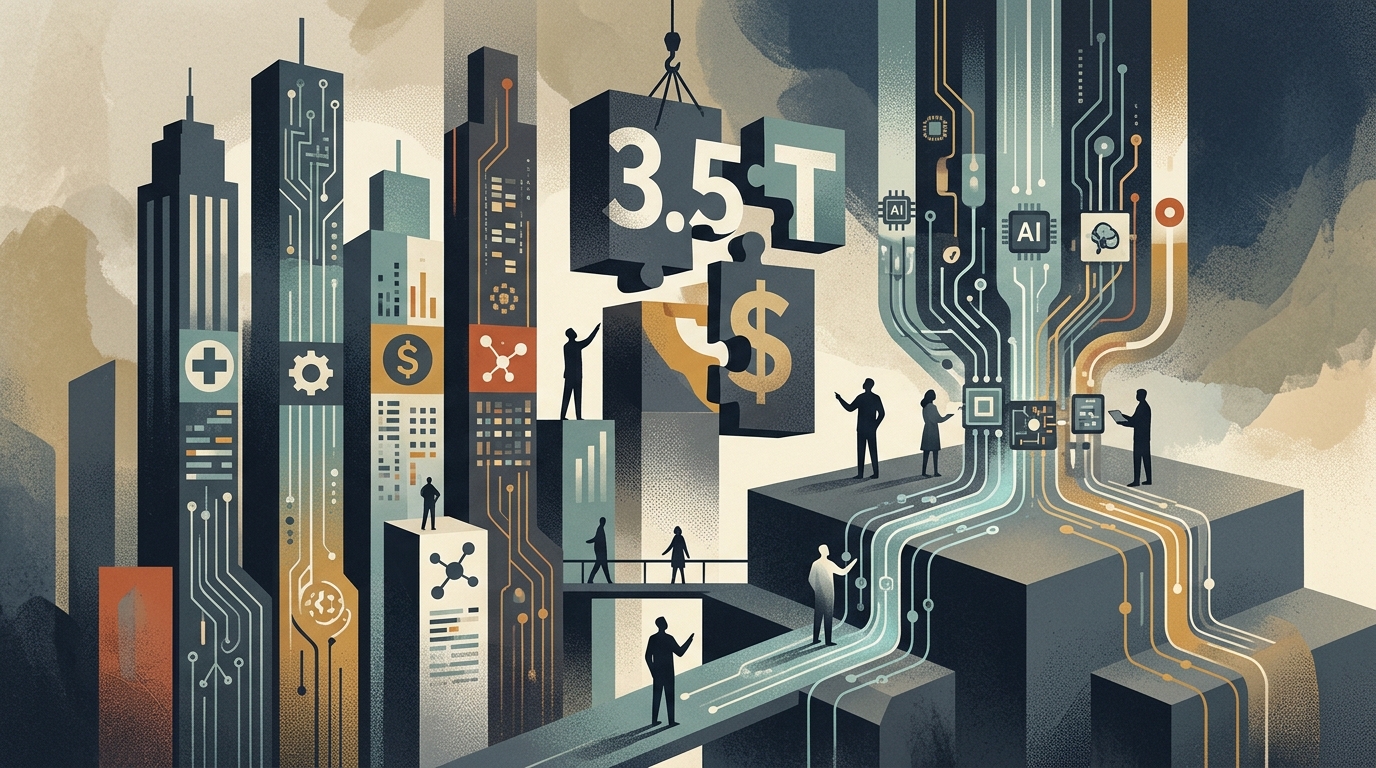

The Convergence of Finance and Digital Assets
In my view, the launch of the 'Visa Stablecoin Platform' represents a pivotal moment in the convergence of traditional finance and digital assets. By opening its network of 15,000 financial institutions and more than 200 million merchants to stablecoins, Visa appears to be re-engineering the plumbing of global commerce. With an annual transaction volume reaching $15 trillion, the move toward blockchain-based settlement offers potential advantages in near-instant settlement and lower costs. Market indicators suggest that interoperability between legacy banking and digital asset infrastructure is now a primary competitive advantage, a trend also seen in Mastercard’s recent introduction of settlement mechanisms with regulated digital assets in partnership with MoonPay.
The Billion-Dollar Infrastructure Bet
The financial architecture of the AI boom is being rewritten by firms like Morgan Stanley, which has overtaken Goldman Sachs to secure the second position globally in debt and equity capital markets. The bank’s revenue in this sector rose to $2.3 billion, driven by landmark transactions such as a $27 billion debt package for the Meta and Blue Owl partnership. This scale of infrastructure demand is further evidenced by Alphabet’s development of the 'Frozen v2' AI chip and its recent agreement to pay SpaceX nearly $1 billion per month for computational resources. However, this consolidation of power faces legal hurdles, as seen in the federal judge's order to halt Paramount’s $111 billion merger with Warner Bros. Discovery due to concerns over market concentration.
"Model diversity (heterogeneity) is a security prerequisite; relying on a single model family for both planning and auditing provides no protection against sophisticated planning-phase attacks."
Greek Retail and Consumer Shifts
In the Greek market, McKinsey & Company reports a phase of intense transformation. Greek food retail EBITDA margins remain lower than the European average (5% vs. 6%), while 63% of consumers state an intention to reduce food spending. Despite these pressures, technology is offering new avenues for growth; early AI applications in the sector are showing up to a 20% increase in add-to-cart rates through personalized recommendations. As consumers visit multiple chains in search of deals, the momentum of private labels is growing, with 91% of Greek consumers now believing they offer equal or better value for money.
Market Risks and Security Concerns
Despite the momentum, the landscape remains fraught with security and legal challenges. Geopolitical risks have intensified with the IRGC's unverified claims of missile strikes against Amazon data infrastructure in Bahrain. Simultaneously, the music industry faces a new legal front as Sony Music Entertainment sues Udio over the alleged infringement of 30,000 songs. From a policy perspective, research into the 'PlanFlip' attack framework suggests that reliance on single-model families for AI planning creates a 'correlated-agent blind spot.' With GPT-5 demonstrating an attack success rate of 0.68, researchers argue that model diversity is essential for institutional integrity, as reasoning-augmented models like DeepSeek-R1 showed total resistance.