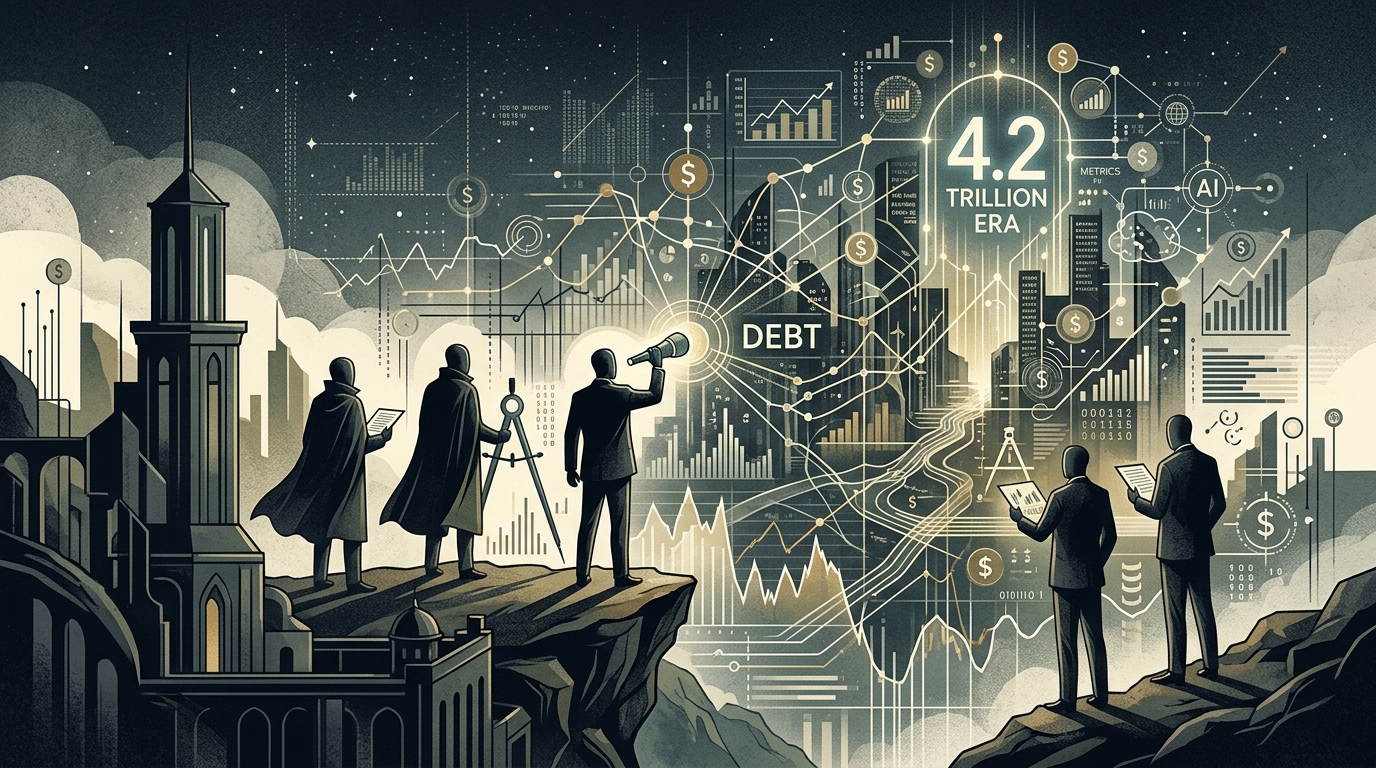
As we navigate the mid-point of 2026, the global business landscape is witnessing a profound shift in how market discipline is enforced. The transition of power in the United Kingdom to Prime Minister Andy Burnham serves as a primary case study; despite a new administration, the $4.2 trillion British economy remains under the intense scrutiny of what veteran analyst Ed Yardeni terms 'bond vigilantes.' This resurgence of market oversight suggests that political mandates are increasingly secondary to the demands of sovereign debt holders.
The Invisible Hand of the Gilt Market
Data from the International Monetary Fund (IMF) reveals a fundamental change in market stability. Between 2020 and 2026, external global factors were responsible for a staggering 60% to 90% of yield fluctuations in UK bonds. With non-domestic entities now possessing nearly 30% of the nation's sovereign debt, the margin for fiscal error has effectively vanished. From a market perspective, the IMF’s observation that tax increases on high earners could be counterproductive highlights the narrow corridor in which modern governments must operate to avoid capital flight.
Greek Fiscal Transparency as a Strategic Shield
While the UK grapples with volatility, Greece is attempting to build a structural defense through digital modernization. The Ministry of National Economy and Finance’s introduction of a 14-digit administrative identity for state entities is a significant move toward institutional accountability. By mapping the fiscal hierarchy down to the departmental level by 2027, Greece is transforming transparency into a technical reality. This initiative, combined with the deployment of the DAEDALUS supercomputer and the Pharos AI Factory, provides the physical and legal backbone necessary for the one-third of Greek SMEs already utilizing AI to bridge the gap between innovation and practical application.
Global Tech Volatility and the Risk Indicator
The broader markets are also adjusting to a new phase of tech-driven volatility. The South Korean Kospi Index has emerged as the primary global risk indicator for tech and semiconductors, with its 60-day correlation to the Nasdaq 100 reaching 0.46—nearly triple its five-year average. A recent selloff, triggered by skepticism over AI demand, saw the Kospi tumble 25% from its June peak, resulting in a $1 trillion wipeout. For investors, the message is clear: whether in sovereign debt or tech equities, data-driven accountability and execution are the only currencies that buy market stability in 2026.