
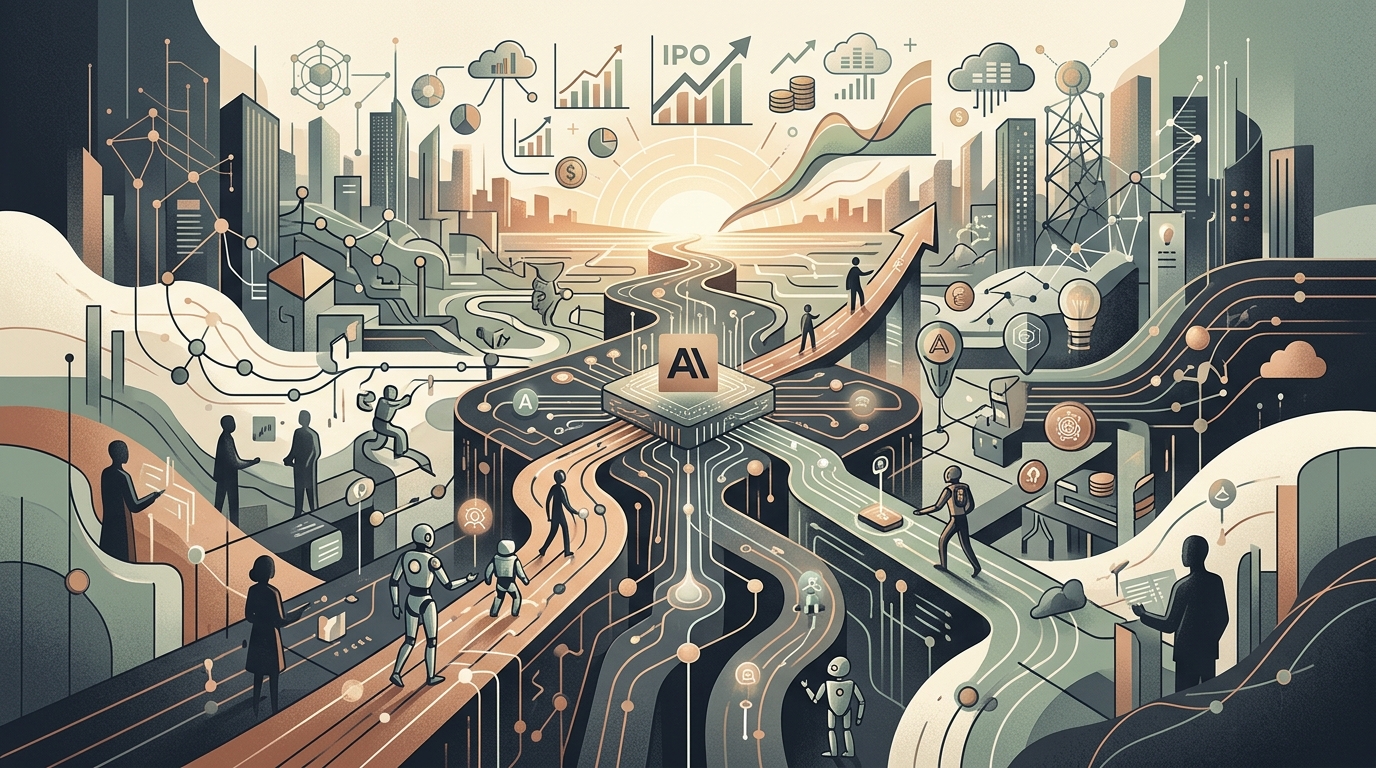
The artificial intelligence sector is approaching a defining valuation milestone that could reshape the global technology landscape. Anthropic, the developer of the Claude models, is reportedly weighing an Initial Public Offering (IPO) as early as November 2026. According to market sources, the company could initiate the process during the week of November 9, targeting a market debut before the Thanksgiving holiday. With potential valuations ranging between $1.8 trillion and $2 trillion, the scale of this move is expected to rival or surpass the historic SpaceX IPO, signaling an extraordinary investor appetite despite ongoing debates regarding AI safety.
The Monetization Pivot: Agents and Infrastructure ROI
As Anthropic prepares for the public markets, its primary rival, OpenAI, is intensifying its monetization efforts. At its annual DevDay, OpenAI introduced 'Dots,' a platform of autonomous agents powered by the GPT-6 Astra model. While OpenAI’s strategy involves high-margin subscription tiers—including a new $500 monthly 'Pro 500' plan for power users—it faces stiff competition from Meta, which offers its 'Muse' platform for free. This pricing divergence highlights a critical market tension: the necessity to recoup projected compute spending, which for OpenAI is estimated to reach $280 billion by 2030, against the pressure of free, open-access alternatives.
Simultaneously, Google is shifting the narrative from model scale to 'deep engineering utility' with Gemini 4 Argon. By automating complex tasks such as migrating 800,000 lines of legacy code to Rust, Google is positioning AI as a tool for technical debt reduction and operational efficiency. For enterprise observers, the commercial benchmark is now set by tangible ROI, such as Argon’s reported saving of 300 TiB of memory across data centers, rather than just benchmark scores.
Greek Business and the Regulatory Landscape
In the Greek market, the focus is shifting toward the practical integration of these technologies into core operations, as highlighted during the recent ShipIT Conference. However, this transition occurs against a backdrop of tightening European regulation. The Hellenic Competition Commission is currently investigating Booking.com for potential abuse of a dominant position, even as the platform adopts transparency measures to comply with the EU’s Digital Markets Act (DMA). Furthermore, the upcoming 15-year age limit for social media in Greece, effective January 2027, alongside the proposed EU KIDS Act, creates a new compliance burden for digital service providers. As AI agents move from experimental tools to professional assistants capable of complex workflows, the balance between American 'self-regulation' and European 'legislative mandates' will remain the primary strategic challenge for global and domestic business leaders alike.