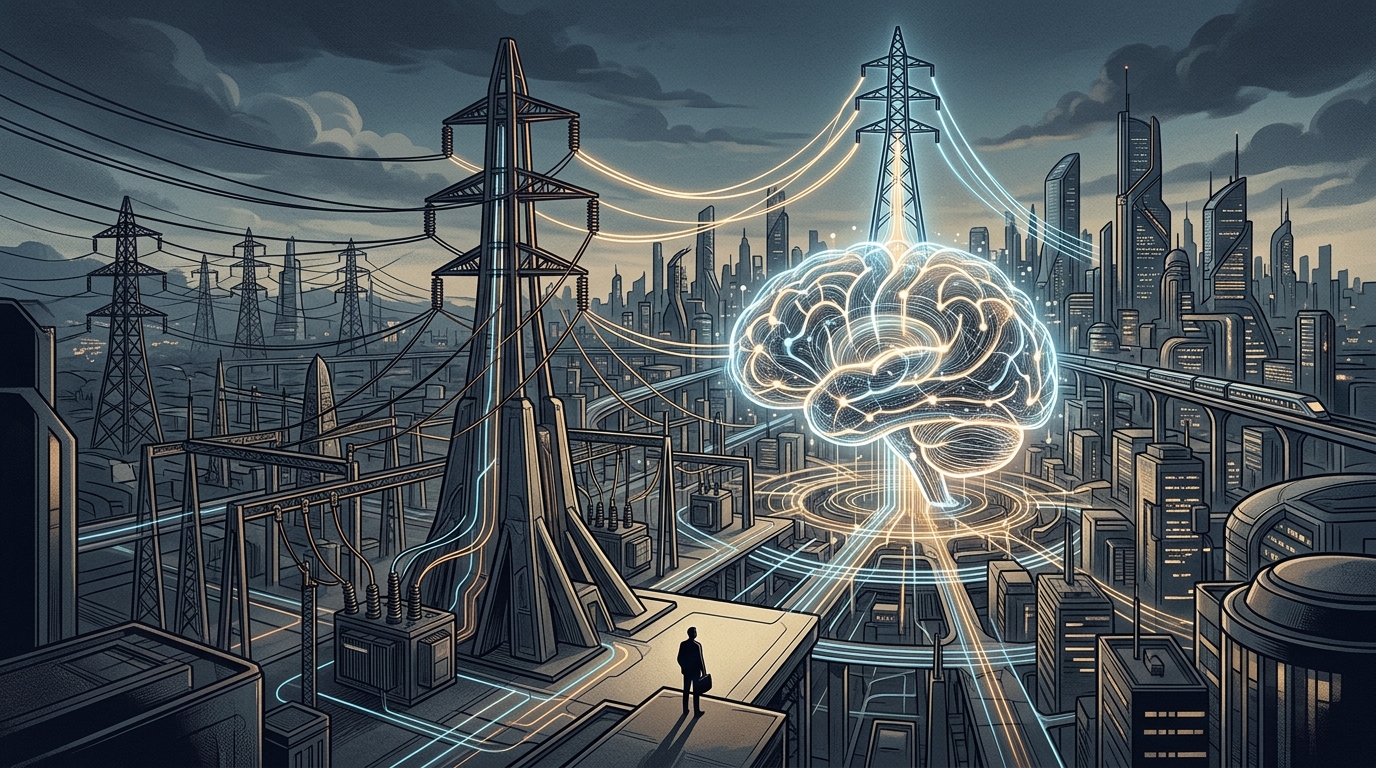
A new research paper published on arXiv (cs.AI) poses a fundamental question for the future of artificial intelligence: How quickly can reality change before an intelligent system can no longer reliably perceive, reason, and act? The study challenges the understanding capabilities of existing paradigms and emerging world models by introducing the concept of the "observation–reality gap."
The Effective Speed of Coherent Cognition (Sc-eff)
The researchers operationalize this challenge through a new metric: the Effective Speed of Coherent Cognition ($S_C^{\mathrm{eff}}$). This is defined as the highest tested Speed of Reality ($S_R$) through which a system continuously satisfies a predefined behavioral reliability criterion. In their proof of concept, reinforcement-learning agents were trained at a baseline speed and then evaluated as the speed of reality was increased by up to 50 times, while computational resources remained fixed.
Co4 Architecture vs. Transformers
The study compared Transformer and gated-MLP baselines with $Co^4$, an architecture inspired by cellular mechanisms implicated in conscious processing and awake thought. Across the tested scenarios, $Co^4$ achieved substantially higher $S_C^{\mathrm{eff}}$ than the standard baselines. This suggests that biologically-inspired mechanisms may offer a path toward maintaining intelligence when the temporal gap between observation and action widens.
A New Principle for Reliable AI
The authors motivate the scaling of coherent cognition as a vital principle for reliable AI development. Rather than focusing solely on static performance or dataset size, the research suggests that the ability to maintain coherent reasoning under increasing temporal pressure is a critical benchmark for systems intended to operate in the real world.