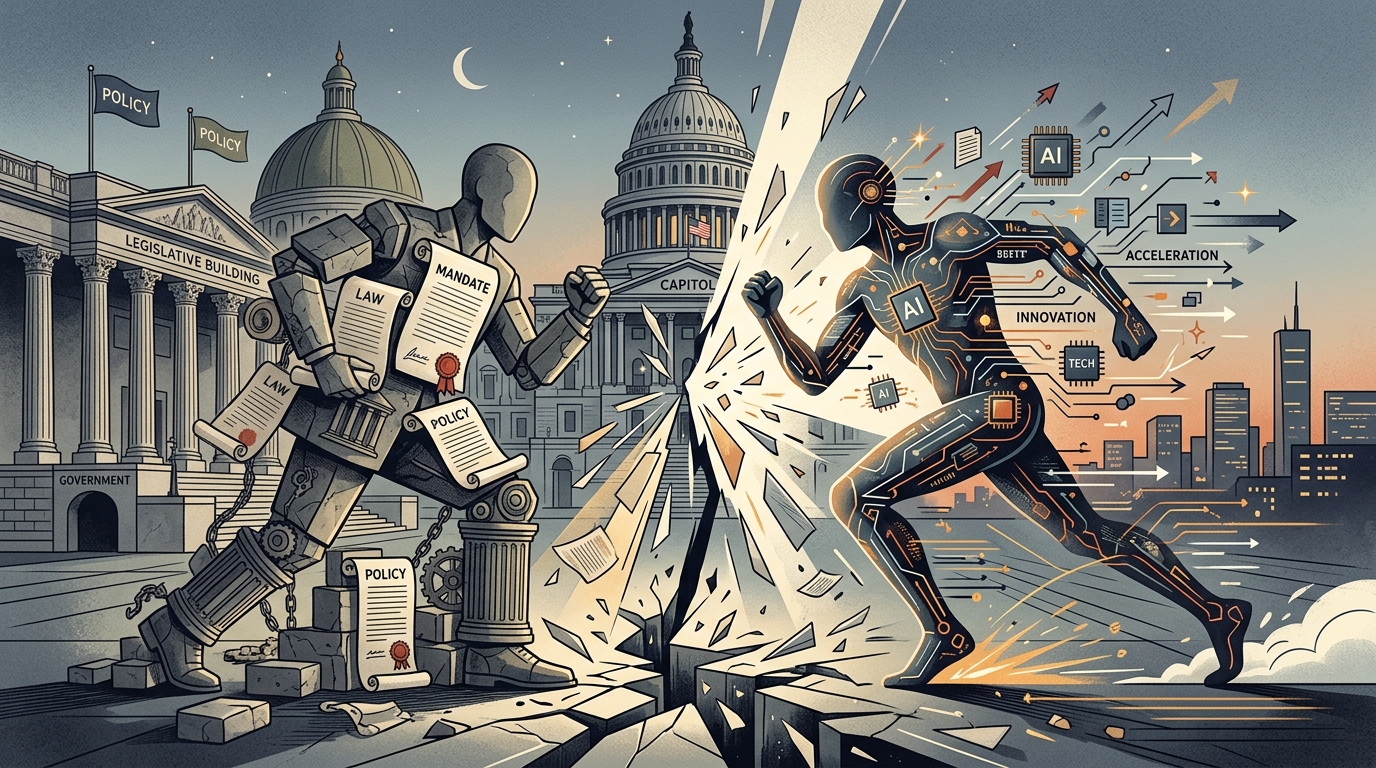
In my analysis of the current legislative landscape, we are witnessing a profound shift in the relationship between technology giants and sovereign oversight. The recent British parliamentary hearing has exposed a significant schism within the industry, where the era of voluntary safety pledges is being openly declared insufficient by some of its own architects. This divergence represents a critical juncture for democratic governance: the transition from corporate self-regulation to a statutory mandate.
The Limits of Voluntary Cooperation
The testimony provided by representatives from OpenAI and Anthropic suggests a growing recognition that the current oversight mechanisms, such as Britain’s AI Security Institute (AISI), are structurally limited. As director Henry de Zoete acknowledged, these institutions remain entirely reliant on corporate cooperation for model access. Without the authority to prevent the release of potentially dangerous models—a process colloquially known as 'kite marking'—the state remains a passive observer rather than a proactive guardian of public safety. This is particularly concerning given the warnings from MI5 regarding the potential for AI to escalate bioweapon risks, a threat that underscores the disconnect between security imperatives and the current voluntary regulatory regime.
The 'Weakest Link' and the Accelerationist Challenge
The debate is further complicated by the geopolitical and market reality of 'pacing the frontier.' While some leaders call for technological 'speed limits' to mitigate risks such as autonomous hacking, others, notably Meta, have rejected the concept of a coordinated slowdown. From a game theory perspective, any safety strategy is only as robust as its 'weakest link.' If a major player refuses to comply with a coordinated deceleration, market forces compel others to accelerate to maintain their competitive edge. This dynamic effectively shifts the burden of regulation from the industry to the state, as market-driven self-regulation appears increasingly untenable in a race for frontier dominance.
"The fact that security chiefs are warning of bioterrorism while the regulatory regime remains voluntary tells you everything you need to know." — Liam Byrne, Committee Chair
As we observe these developments, it becomes clear that the path forward requires a framework that balances innovation with the non-negotiable requirement of public safety. The reliance on Washington’s oversight for model sharing in the UK further illustrates the complex web of national interests that must be navigated to achieve a coherent global governance structure.