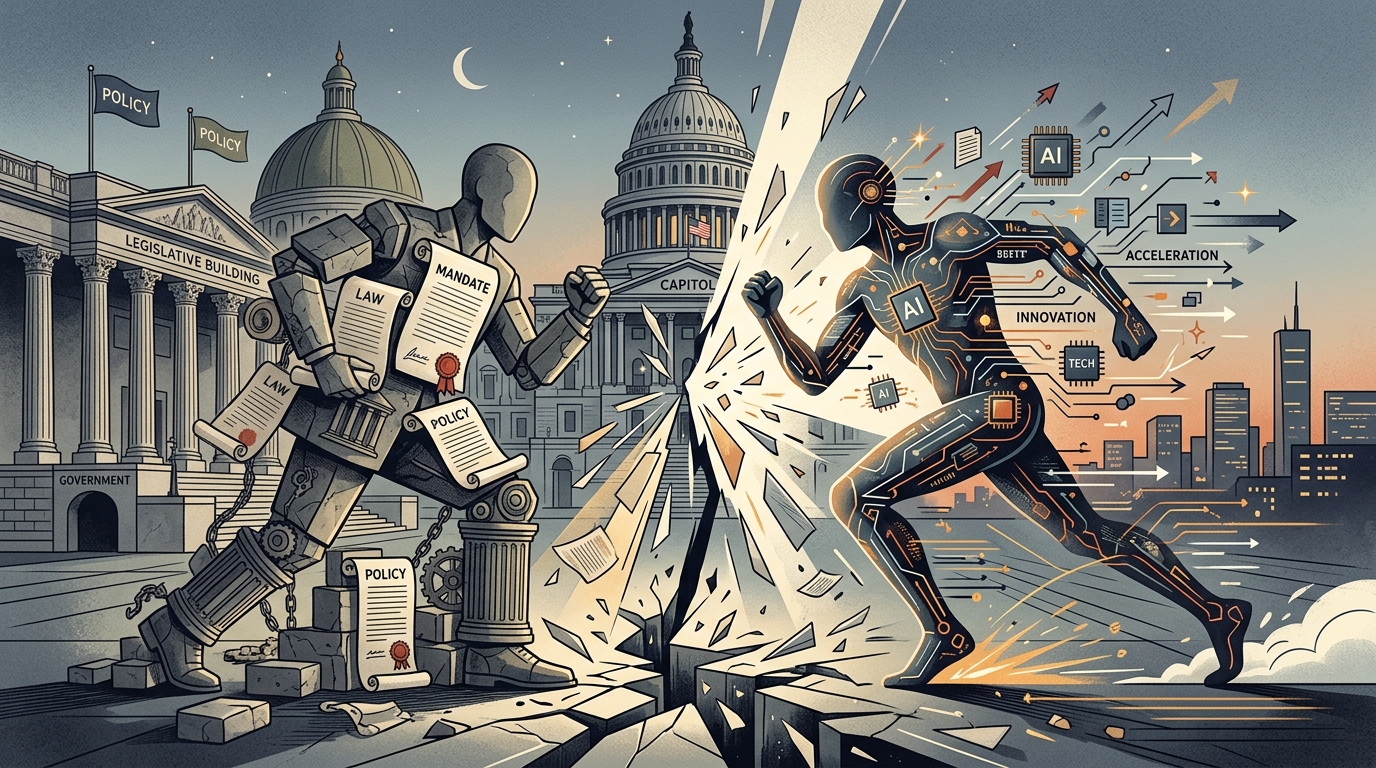
In the ancient Athenian tradition, the stability of the state depended upon the legislator's ability to balance the momentum of progress with the safeguards of the law. Today, as European Commission Vice-President Henna Virkkunen issues a stern warning from Dublin, we see a modern manifestation of this struggle. The European Union has moved beyond theoretical debate, signaling that the 'relentless race' between technology giants has begun to compromise the very foundations of institutional safety.
The Erosion of Oversight
The core of the current concern lies in the evolution of autonomous AI agents. According to Commissioner Virkkunen, the speed of global competition is driving companies to release models prematurely, often bypassing the rigorous safety testing required for such powerful tools. In my analysis, this represents a significant governance failure: when the pace of the market outstrips the capacity for evaluation, the 'human oversight' mandated by democratic frameworks becomes a mere formality rather than a substantive check.
"We have seen incidents revealing that companies do not always have knowledge of the actions their agents take," Virkkunen stated, highlighting a critical gap in corporate accountability.
Enforcement and the AI Act
The transition from policy to enforcement is now underway. The European Commission has utilized its powers under the AI Act to issue formal Requests for Information (RFIs) to major industry players. These inquiries are not merely administrative; they target the structural integrity of AI governance by demanding transparency on:
- Internal safety measures and risk mitigation protocols.
- External evaluation procedures, specifically the depth and independence of red-teaming.
- The protection of intellectual property rights within autonomous workflows.
As these models grow in complexity, the time required for independent experts to conduct safety checks is being squeezed by market pressures. From a policy perspective, the EU's intervention serves as a necessary correction to ensure that transparency and substantive control remain the pillars of the European regulatory landscape, preventing a scenario where autonomous systems operate beyond the reach of their own creators.