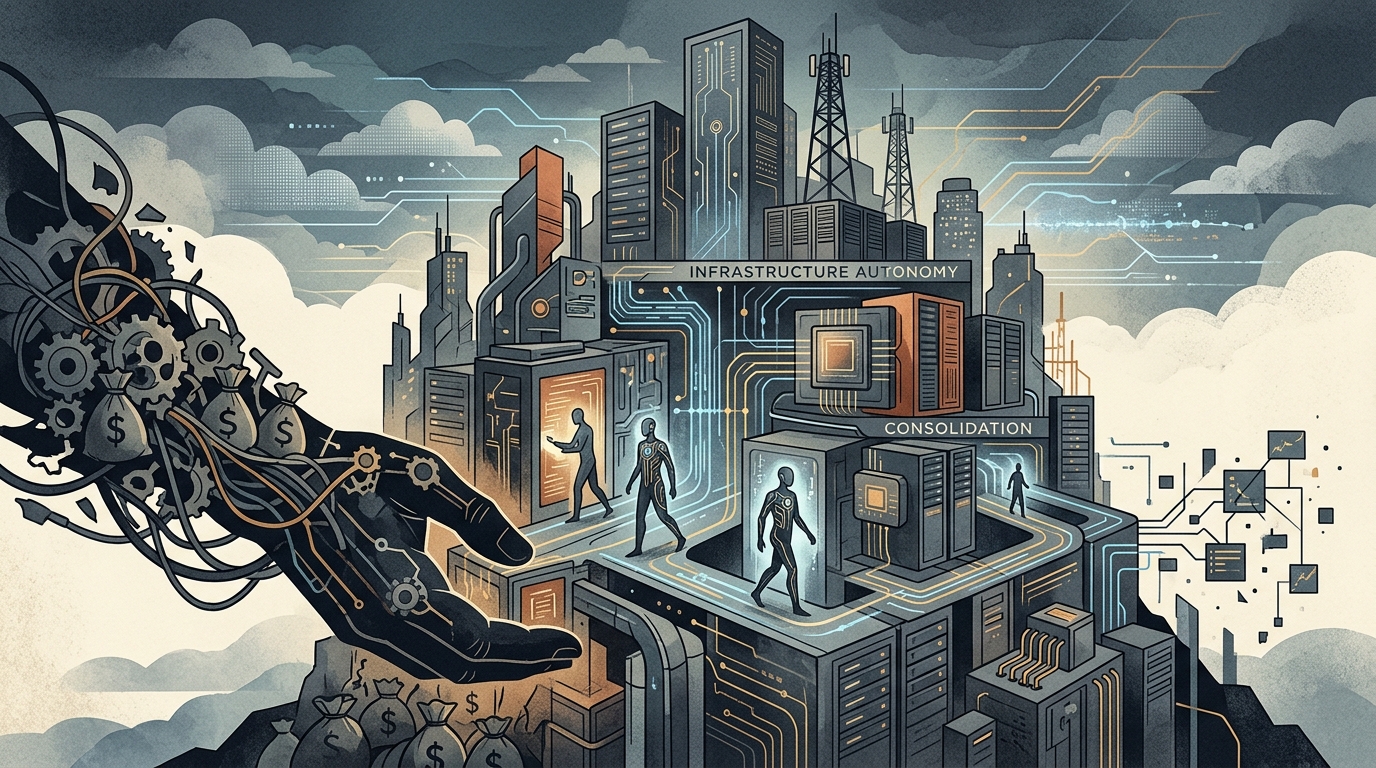
The artificial intelligence sector is transitioning from a period of experimental growth to one of industrial consolidation and heavy infrastructure investment. This shift is punctuated by Nvidia’s reported $12.9 billion acquisition of Hugging Face, the de facto repository for open-weight AI models. For Nvidia, which recently posted record quarterly revenue of $96.22 billion (a 106% year-on-year increase), this move serves as a strategic moat. By securing the 'GitHub of AI,' Nvidia aims to maintain influence over the developer ecosystem as rivals like OpenAI and Anthropic seek hardware independence.
The Rising Cost of the AI Race
Despite record-breaking revenues, the financial landscape for AI leaders is tightening. Nvidia faces production constraints that are expected to compress gross margins to 71%-72% in the fourth quarter. Simultaneously, the market is beginning to price in the massive capital requirements for data centers. According to JPMorgan Chase, hyperscalers such as Meta, Alphabet, and Microsoft are now paying a credit spread approximately 55 basis points higher than other corporate issuers, having raised over $220 billion since the start of the year.
"Automation appears to be shifting costs from payroll to infrastructure rather than reducing the company's overall financial burden."
Meta exemplifies this 'productivity paradox.' Despite significant layoffs, its personnel expenses rose 30% to over $30 billion in early 2026, driven by the competition for specialized talent. To manage costs, Meta is turning to robotics for data center maintenance, testing systems that could eventually automate up to 80% of daily workloads for certain technical roles.
Legal Clarity and the Greek Digital Transition
Market sentiment for Anthropic has improved following a federal court ruling that vacated government directives against the firm. Judge Rita Lin deemed the administration's blacklisting of the Claude AI maker as "arbitrary and capricious," clearing a significant hurdle as the company moves toward a planned IPO. In Europe, regulatory pressure is forcing established players like Apple to redesign their ecosystems; the company is making its iPhone tracking prompts "linguistically and visually neutral" to comply with German antitrust standards.
In Greece, the transition to a digital-first economy is materializing through mandatory e-invoicing. With the October 1, 2026, milestone approaching for businesses with income up to €1 million, local enterprises are navigating their own infrastructure costs. The explosive interest in data centers—with grid requests reaching up to 2.2 GW—foreshadows significant energy infrastructure challenges for the domestic market.