
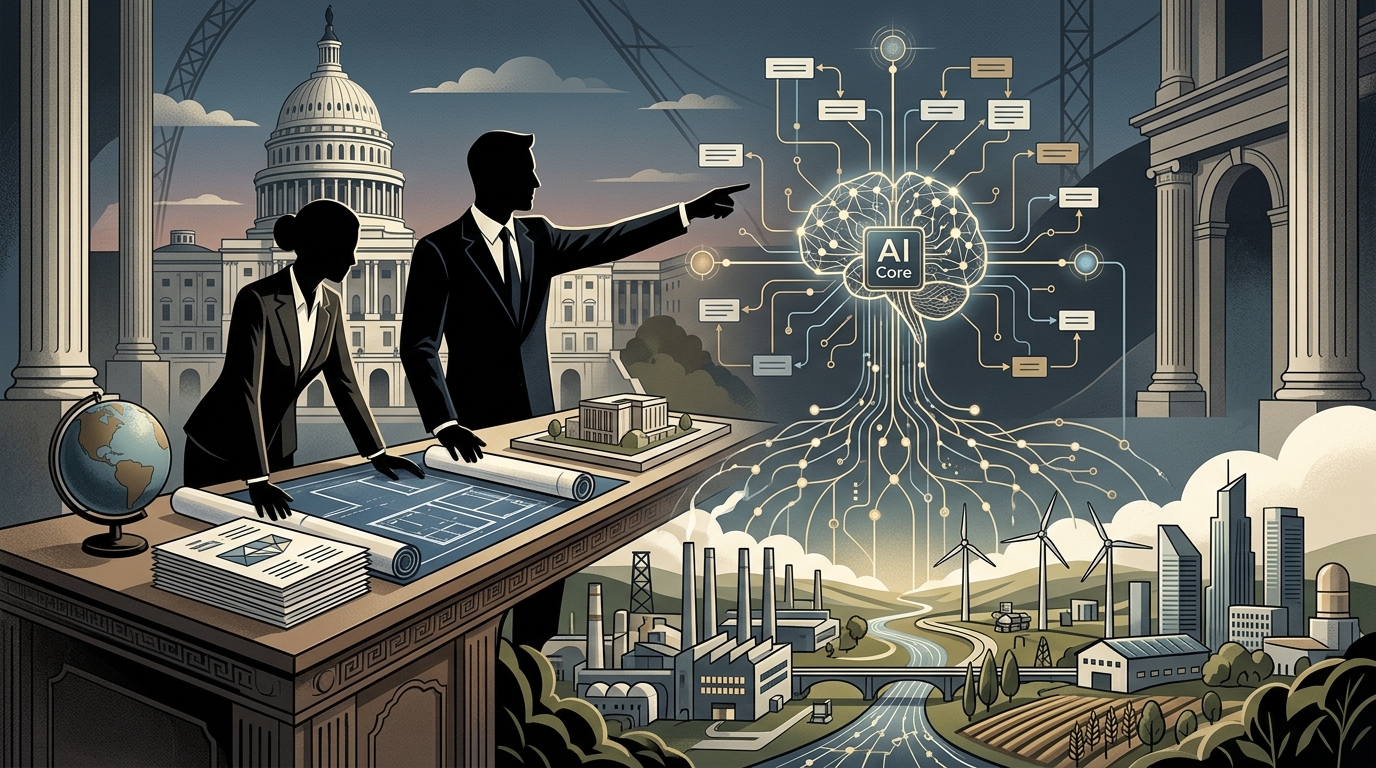
In the spirit of the ancient Athenian reforms that sought to align the structure of the state with the realities of its time, modern governance now faces a similar imperative. The emergence of Artificial Intelligence is not merely a technological milestone; it is a catalyst for a fundamental restructuring of national productive models. From the corridors of the GrowthFund in Athens to the shifting labor markets of North America, we are witnessing a transition from the theoretical to the practical, and from passive management to active strategic investment.
The Greek Paradigm: From Asset Management to Active Investment
The recent discussions at the 90th Thessaloniki International Fair (TIF) highlight a significant evolution in Greek economic policy. The "Invest Ahead" initiative, presented by the National Development Fund (NDF), signifies a departure from the traditional role of a silent asset manager. By identifying 30 specific, costed investment opportunities across 100 sectors, the state is effectively linking capital interest with concrete projects designed for the post-Recovery Fund era.
"This represents a strategic shift... moving from a traditional asset manager role to that of an active investor, effectively linking capital interest with concrete projects."
This institutional proactivity is complemented by the deployment of capital into high-tech sectors such as space technology and microchips through the Phaistos Investment Fund. The political significance of these moves extends beyond fiscal growth; it addresses the vital issue of human capital. Data indicates that 26% of new hires in these specialized firms involve "brain regain," suggesting that targeted investment in digital infrastructure can serve as a primary mechanism for reversing the exodus of scientific personnel.
The Labor Market Reversal: Experience over Credentials
Parallel to these institutional shifts, the American labor market provides a cautionary yet enlightening perspective on the value of education in the AI era. A notable reversal is occurring where job seekers without four-year degrees are recording their best performance in years, while graduates in high-demand fields face increasing difficulties. This trend, which began prior to the AI explosion, emphasizes "how fast you learn" over "how much you know."
As AI reshapes entry-level positions, the demand for practical experience has begun to eclipse traditional academic credentials. For policymakers, this suggests a dual challenge: while the supply of skilled tradespeople declines due to demographic shifts, the market is saturated with degree holders whose theoretical knowledge may not immediately translate to the AI-driven work environment. The successful governance of this transition will require frameworks that prioritize immediate professional integration and continuous practical learning.
Securing the Digital Commons
Finally, any reform of the productive model must be underpinned by robust security. The successful implementation of the first quantum-secure satellite link between Greece and Cyprus by Sparkle and Hellas Sat demonstrates that technological sovereignty is inextricably linked to data integrity. By addressing the "harvest now, decrypt later" threat, these initiatives provide the necessary safety net for commercial enterprises operating in remote or critical locations, solidifying the region's role as a hub for next-generation security technologies.