
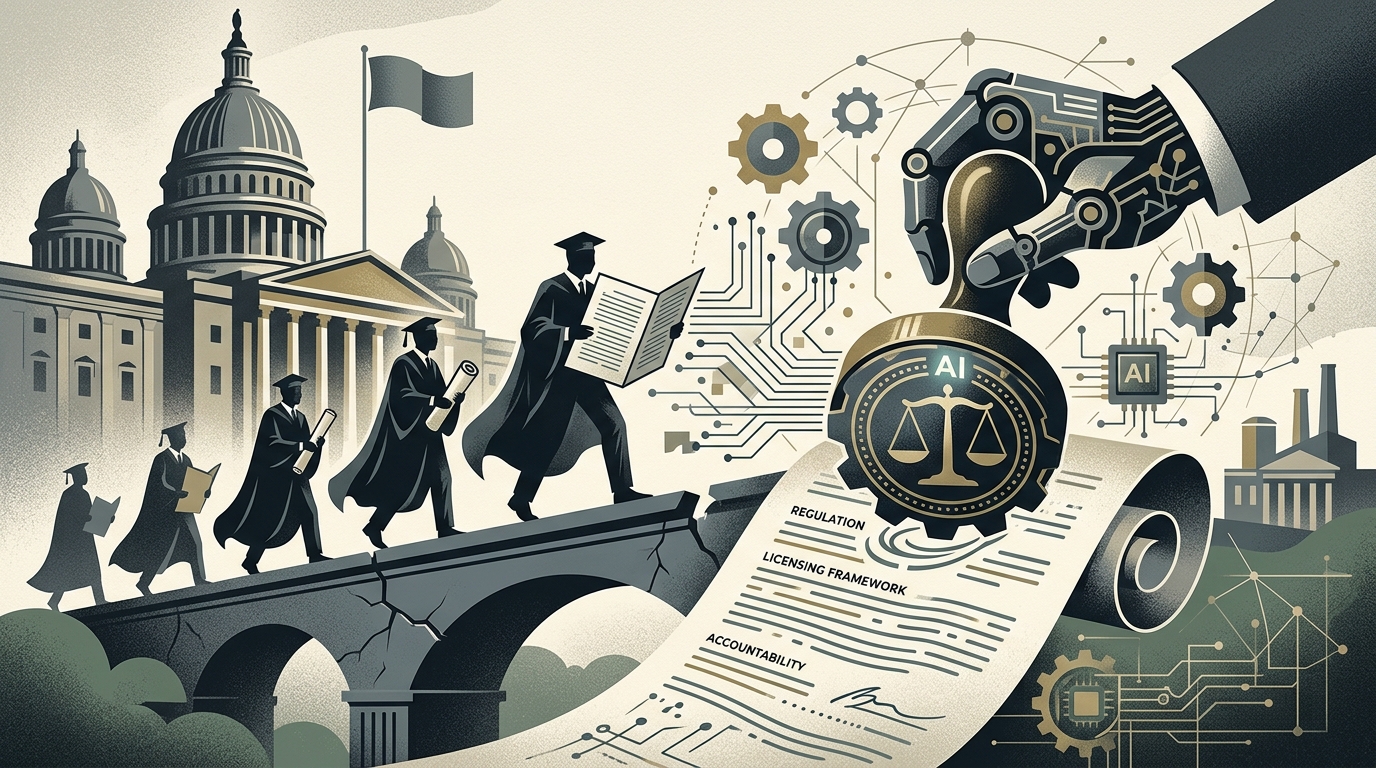
As the integration of artificial intelligence into the fabric of governance and enterprise accelerates, a fundamental question of political economy emerges: where does the 'license to operate' begin and end? In recent days, the discourse among industry leaders and researchers has shifted from the mere capabilities of models to the institutional frameworks required to hold them accountable. This debate reflects an ancient democratic tension between the freedom of the marketplace and the necessity of civic protection.
The Liability Model: From 'Kuleana' to Product Law
At the center of this policy debate is the concept of corporate responsibility. Salesforce CEO Marc Benioff has invoked the Hawaiian principle of kuleana, suggesting that the industry must transition from voluntary ethics to a regime of product liability similar to that of the automotive sector. This perspective argues that companies must be held responsible for their products before harm occurs, particularly as tech firms alone possess full visibility into their internal laboratories. Microsoft CEO Satya Nadella has echoed this sentiment, asserting that the industry’s license to operate depends on maintaining human control and submitting to external third-party auditors.
However, this vision of regulated accountability is not universal. Meta’s Mark Zuckerberg and Nvidia’s Jensen Huang argue that market forces—where users naturally reject misaligned or unsafe agents—provide a sufficient incentive for safety. This ideological divide highlights a critical challenge for policymakers: whether to rely on the self-correcting nature of the market or to impose a 'parent-child' alignment model, as suggested by philosopher Nick Bostrom, where AI acts as a direct, safe extension of human intent.
Technical Governance: The PAC-2026 Protocol
While industry leaders debate legal philosophy, new research has proposed a technical framework for establishing what is termed 'Publication Authority.' The PAC-2026 protocol (Publication-Accountability Calculus) introduces the SF-4 specification, which binds evidence, human authorization, and analysis into a single verifiable state. By enforcing six distinct obligations—including documentation of artifacts, full disclosure of measurements, and lifecycle continuity—the protocol ensures that failure in one area cannot be compensated by success in another.
"Only a fresh, 'all-pass' record can trigger the atomic transition required for a formal publication."
Such frameworks represent a move toward 'Semantic Freeze' in AI-assisted claims, providing a mechanism for institutional bodies to verify the internal coherence and safety of AI systems, even if they do not verify factual truth itself.
Geopolitics and Local Sovereignty
The political implications of these frameworks extend to national and local levels. French Finance Minister Roland Lescure has cautioned that calls for a global slowdown in AI development may serve the self-interest of dominant American firms seeking to entrench their lead. For Europe, the path to managing risks is seen not through deceleration, but through technological autonomy and leadership. Simultaneously, local governments like Minneapolis are asserting democratic control over AI deployment, considering mandates for human 'safety monitors' in autonomous vehicles to address both physical safety and the economic displacement of workers.
Ultimately, the governance of AI is moving toward a multifaceted structure: a blend of technical protocols like PAC-2026, corporate liability frameworks, and local ordinances that prioritize the rights of the citizen over the speed of the algorithm.