The global AI chessboard is undergoing a tectonic shift, one that is no longer measured solely in compute power or model parameters, but in human capital. According to the latest analysis from the Stanford AI Index, as reported by 36Kr, China has achieved something that seemed unthinkable a decade ago: complete autonomy in the production of top-tier AI scientists. The era when the best Chinese researchers had to pass through MIT, Stanford, or Carnegie Mellon to be considered "world-class" appears to be coming to a close.
The Rise of Domestic Talent Hubs
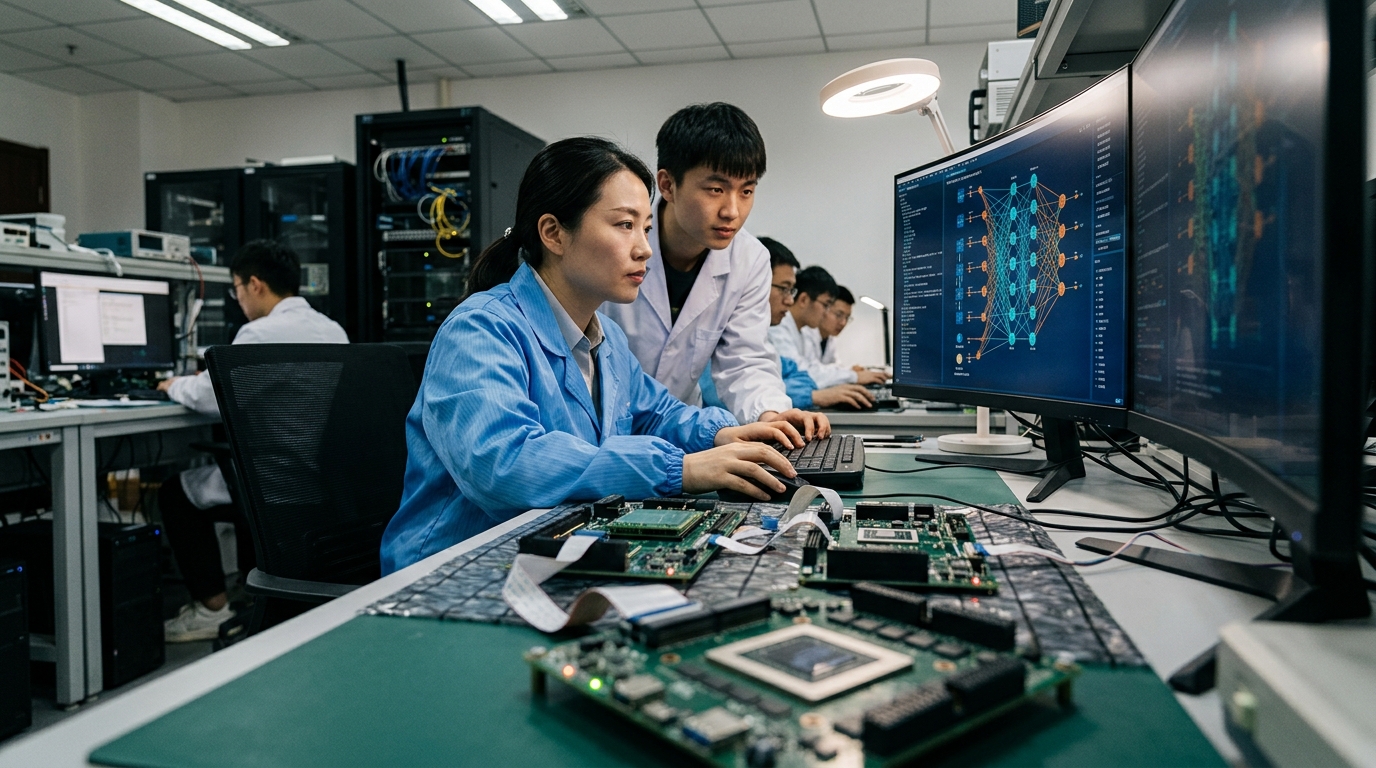
For years, the narrative surrounding Chinese technology focused on the country's ability to scale existing ideas. However, Stanford's data shows that China now produces a massive percentage of citations at top AI conferences (such as NeurIPS and ICML), featuring researchers who have completed their entire academic journey—from undergraduate to PhD—within Chinese borders. Universities like Tsinghua, Peking, and Shanghai Jiao Tong are no longer just feeders for Western institutions; they are autonomous poles of innovation.
This development is the result of a decade-long strategic investment. Beijing, recognizing that talent is the most critical resource in the "tech cold war," has funneled billions into programs like the "AI Innovation Action Plan for Institutions of Higher Education." The result is a generation of scientists who are intimately familiar with the most advanced neural network architectures without ever having set foot on American soil.
Reversing the Brain Drain
One of the report's most striking findings concerns talent retention. While historically the majority of Chinese PhDs studying in the US remained there to work at giants like Google and Meta, a dual trend is now emerging: first, more researchers are choosing to stay in China after completing their studies there, and second, there is an increasing number of "sea turtles" (haigui)—scientists returning home after a career in the West.
The reasons are both economic and geopolitical. China now offers research grants and access to data that often surpass their Western counterparts. Simultaneously, stricter US visa controls and the Department of Justice's "China Initiative"—despite being officially terminated—created a climate of suspicion that pushed many top scientists to seek security and recognition within their own borders.
Geopolitical and Economic Implications
China's ability to independently train "top 0.1%" level talent effectively nullifies many Western efforts to curb Chinese growth through hardware export controls (chips). While chips are necessary, the ability to optimize algorithms and invent new training methods with limited resources is what will determine the long-term winner. Chinese researchers have become exceptionally skilled at "doing more with less," developing techniques that reduce dependence on Nvidia's GPUs.
- Autonomy: China no longer depends on the US educational system to reproduce its scientific elite.
- Innovation: Domestic training leads to different approaches in problem-solving, enriching the global AI ecosystem.
- Competition: American companies are losing privileged access to a talent pool that traditionally fueled Silicon Valley.
In conclusion, the Stanford report serves as a wake-up call for the West. AI hegemony is no longer guaranteed through control of the supply chain. China has built a "knowledge production engine" that is now running at full throttle, and the results of this autonomy will define the global technological balance for decades to come.