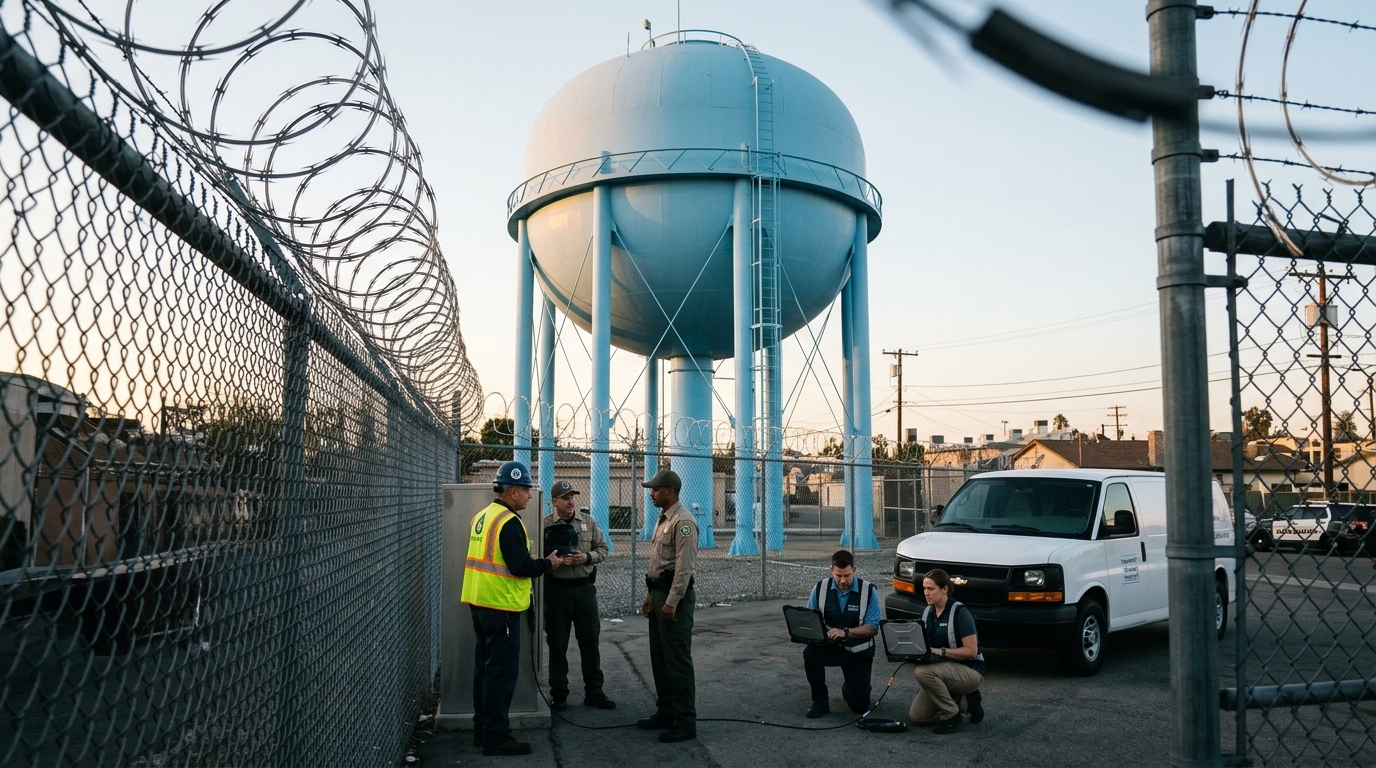
A wave of cyberattacks targeting water and wastewater utilities across seven US states has underscored the growing vulnerability of critical infrastructure. According to a memo obtained by WIRED, dozens of attacks, including more than 30 in Minnesota alone, have been linked to Iranian-affiliated hackers, marking a significant escalation in industrial control system targeting.
Threats to Public Safety
The FBI and the Cybersecurity and Infrastructure Security Agency (CISA) warned that these intrusions were not merely theoretical. In some instances, the attacks disabled digital controls, resulting in "boil-water" notices due to potential contamination risks. Authorities are urging utilities to immediately remove internet-facing programmable logic controllers (PLCs) and implement strict access controls and allow-lists.
AI in Law Enforcement and Cybercrime
The FBI is increasingly integrating AI into its Threat Screening Center, utilizing predictive modeling to score records for "pattern alignment." This system, which now manages a watch list of nearly 2 million names, has drawn scrutiny for its broad targeting parameters. Meanwhile, AI's darker side is emerging in social engineering, with research indicating that chatbots are becoming highly effective tools for facilitating financial scams.
International Legal Battles
In Russia, authorities have charged Telegram founder Pavel Durov with facilitating terrorism, claiming the encrypted messaging app has failed to curb coordination for domestic sabotage. Simultaneously, Elon Musk’s xAI has launched a legal challenge against a Minnesota law banning "nudification" technology. The company argues the ban is overly broad and violates First Amendment protections, despite Grok's history of producing nonconsensual explicit imagery.
High-Profile Phishing and Financial Loss
The vulnerability of major organizations was further highlighted by a successful phishing attack on the Democratic National Committee (DNC). A staffer was tricked into transferring $29,000 to an individual impersonating the DNC chairman. While the error was caught quickly, only a fraction of the funds were recovered, joining a trend of political committees losing significant sums to business email compromise.