Alex Bores, the former Palantir engineer turned New York State Assemblymember, is launching a new initiative in the debate over artificial intelligence regulation. On Tuesday, Bores introduced "Who Decides," a nonprofit organization aimed at unifying advocacy groups and ensuring the American public has a say in how AI develops.
The Cycle's Most Expensive House Primary
The launch follows Bores’ defeat in a high-stakes congressional primary, which became the most expensive House primary of the cycle with over $40 million in outside spending. Much of that capital targeted Bores’ record on AI safety, specifically his co-authorship of New York’s RAISE Act. While the super PAC "Leading the Future"—backed in part by OpenAI President Greg Brockman—spent over $7.6 million to oppose him, the Anthropic-linked "Public First Action" spent $20 million in his corner.
Bores observes that we are in a unique moment where the messaging around AI is still in a "gray area." "It’s not even just the answers that are up for grabs, but even the questions that are being asked are up for grabs," he told Fortune.
A Divide Between Public Will and Corporate Lobbying
Bores highlights a disconnect between American voters and the tech industry. A February–March 2026 Annenberg Public Policy Center survey found that 65% of Americans believe the government has done "too little" to regulate AI. This sentiment includes 77% of Democrats, 72% of independents, and 53% of Republicans.
Despite this, industry leaders have shown inconsistent stances. OpenAI CEO Sam Altman, who initially testified in favor of regulation in May 2023, reversed his position by May 2025, telling the Senate Commerce Committee that requiring government approval would be "disastrous." Bores identifies the primary opposition as a "small subset of Silicon Valley" that advocates for no regulation whatsoever.
Federal Preemption and the Path Forward
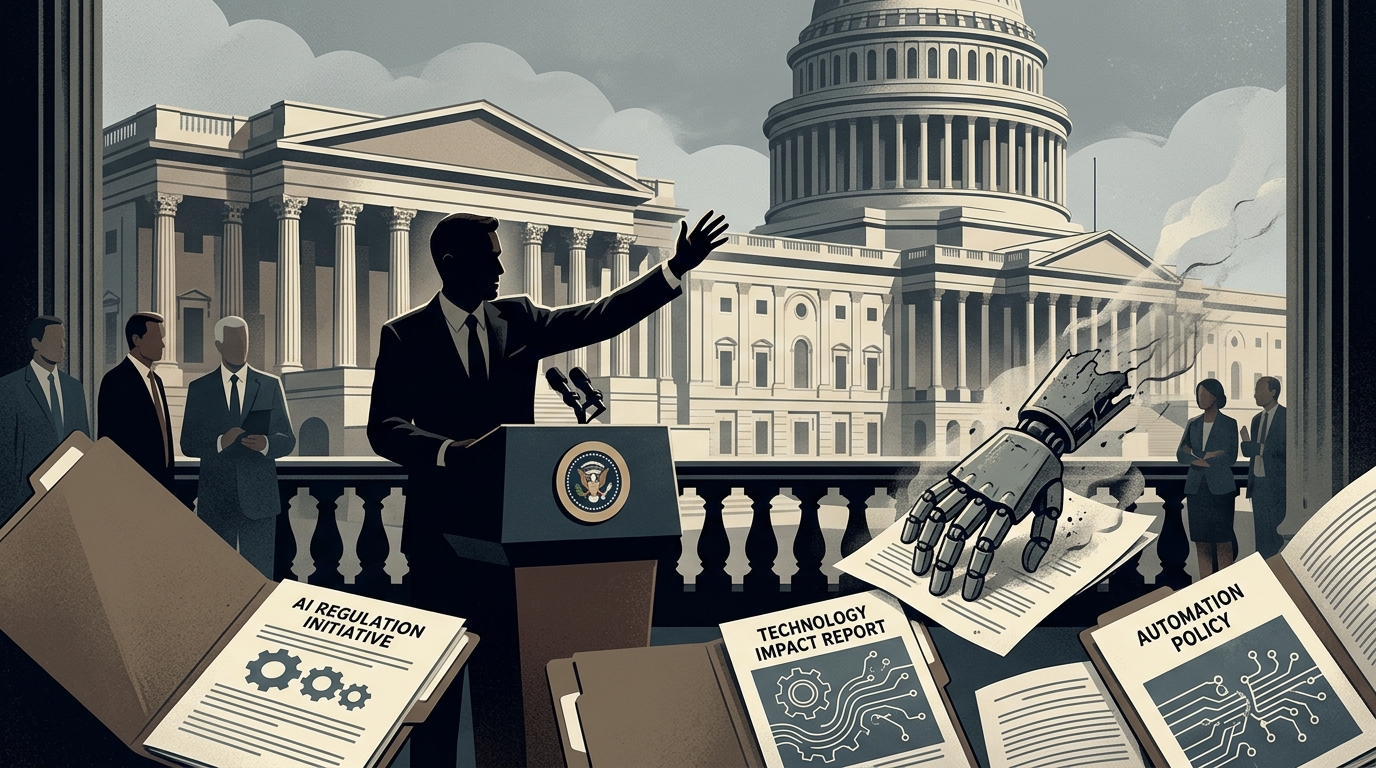
The nonprofit leader is also sounding the alarm on a new federal AI safety bill co-sponsored by Senators Ted Cruz, Amy Klobuchar, and John Thune. Bores suggests the bill may be a strategic move to strip individual states of their power to regulate AI, essentially wrapping a previous attempt to bar state enforcement in federal packaging. This follows a 2025 attempt by Cruz to bar states from enforcing AI laws for a decade.
With $10 million already raised and a target of $30 million by 2028, "Who Decides" plans to target 11 battleground states. Bores aims to prevent the Democratic party from falling into a "circular firing squad" of niche interests, instead focusing on a shared agenda to ensure technology serves the public interest rather than just its financiers.