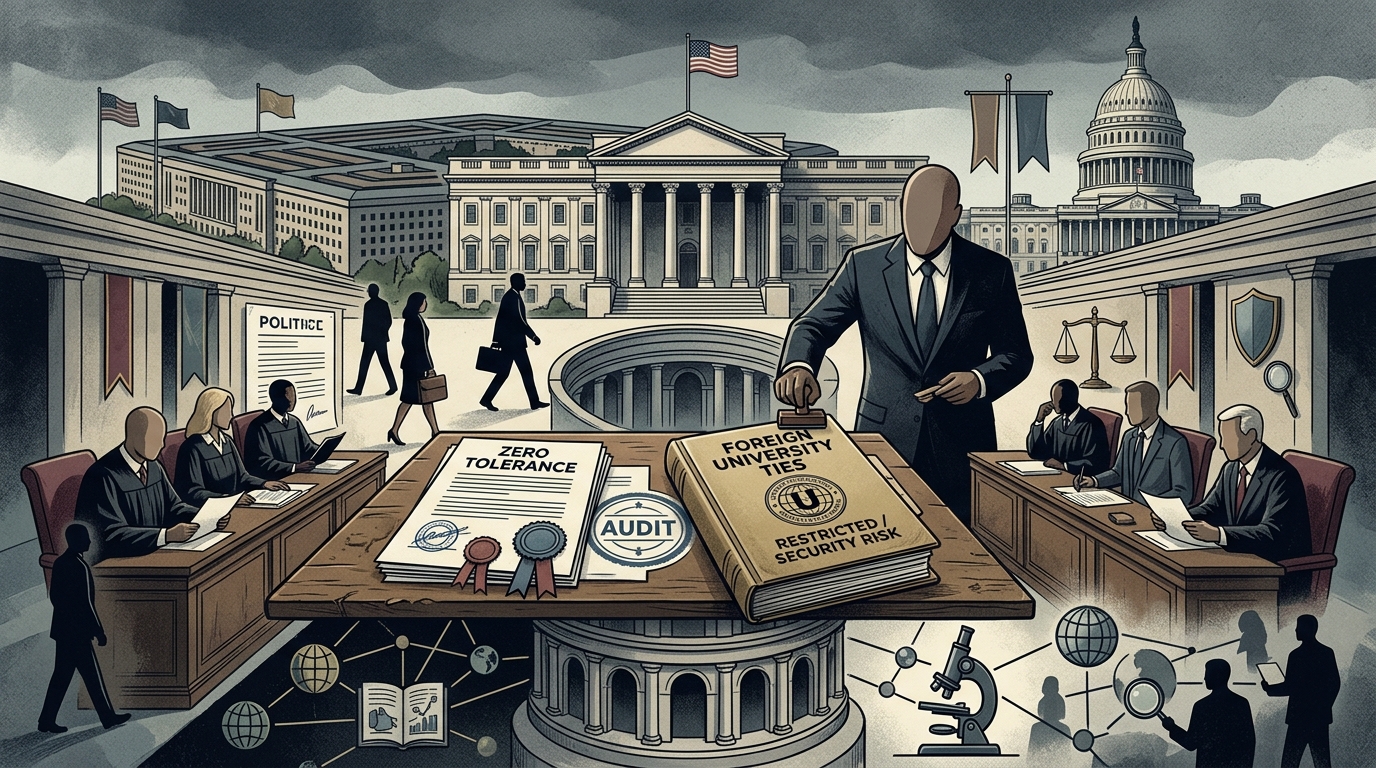
The U.S. Department of Defense has ordered 30 American universities to audit their partnerships with foreign institutions, primarily Chinese universities and military training centers. The move reflects the Trump administration's intensifying scrutiny of China’s expanding global influence.
A Two-Week Ultimatum
Schools must complete their reviews and terminate any arrangements deemed problematic within the next two weeks or face the loss of federal funding. The Pentagon stated on Monday that the objective is to safeguard taxpayer-funded research from theft and exploitation.
“The Department of War has zero tolerance for academic partnerships that compromise our national security,” said Emil Michael, the Pentagon’s chief technology officer. While the official release did not name the specific institutions, a U.S. official speaking on condition of anonymity identified Harvard University, the Massachusetts Institute of Technology (MIT), and Johns Hopkins University among those targeted.
Academic Concerns and Liability
Sarah Spreitzer, vice president at the American Council on Education (ACE), raised concerns that the mandate implies wrongdoing by the schools without providing evidence. She noted that most member institutions had already distanced themselves from such partnerships in recent years and expressed worry that schools might be held liable for agreements that predated the government's restricted lists.
Broader Geopolitical Context
The audit follows the release of an updated list of 130 foreign institutions—mostly Chinese, but including several from Iran and Russia—accused of activities that increase the risk of misappropriating U.S. government-funded research. This action coincides with broader administration concerns regarding Chinese investment in infrastructure, telecommunications, and ports in the Americas.
Additionally, the Justice Department is investigating whether Harvard University allows Chinese donors to establish scholarships that exclude American students. A spokesperson for the Chinese embassy responded by opposing the “politicization” of academic exchanges, urging the U.S. to move past a “Cold War mentality.”