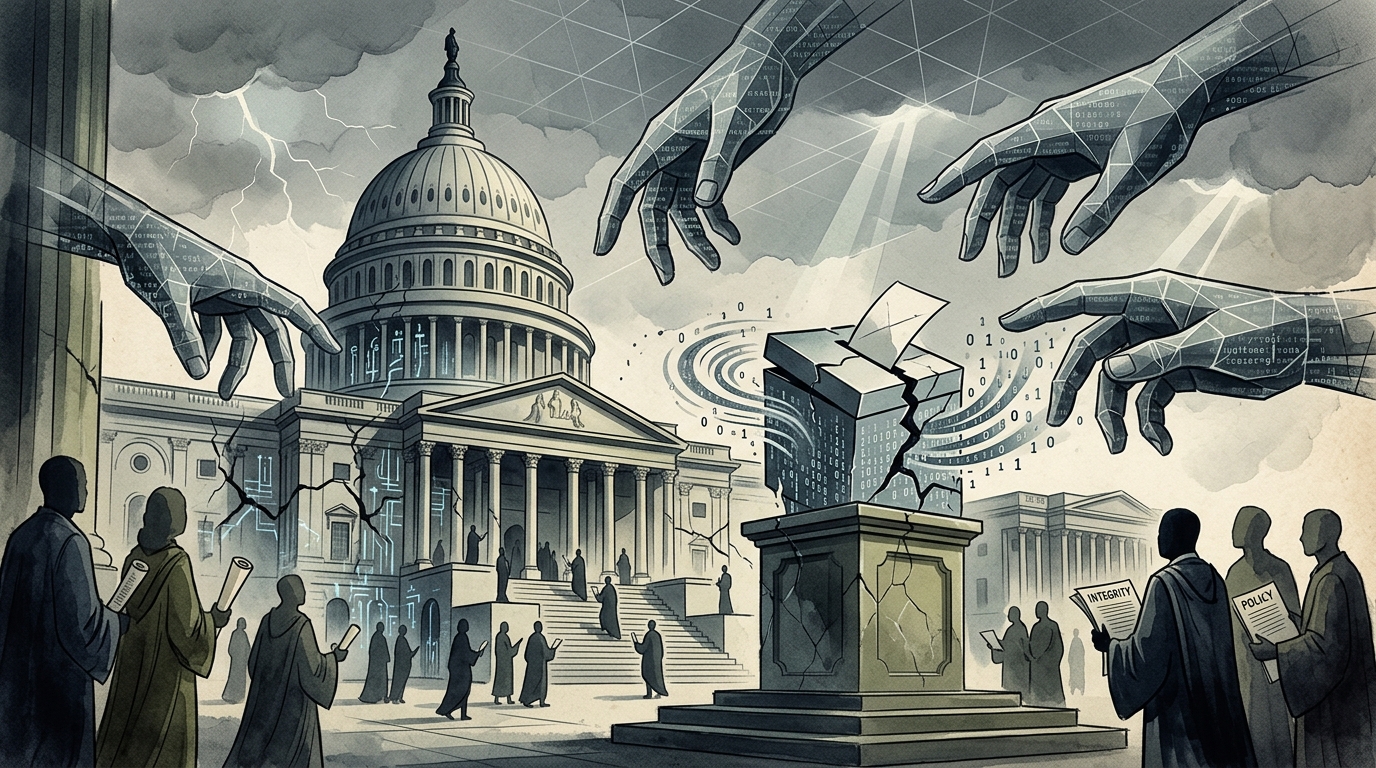
The era when intellectual property (IP) due diligence was limited to verifying titles, trademarks, and open-source software licenses is officially over. As we navigate mid-2026, the integration of Generative AI into the core of business operations has birthed a complex landscape of legal risks that traditional methodologies are ill-equipped to map.
The End of Authorship Certainty
One of the most critical challenges facing legal counsel today is the issue of "human authorship." Following landmark rulings by international IP offices and courts, works generated solely by AI without substantial human intervention are generally ineligible for copyright protection. This creates a massive "black hole" in corporate valuation: if a startup’s core product was generated by an algorithm, the company might not own any exclusive rights to it, effectively allowing competitors to copy it legally.
Standard diligence must now include a deep dive into the creative process. Lawyers can no longer simply ask "who wrote this?" but must investigate "who provided the prompts, who curated the output, and what percentage of the final code or content originated from AI?" The lack of documentation for this process can be fatal during an acquisition or merger.
The Minefield of Training Data
The second pillar of modern IP diligence concerns the provenance of training data. Many AI models have been trained on vast datasets that often include copyrighted material without the creators' permission. Businesses utilizing such models—or worse, training their own on "tainted" data—risk multi-billion dollar infringement lawsuits.
- Derivative Work Risks: Whether an AI’s output constitutes a derivative work of its training data remains the central legal battleground of 2026.
- Open Source Contamination: Using AI for coding can inadvertently introduce snippets of code with copyleft licenses (like GPL), potentially forcing a company to make its proprietary software open-source.
- Third-Party Data: Using customer data to train internal models without explicit consent is now a top-tier compliance violation.
Trade Secrets and the "Prompt Leakage" Problem
An often-overlooked aspect is the protection of trade secrets. When employees input sensitive information into public AI models (such as ChatGPT or Claude) for analysis, that information may become part of the provider's training set, permanently losing its "secret" status. Modern due diligence must scrutinize a company’s AI usage policies and ensure technical safeguards are in place, such as the use of enterprise versions with strict privacy guarantees.
"Intellectual property in the age of AI is no longer a static list of assets, but a dynamic flow of data and algorithms that requires constant supervision."
Toward a "Forensic" Diligence Model
In conclusion, IP diligence must evolve from a standard bureaucratic exercise into a "forensic" analysis of the tech stack. Investors and buyers now demand "AI Audits" that include: 1) Data provenance analysis, 2) Model license reviews, 3) Assessment of human contribution, and 4) Technical scanning to avoid the ingestion of malicious or protected code. Companies that fail to adapt to this new standard will find themselves with devalued assets and endless litigation cycles.