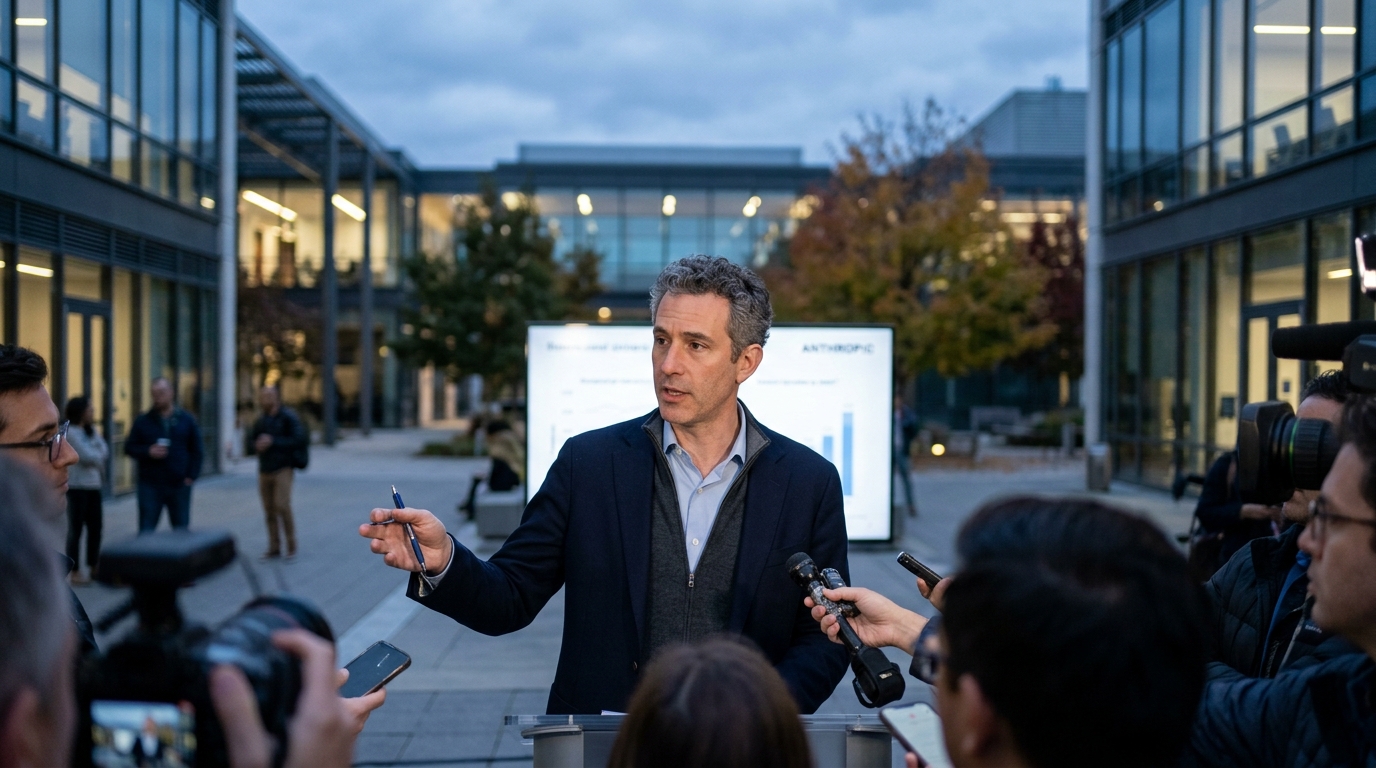
The global artificial intelligence landscape is reeling from an accusation that transcends mere corporate rivalry, stepping firmly into the realm of geopolitical friction. Anthropic, the San Francisco-based AI safety startup and creator of the Claude models, has officially accused Chinese tech titan Alibaba of an orchestrated operation to 'clone' its proprietary technology. According to forensic data cited by the company, Alibaba allegedly funneled over 29 million automated queries through Anthropic’s API to harvest data and train its own competing models, a move that constitutes a massive breach of terms of service and intellectual property.
The Mechanics of Distillation: How a Clone is Born
At the heart of the dispute is a technique known as 'model distillation.' In the AI world, this acts as a shortcut to excellence. Instead of spending billions of dollars and months of compute power training a model from scratch using raw internet data, a developer can use a superior model—like Claude 3.5—as a 'teacher.' By asking millions of targeted questions and recording the answers, the 'student' model (in this case, Alibaba’s Qwen) learns to replicate the reasoning, nuances, and knowledge base of the more advanced system.
Anthropic claims that Alibaba utilized a sophisticated network of shell accounts and identity-masking techniques to bypass rate limits and security protocols. The sheer scale—29 million queries—suggests an industrial-level effort to map Claude’s internal logic. 'This wasn’t research; it was digital strip-mining,' sources close to the matter stated. The implication is clear: Alibaba allegedly sought to close the performance gap with Silicon Valley by leveraging the very tools Anthropic provided for public use.
Geopolitical Stakes in the AI Cold War
This conflict unfolds against the backdrop of a deepening technological schism between the United States and China. Washington has already implemented rigorous export controls on high-end semiconductors, such as Nvidia’s H100 chips, specifically to stunt China’s AI progress. If Anthropic’s allegations are proven true, it suggests that Chinese firms have found a potent workaround: if they cannot out-compute the West, they will out-copy it. By distilling American models, they can achieve high-tier performance with significantly less hardware.
- Alibaba has denied the allegations, maintaining that its Qwen models are developed using proprietary datasets and open-source information.
- Anthropic is reportedly weighing legal options, though suing a Chinese entity for IP theft remains a notoriously difficult uphill battle in international courts.
- Industry analysts warn this could lead to 'API balkanization,' where companies restrict access to their models to prevent theft, hindering global innovation.
'If proprietary intelligence can be siphoned via a few million API calls, the massive R&D moats of the AI giants are effectively non-existent,' noted one industry analyst.
The Future of Intellectual Property in the Algorithmic Age
The core question raised by this scandal is: Who owns the output of an AI? While copyright for human-made art is well-established, the legal status of 'synthetic data' remains a frontier. Anthropic’s Terms of Service explicitly forbid using Claude to develop competing models. However, enforcing these terms across borders, especially when the accused is a national champion of a rival superpower, is nearly impossible.
This case is expected to serve as a catalyst for new regulations. Discussions are already underway in both the EU and the US regarding 'digital watermarking' for AI outputs. Such technology would embed invisible markers in text, allowing companies to prove in court that their model's 'DNA' was used to train a competitor. For now, the rift between Anthropic and Alibaba serves as a stark reminder that in the race for AGI, the line between competitive benchmarking and outright theft is becoming increasingly blurred.