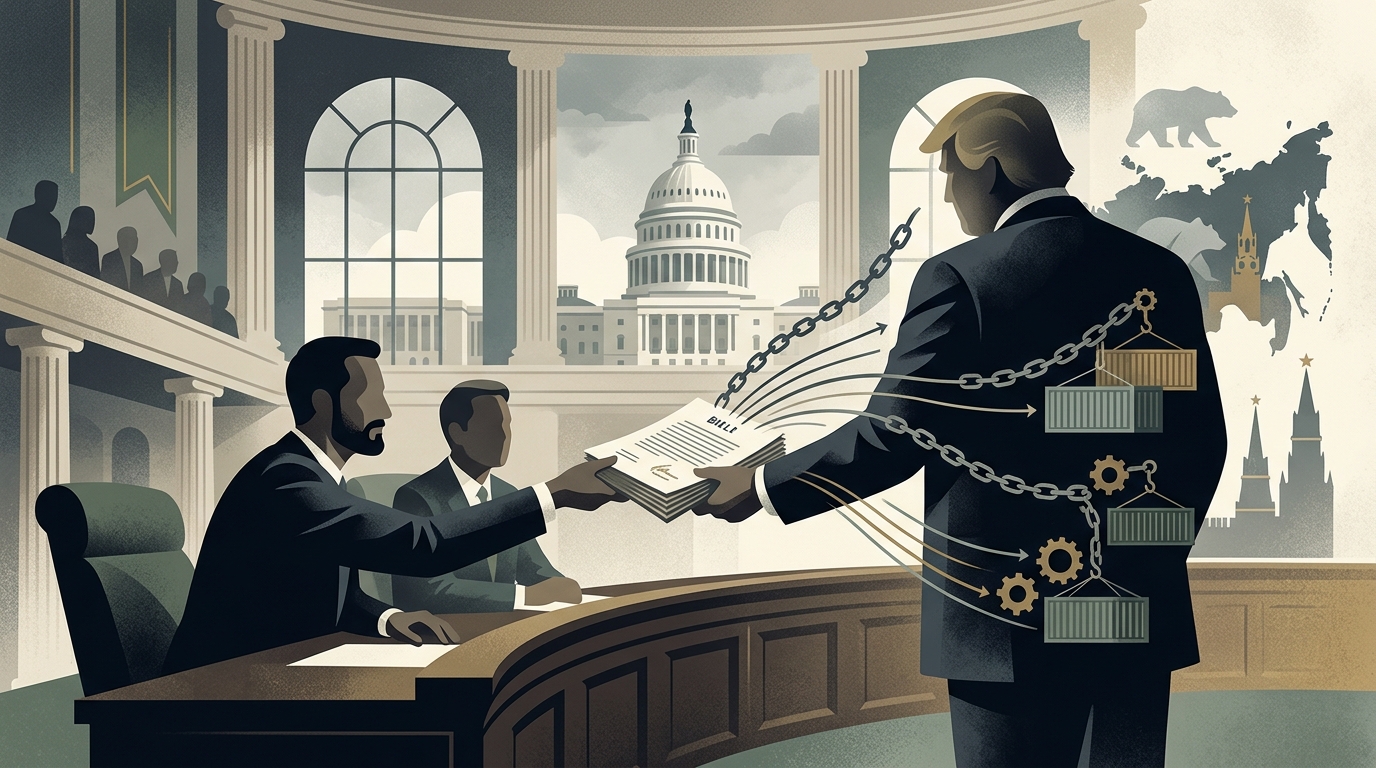
In a move backed by broad bipartisan support, the U.S. Senate passed the "Lindsey O. Graham Sanctioning Russia Act of 2026," granting President Donald Trump the power to impose tariffs of up to 100% on the nation's top trading partners. The 86-to-11 vote on Friday sets the stage for House approval expected next month.
Targeting Energy and Executive Discretion
The bill sanctions Russian President Vladimir Putin, senior Kremlin officials, and the country's energy sector to cripple the economy amid the ongoing war in Ukraine. Crucially, it authorizes the President to levy fresh tariffs on the top five importers of Russian oil and gas. Potential targets include U.S. allies such as the European Union, South Korea, and Japan, alongside major trading partners China and India.
While the President can issue waivers if deemed in the "national interest," critics warn of the economic fallout. Senator Rand Paul (R-Ky.) argued that the move would "deliberately make American families poorer" by increasing taxes on imported goods. Senator Raphael Warnock (D-Ga.) also voiced concerns, stating, "We should not have to choose between putting a check on Putin’s aggression and putting a check on this president’s tariffs regime."
Legal Maneuvers and Strategic Leverage
This legislative push follows a February Supreme Court ruling that restricted the President's ability to use the International Emergency Economic Powers Act for trade wars. Unlike previous attempts, the Russia sanctions bill provides more open-ended authority, likely shielding it from similar legal challenges.
Scholars from the Cato Institute have criticized the bill's ambiguity, noting it fails to specify data sources for identifying top importers or the duration of the tariffs. They warn that Trump could use this "unchecked authority" as leverage in unrelated trade disputes, such as negotiations with India over farm exports or digital taxes. Furthermore, the prospect of 100% tariffs on China threatens to destabilize the fragile trade truce maintained by the world's two largest economies over the past year.