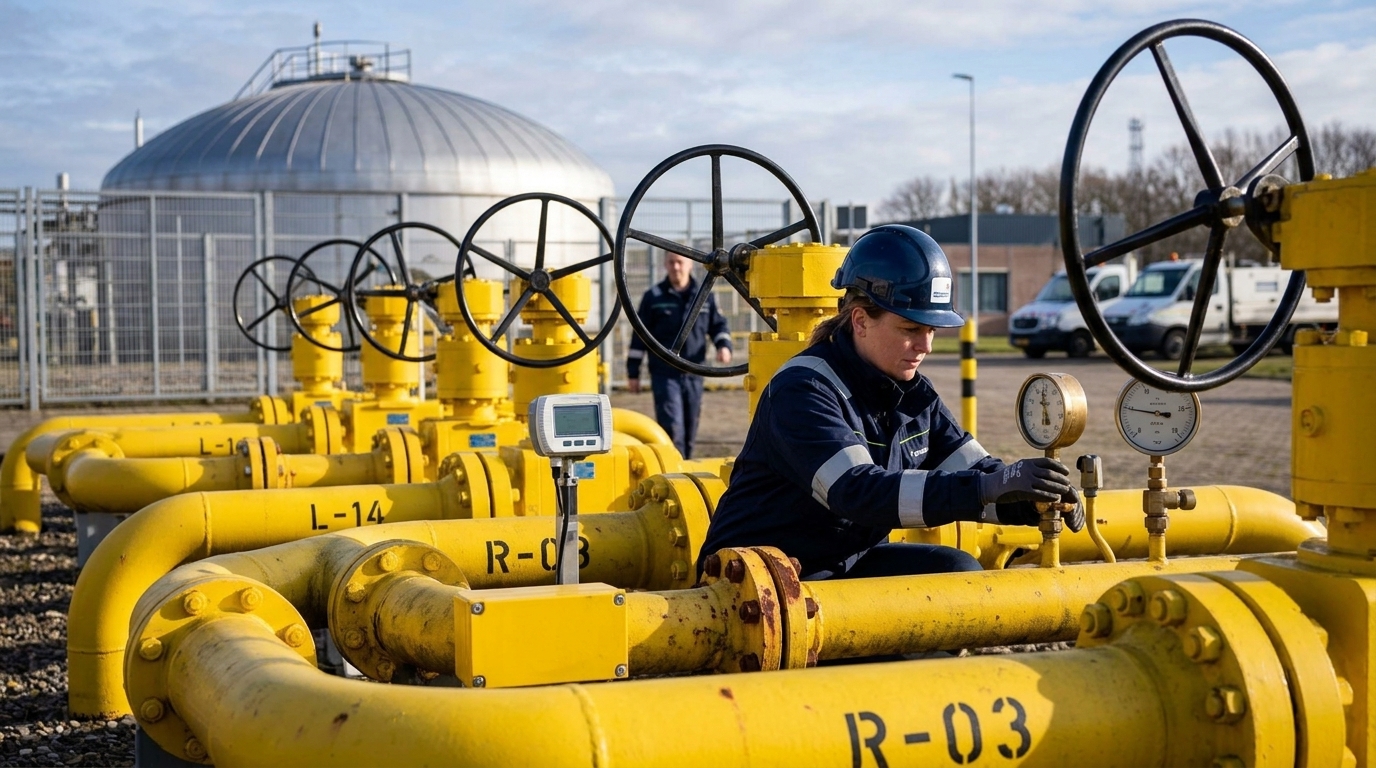
The Dutch government has committed nearly €1 billion this year to support the filling of natural gas storage facilities, a cost it claims highlights fundamental flaws in current European Union mandates. According to Bloomberg, The Hague is calling for the abolition of mandatory EU storage targets, arguing that the financial burden is unfairly distributed.
The Capacity vs. Consumption Dilemma
The Netherlands’ core argument rests on the fact that EU obligations are largely tied to a country's total storage capacity rather than its actual domestic consumption. Because the Netherlands maintains large-scale facilities that serve neighboring markets while its own gas usage has declined, it finds itself subsidizing the energy security of its neighbors.
Market Disincentives and Target Adjustments
Economic conditions have further complicated storage efforts. Gasunie has noted that summer storage is currently commercially unviable because gas purchased now is more expensive than prices projected for the winter season. This price disparity removes the financial incentive for private market participants to build up reserves.
In response to these pressures, the Netherlands has already utilized EU flexibility to lower its storage target from 74% to 64% (approximately 93 TWh). The government estimates this volume is sufficient for a typical winter, given that the average withdrawal over the last five years was roughly 70 TWh. Currently, Dutch storage levels stand at just over 56%, while European facilities are about 70% full, trailing the seasonal average of 86%.
A Proposed New Model
The Dutch proposal suggests shifting responsibility toward market players. One option includes requiring suppliers serving protected consumers, such as households, to maintain their own reserves. Additionally, The Hague is considering a massive expansion of its strategic reserve—from 5 TWh to as much as 72 TWh. This reserve would be strictly dedicated to severe supply disruptions rather than price stabilization. While EU storage targets remain legally binding through 2027, the Dutch position signals a push for a significant redesign of the bloc's energy security strategy.