

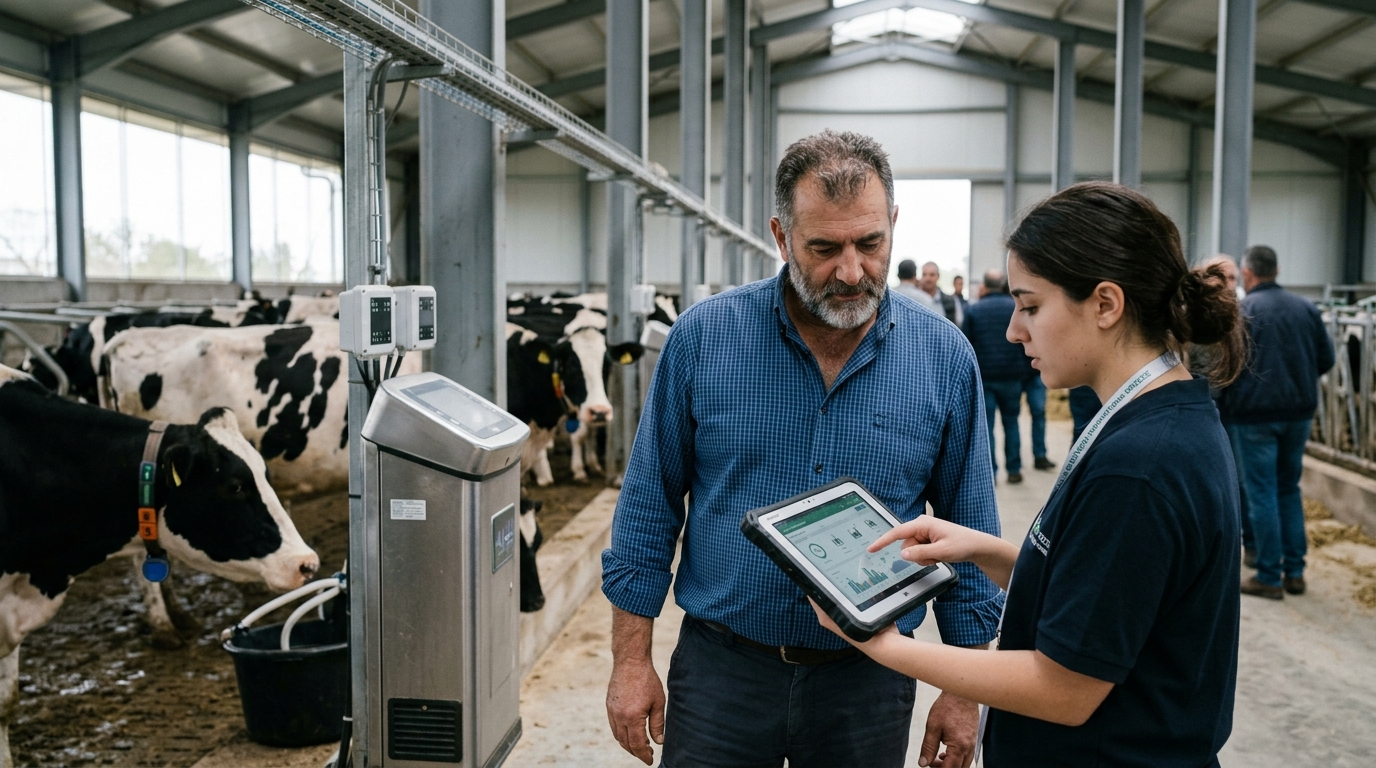
In the heart of Thessaloniki, at the HELEXPO premises, the 14th Zootechnia is not merely a trade fair; it is ground zero for the digital transformation of livestock farming in Southeast Europe. In an era where the climate crisis, rising production costs, and labor shortages are squeezing the primary sector, technology is emerging as the "deus ex machina." This year's event focuses on "Smart Farming," integrating Artificial Intelligence (AI) and Internet of Things (IoT) tools that, until a few years ago, belonged to the realm of science fiction.
Artificial Intelligence in the Service of Animal Production
The entry of AI into the barn is radically changing how farmers interact with their livestock. Through sensors placed on animals or within their living environment, real-time data is collected on temperature, movement, nutrition, and rumination activity. AI systems analyze this data to predict diseases before the first symptoms even appear, allowing for early intervention and a drastic reduction in antibiotic use.
Furthermore, digital livestock farming enables precise nutritional management. Automated feeding systems, guided by algorithms, adjust rations based on the needs of each individual animal, optimizing milk or meat production while simultaneously reducing resource waste. This "precision cruising" in livestock farming not only improves profitability but also promotes animal welfare, as living conditions are monitored and adjusted automatically.
Sustainability and the Circular Economy
One of the central themes of the 14th Zootechnia is the green transition. Livestock farming is often criticized for its environmental footprint, but technology offers solutions for turning waste into resources. The exhibition showcases innovative wastewater management and biogas production systems that allow units to become energy autonomous. Digital monitoring of greenhouse gas emissions enables businesses to comply with strict European standards, ensuring access to subsidies and new markets.
The use of drones for monitoring extensive farming and the digital mapping of pastures are two other applications gaining ground. In this way, overgrazing is avoided and biodiversity is protected, proving that AI can act as an ally to nature rather than its enemy.
The Challenge of Adoption and the Future
Despite the obvious benefits, the transition to digital livestock farming in Greece faces obstacles. High initial investment costs and the need for new skills on the part of producers are the main challenges. At Zootechnia, academic institutions and research centers, such as ELGO-DIMITRA, present training programs and financial tools aimed at bridging this gap.
The conclusion from this year's event is clear: the farmer of the future will not only hold a crook but also a tablet. The ability to analyze data is becoming as important as the empirical knowledge of generations. Thessaloniki, through Zootechnia, sends a message of optimism that the Greek primary sector can play a leading role in the new digital age, provided it invests in knowledge and innovation.





