

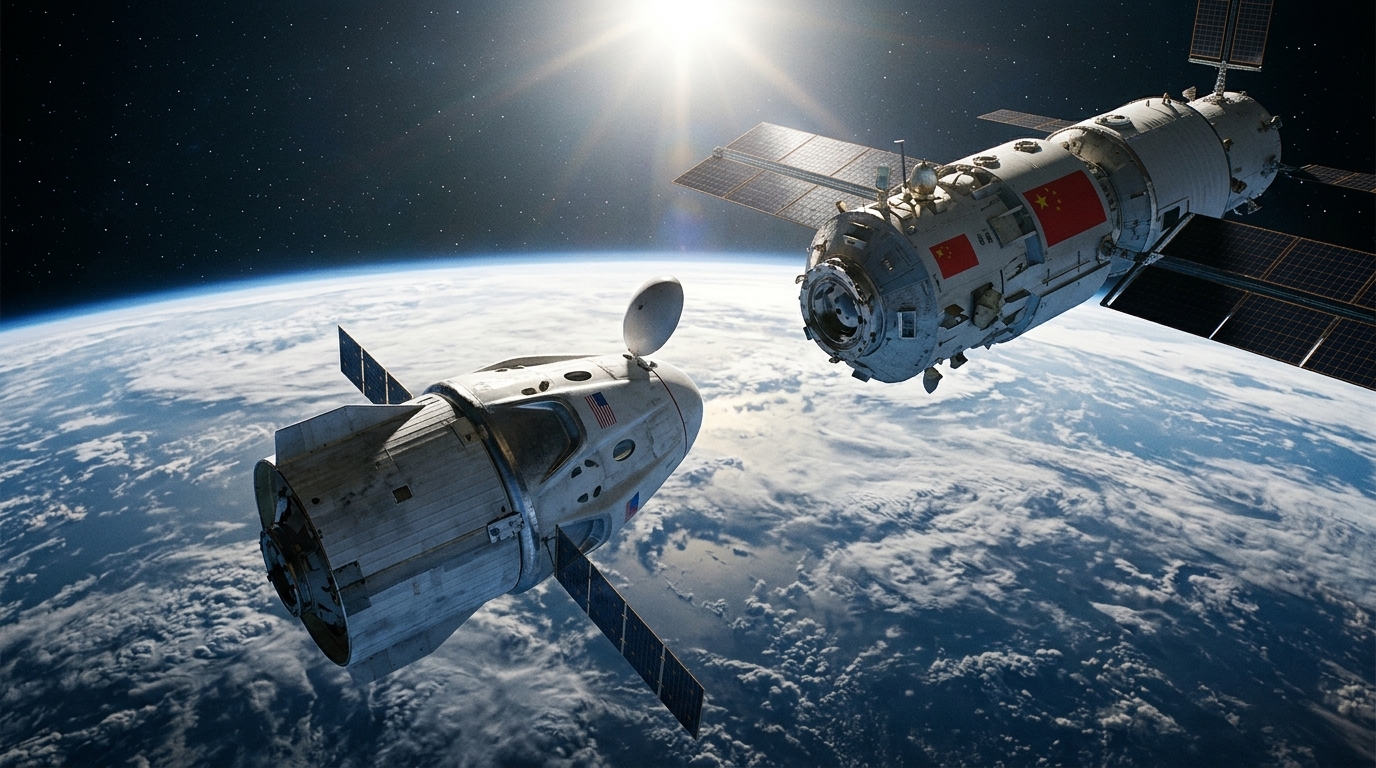
The landscape of military operations in space is evolving at a rapid pace, as Washington and Beijing prepare for the possibility of a conflict extending far beyond our planet. Satellites, which for decades served as passive tools for communication and navigation, are now being treated by armed forces as active weapon systems capable of offensive actions.
Hunter-Satellites and 'Dogfight' Maneuvers
According to research based on tracking data, last June a Chinese unmanned spacecraft released a small satellite hundreds of miles above Earth. This object performed a loop around another Chinese satellite before returning to the parent craft, a maneuver that drew intense scrutiny from US analysts. Simultaneously, the United States maintains its own highly classified unmanned space plane conducting similar tests.
Chinese research is focusing on technologies including:
- Satellites designed to chase and capture other craft using nets.
- Autonomous maneuver calculation systems to save fuel during pursuits.
- In-orbit refueling capabilities, allowing a craft to remain a 'hunter' for longer periods.
Strategic Messaging and the Five Eyes Alliance
In September of last year, the US and Britain conducted their first joint military operation in space. A US military satellite moved into close proximity with a British one just as the Chinese Shiyan 12-01 satellite passed below them. Experts believe this action was a 'strategic message' to Beijing, demonstrating the capabilities and unity of the allies.
The Threat of Paralysis
Modern military dependence on space is total. As noted by Everett Dolman, a former professor at the Air War College, any disruption of US space capabilities would 'paralyze' ground forces, affecting everything from surveillance to missile defense. General Stephen Whiting of U.S. Space Command warns that adversaries would likely attempt to strike space assets in the early stages of a conflict, necessitating the development of orbital interceptors and ground-based electromagnetic weapons, such as the one from L3Harris Technologies recently put into service.





