

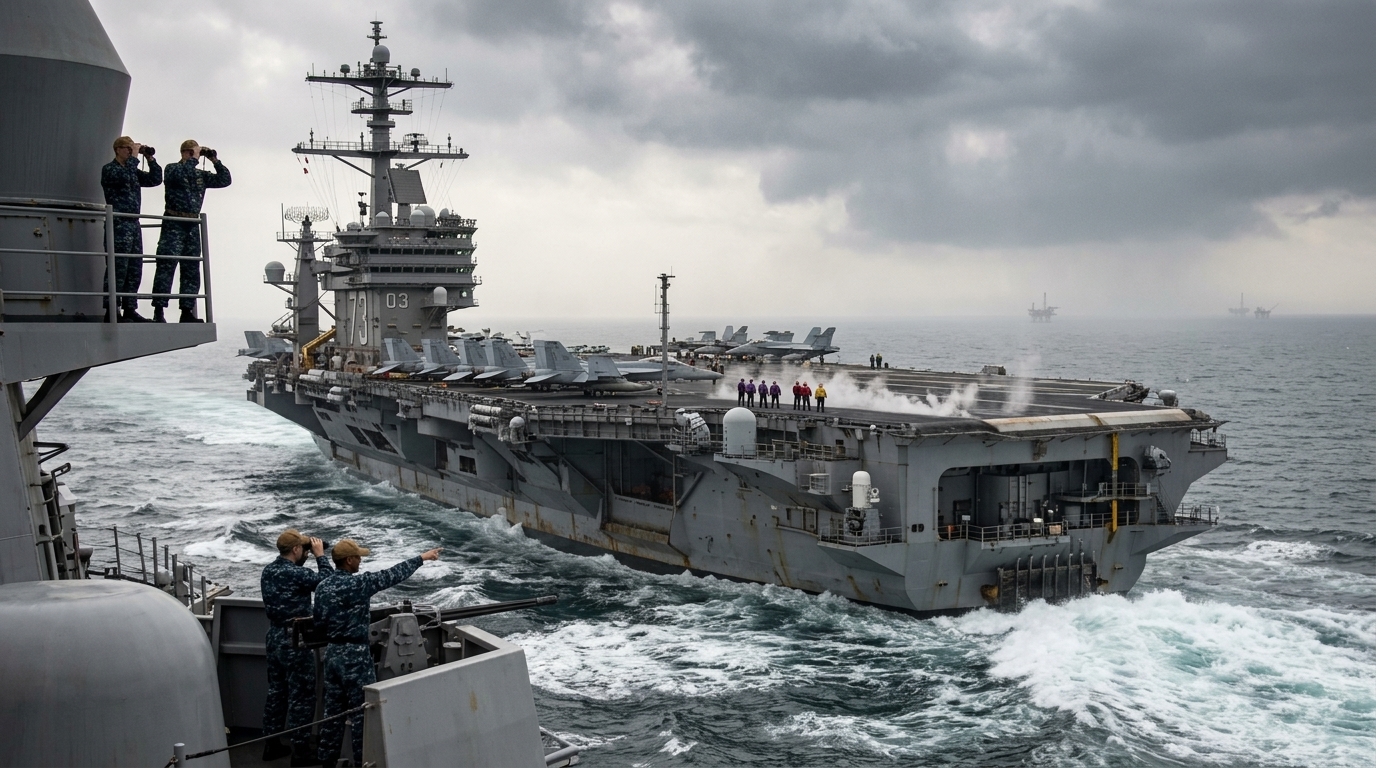
The long-standing stalemate in the Strait of Hormuz shifted into a dangerous new phase on Saturday as Iranian forces directly targeted U.S. Navy warships. While President Donald Trump previously downplayed the conflict, the latest escalation threatens to fundamentally transform the nature of the war.
From Tankers to Warships
After months of focusing on commercial vessels, Tehran escalated its operations by launching missiles at a U.S. aircraft carrier and a destroyer. Although the strikes failed, analysts note that targeting the forces enforcing the naval blockade crosses a significant threshold.
In retaliation, U.S. forces struck three Iranian oil tankers identified as part of the "shadow network" used to fund the Islamic Revolutionary Guard Corps (IRGC). Adm. Brad Cooper, chief of U.S. Central Command, issued a clear warning: “If you shoot at two of our ships, we will impose an even higher economic cost — taking out three of yours.”
Russian Involvement and Supersonic Missiles
The escalation follows reports in the Financial Times that Russia is secretly assisting Iran in developing supersonic cruise missiles using ramjet propulsion. Such weaponry could potentially force U.S. Navy assets to operate further from the Iranian coast, potentially breaking the economic chokehold on the regime.
Economic ‘D-Day’
The U.S. Treasury Department is reportedly preparing an “economic D-Day,” involving wider sanctions aimed at nations facilitating Iran’s illicit oil trade. However, experts from the International Crisis Group warn that increasing pressure may not lead to caution. As Tehran views the economic squeeze as existential, it may conclude it has less to lose, making high-risk military actions more likely.





