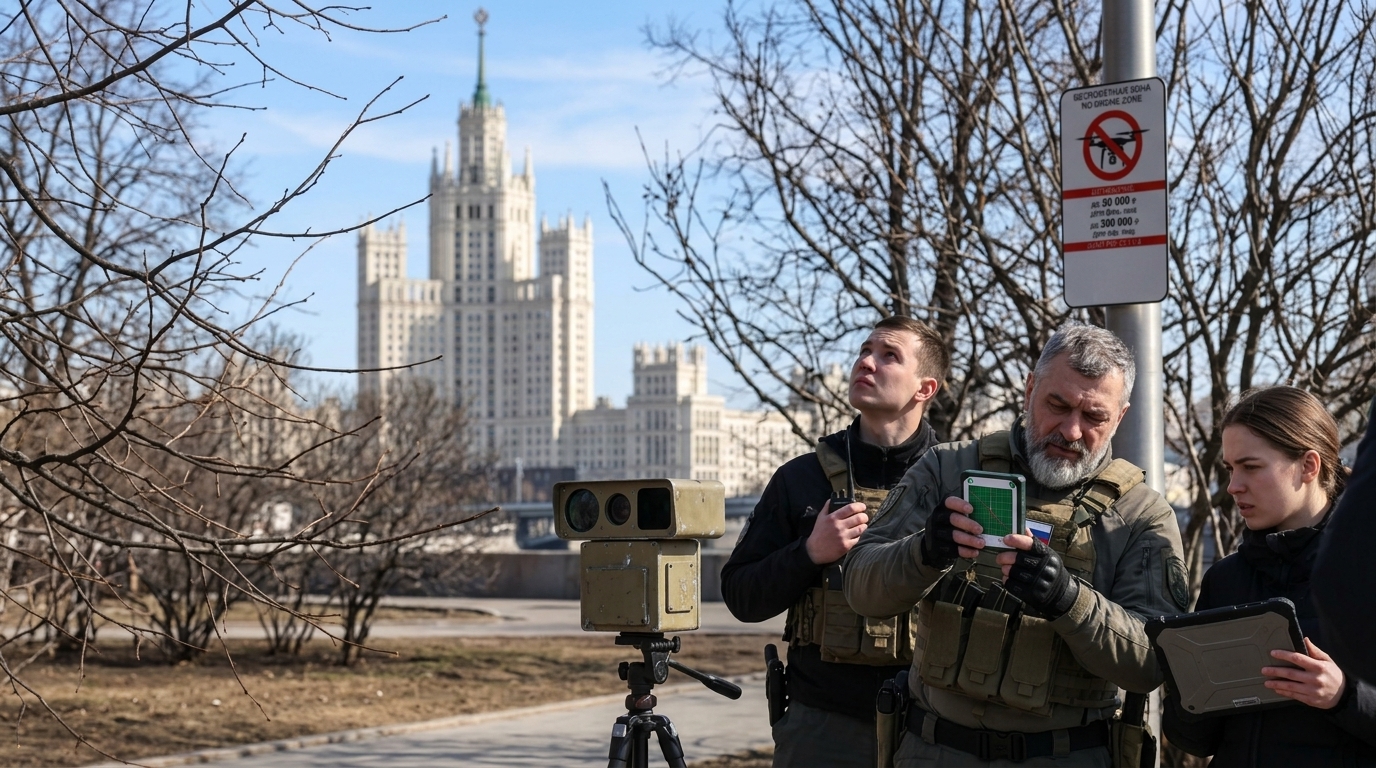
The news that Russia’s largest job recruitment portal, HeadHunter (hh.ru), is hosting advertisements for Unmanned Aerial Vehicle (UAV) operators specifically for the "defense of Moscow" marks a pivotal shift in the perception of the conflict within the Russian Federation. It is no longer just a military operation on foreign soil; it is an urgent internal security necessity invading the daily lives of average citizens through the same channels they would use to find work as an accountant or a developer.
The Normalization of War via the Gig Economy
Using HeadHunter to recruit personnel for air defense and surveillance systems suggests a profound change in how the Russian state and its affiliated private security firms approach mobilization. The fact that these ads target individuals with "no prior experience" is particularly revealing. It implies a rapid training pipeline, likely utilizing simulation and gaming technologies, turning participation in the conflict into a form of specialized yet accessible labor.
This "democratization" of drone operation lowers the psychological and technical barriers to entry. For many Russian citizens, the prospect of a steady paycheck in an environment that feels more like an office or a control center than a muddy trench is an attractive option in a sanctions-pressed economy. However, the ethical dimension of converting defensive service into a standard job listing remains a dark spot in modern Russian society.
The Strategic Necessity: Skies Over Moscow
Why now? The answer lies in the increasing frequency of drone strikes that have hit the heart of the Russian capital in recent months. The need for a dense network of observers and operators capable of intercepting hostile UAVs before they reach critical infrastructure or government buildings is imperative. Traditional air defense, designed for large missiles and aircraft, often struggles to detect small, low-flying drones.
- Creation of a "civilian air defense" using light surveillance drones.
- Strengthening Rosgvardiya (National Guard) forces with specialized technical staff.
- Psychological reassurance for the population that "measures are being taken" to protect the city.
Recruiting through HeadHunter also allows for faster replacement of personnel or the expansion of units without the bureaucratic delays of official military mobilization, which remains a politically sensitive issue for the Kremlin.
Technological Dependence and the Future of Urban Conflict
Russia is not alone in turning to drones, but integrating recruitment into the civilian labor market shows a trend we might see in other nations in the future. The drone operator is the "white-collar worker" of modern warfare. It requires no physical prowess, but rather mental acuity, quick reflexes, and familiarity with digital environments.
"The migration of the war effort to platforms like HeadHunter shows that the boundaries between military and civilian personnel are becoming increasingly blurred," security analysts note.
This development also raises questions regarding international law. If a civilian is hired via a commercial website to shoot down drones over a city, are they considered a legitimate military target? The Russian side seems to be exploiting these "gray zones" to fortify its capital while simultaneously attempting to maintain a facade of normalcy in social life.
Conclusions and Outlook
This move is a tacit admission that Moscow is no longer invulnerable. The need to "defend the sky" through job postings is a glaring indication of the gaps the Russian defense apparatus is scrambling to fill. As drone technology evolves, the battle for aerial supremacy will depend less on traditional pilots and more on an army of "employees" conducting war from behind a screen, having found their role with a simple click on a job board.