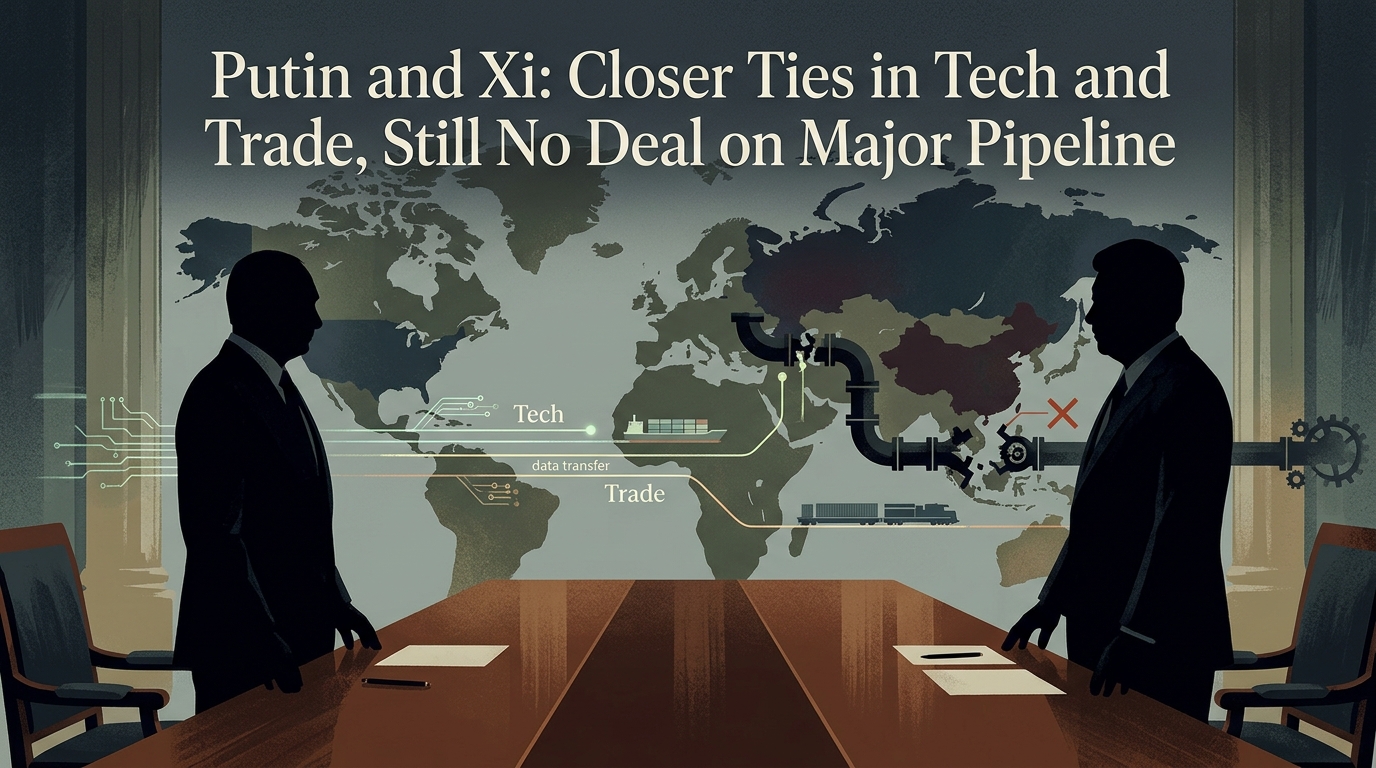
On the sidelines of the Shanghai Cooperation Organization (SCO) summit in Bishkek, Kyrgyzstan, Vladimir Putin and Xi Jinping reaffirmed their strategic alignment, focusing on economics, technology, and travel facilitation. Despite the warm rhetoric, the gas pipeline deal for Power of Siberia-2, highly desired by Moscow, remains deadlocked.
Artificial Intelligence and Digital Control
The Russian president emphasized that digital innovations and AI are opening new horizons for economic growth. However, this shift is accompanied by stricter internet control within Russia. Moscow is promoting the "Max" platform, a non-encrypted application similar to China's WeChat, which has raised concerns among rights organizations regarding surveillance and privacy issues.
The Energy Stumbling Block and Tourism
For the sixth time, the Power of Siberia-2 pipeline issue was placed on the agenda without success. China continues to push for lower prices and specific volume guarantees, keeping negotiations stagnant. Conversely, cooperation in tourism is flourishing, with Putin proposing a permanent visa-free regime following a 43% increase in tourist flows in the first half of 2026.
- China remains the primary buyer of Russian oil.
- Reports indicate the secret training of 200 Russian military personnel in China in 2025.
- The current visa-free status has been mutually extended until the end of 2027.
Xi Jinping stressed the need for a "multipolar world," noting that the cooperation between the two nations serves as a constant in an international landscape filled with uncertainties.