

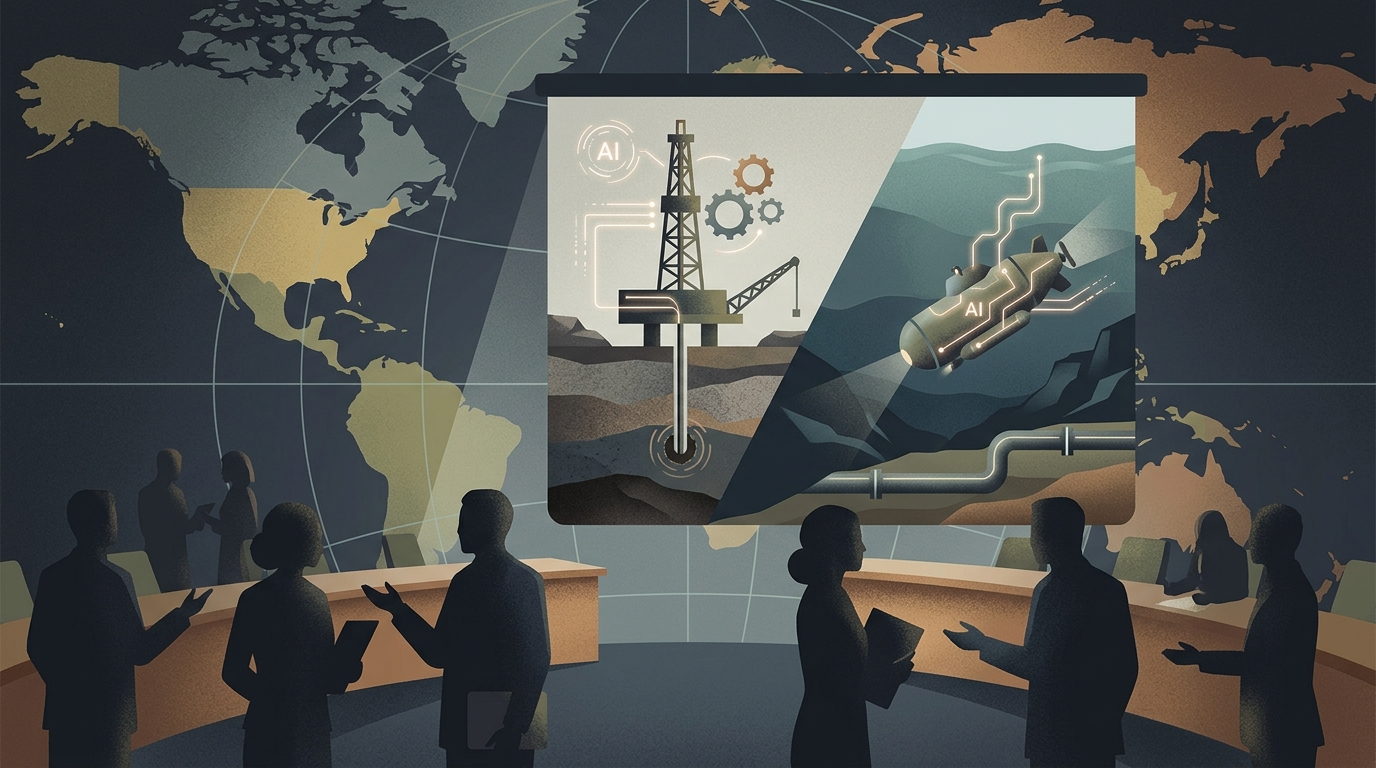
For years, we spoke of the 'cloud' as if it were a weightless, ethereal realm. But as a Mediterranean who grew up among ancient stones and the salt of the sea, I have always known that nothing truly great is built without a heavy foundation. Today, that foundation is making its presence felt in the most visceral ways.
The Sovereignty of the Soil and Sea
We are seeing a fascinating, if somewhat unsettling, pivot toward vertical integration. SpaceX is no longer just a rocket company; it is becoming a natural gas trader, planning its own pipelines and even drilling into the earth to fuel its Starship and semiconductor dreams. Why? Because the 'sovereignty discount' is real. When you rely on third-party APIs or external power, you pay a 'control tax'—sometimes as much as 20% of your compute power goes just to safety and monitoring. It is no wonder giants like ByteDance and Alibaba are moving to own their physical foundations, or that China has just completed the world’s first wind-powered underwater data center.
But at what cost to our thalassa? While Microsoft retreated from the depths in 2024, others are charging ahead. We must ask: can our oceans handle the heat? UNESCO warns that 60% of marine ecosystems are already degraded. Discharging warm water from massive server clusters risks localized thermal pollution that could alter the very pH of the water. We are literally heating the cradle of life to power our algorithms.
The Productivity Paradox and the Human Record
While machines are shattering human limits—with Chinese humanoid robots beating Usain Bolt’s sprint time and clearing high jumps of 2.88 meters—the corporate world is facing a sobering 'productivity paradox.' According to an Atlanta Federal Reserve study, 90% of executives admit AI hasn't boosted productivity yet. Instead of investing in people, many are trapped in a 'hunger games' mentality, using layoffs to fund technology.
"Negative employee sentiment is a strong predictor of poor firm productivity; when workers fear for job security, effective tool adoption slows."
This is the hubris of our age. We build robots that can outrun a legend like Bolt, yet we struggle to make our own workplaces more efficient because we have forgotten the human element. Even Wall Street is beginning to look away from the AI hype toward the mountain of global debt and surging bond yields. We are being reminded that even the most advanced intelligence cannot outrun the laws of physics or the realities of a balance sheet.
I believe we are entering a new era of 'architectural clarity.' We are learning that AI is not a magic wand, but a physical infrastructure that requires gas, water, and, most importantly, the trust of the humans who use it. As we watch these machines dash across the track in Beijing, let us remember that the goal isn't just to be faster than a human, but to be better for humans.