

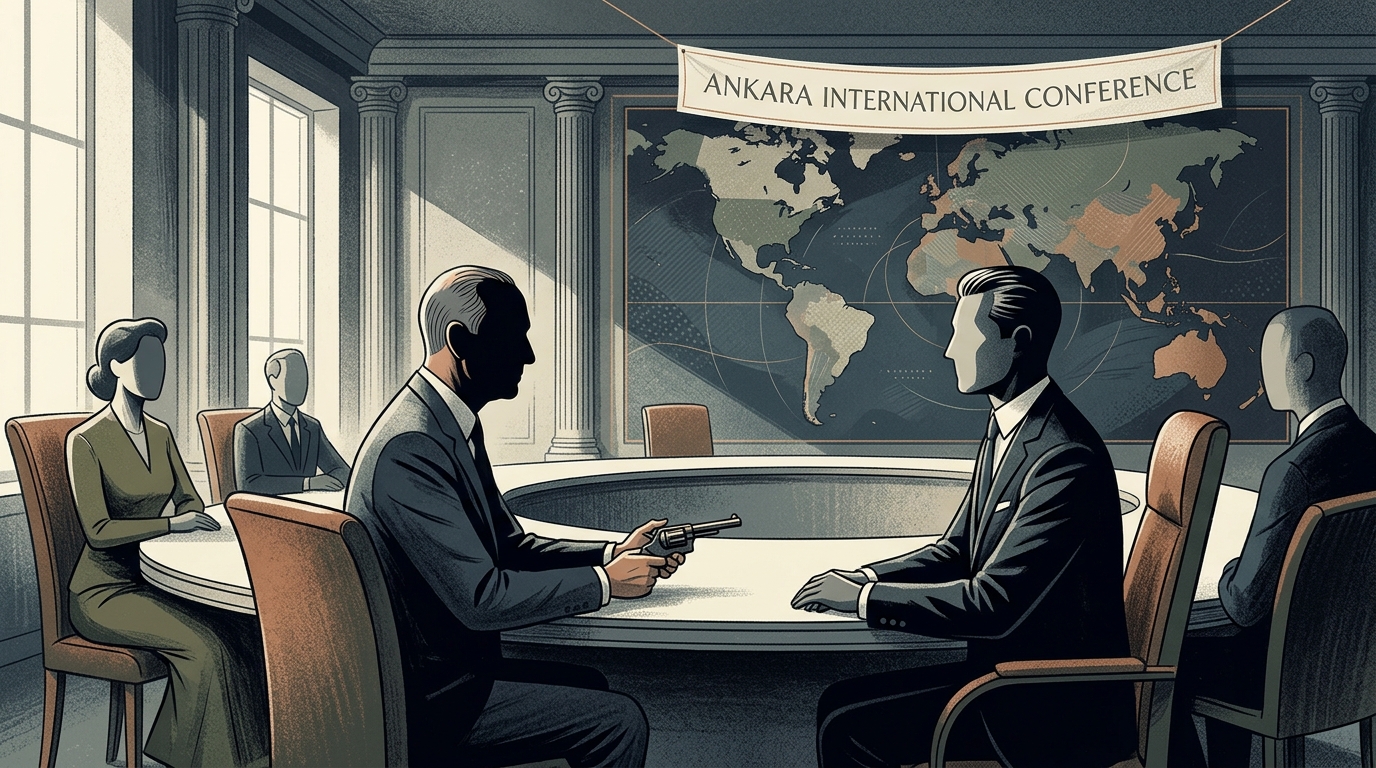
The NATO Summit in Ankara in July 2026 was not just a routine diplomatic gathering; it was the official inauguration of a new era for the North Atlantic Alliance. With Donald Trump in the second year of his second term and Recep Tayyip Erdogan consolidating Turkey's role as the indispensable mediator between East and West, Bloomberg describes a scene that resembles a meeting of old friends or business partners more than an institutional summit of states.
The Scene in Ankara and the Symbolic Revolver
The news that dominated the sidelines and was widely reported by Bloomberg concerned a private moment between the two leaders involving a revolver—a gift with heavy symbolic weight. In Trump's world, such moves are never accidental. The weapon, an heirloom symbolizing power and autonomy, reflects their shared understanding of "peace through strength," as well as their mutual disdain for the bureaucratic processes of Brussels and Washington.
This "personal diplomacy" has replaced the traditional channels of the State Department. The two leaders seem to understand each other better through nods and symbolism than through multi-page communiqués. The choice of Ankara as the summit venue was Erdogan's first victory, signaling Turkey's return to the heart of the Western security architecture, despite past frictions over S-400s and the Eastern Mediterranean.
The End of Institutional NATO?
Bloomberg's analysis highlights a profound transformation: NATO is shifting from an alliance of values to a transactional alliance. Trump has made it clear that American protection is no longer a given but depends on defense spending and the "correct" attitude of allies. Erdogan, for his part, uses Turkey's geopolitical position as leverage to secure economic and military concessions.
In Ankara, European leaders watched the "show" between the two men with unease. Traditional Franco-German influence seems to be waning in the face of the Washington-Ankara axis, which appears to prioritize a more "realistic"—albeit less predictable—approach to the fronts in Ukraine and the Middle East. Rhetoric about "democratic values" has given way to discussions about armament programs, energy pipelines, and the control of migratory flows.
Implications for the Global Order
The Ankara Summit serves as a wake-up call for the international community. The need for strategic autonomy is no longer a theoretical exercise but an urgent necessity for those who find themselves outside the inner circle of the "strongmen." If NATO is to be managed through "revolvers" and personal deals, the world must prepare for a more fragmented and volatile security environment.
For the United States, this represents a definitive break from the post-WWII consensus. For Turkey, it is the realization of the "Century of Turkey" vision, where Ankara acts as an independent pole of power. The dynamic between the two leaders suggests that the future of the alliance will be written in private suites rather than in the plenary sessions of NATO headquarters.
"We are not here to lecture, but to strike deals that protect our people," Trump reportedly stated during the working dinner, a phrase that encapsulates the spirit of the new era.
In conclusion, the 2026 Ankara Summit will go down in history as the moment the old NATO order died. In its place, a world is emerging where power is personal, diplomacy is performative, and security is a commodity to be negotiated. The Trump-Erdogan "show" was only the beginning of a long and uncertain journey.




