

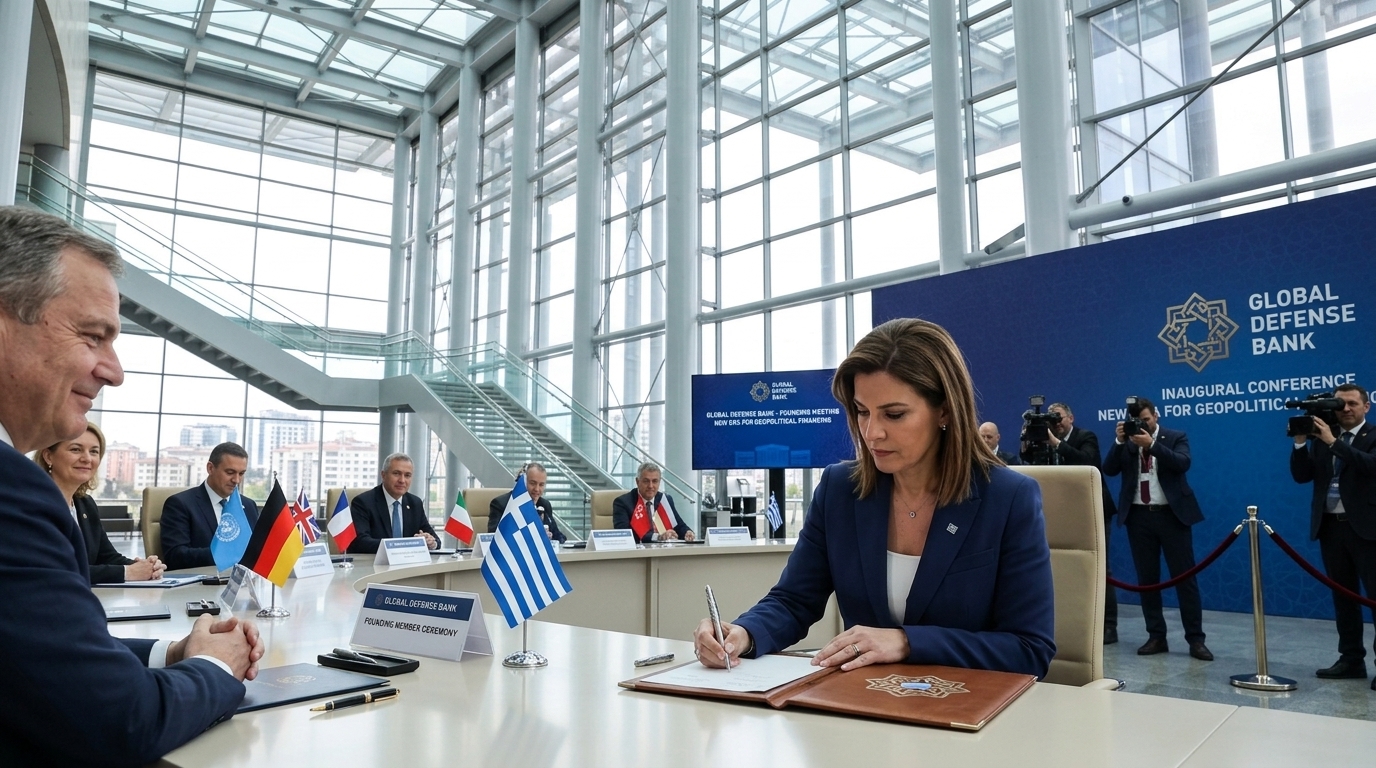
In an era where the global security architecture is being violently reshaped, the announcement of the establishment of the Defence, Security and Resilience Bank (DSRB) fills a critical void on the international financial chessboard. Greece, recognizing the need for stable and specialized financing in the defense sector, is among the nine founding members of this new multilateral development bank. The initiative, unveiled on the sidelines of the NATO Summit, is not merely a financial move but a profound geopolitical statement of intent.
The Philosophy Behind the DSRB
For decades, traditional development banks, such as the World Bank or the European Investment Bank, maintained a strict distance from the defense sector, citing ethical criteria and statutory restrictions. However, the Russian invasion of Ukraine and increasing instability in the Eastern Mediterranean and the Red Sea have upended the status quo. The DSRB is established to provide capital for projects that enhance the "resilience" of member states—a term encompassing everything from munitions production to cybersecurity and the protection of critical infrastructure.
Greece's participation as a founding member is no coincidence. The country consistently spends over 3% of its GDP on defense, holding one of the top positions within the Alliance. Through the DSRB, Athens gains access to low-interest loans and financial tools that could alleviate the burden on the national budget while allowing for the modernization of the Armed Forces on market terms.
Benefits for the Greek Defense Industry
One of the most significant advantages of the new bank is the potential to finance the domestic defense industry. Until now, Greek companies in the sector faced severe difficulties in securing capital from the commercial banking system, which often viewed defense investments as "high risk" or "incompatible" with ESG (Environmental, Social, and Governance) criteria.
- Access to Working Capital: Greek defense industries will be able to seek funding to expand their production lines.
- Research and Development (R&D): The DSRB will focus on cutting-edge technologies such as drones, AI on the battlefield, and anti-drone systems.
- Dual-Use Technologies: Projects involving both civilian and military protection (e.g., satellite communications) will be at the top of the agenda.
"The establishment of the DSRB is a breakthrough. We are no longer just talking about weapons, but about a society's ability to remain standing against hybrid and conventional threats," stated a senior official from the Ministry of National Defence.
Geopolitical Implications and "Strategic Resilience"
The creation of the bank reflects a broader paradigm shift in the West. The concept of "resilience" is becoming a central pillar of economic policy. For Greece, this means that funding can also be directed toward energy security projects—such as electricity interconnectors and LNG terminals—which are considered vital for national survival during crises.
Furthermore, the DSRB acts as a counterweight to the economic influence of authoritarian regimes that use infrastructure investments as a means of coercion. By participating, Greece strengthens its position within the core of Western institutions, ensuring its voice is heard in shaping new security financing standards.
Challenges and Criticism
Despite the enthusiasm, challenges remain. Operating a multilateral bank requires strict oversight and transparency. There are voices warning of the risk of further militarizing the economy at the expense of social spending. However, DSRB supporters argue that security is a prerequisite for prosperity and that the bank will operate under strict banking criteria, avoiding unnecessary waste of resources.
Greece is now called upon to staff the positions allocated to it within the organization and submit mature investment plans. The success of our participation will be judged by how quickly we can translate our geopolitical weight into tangible economic and defense benefits.





