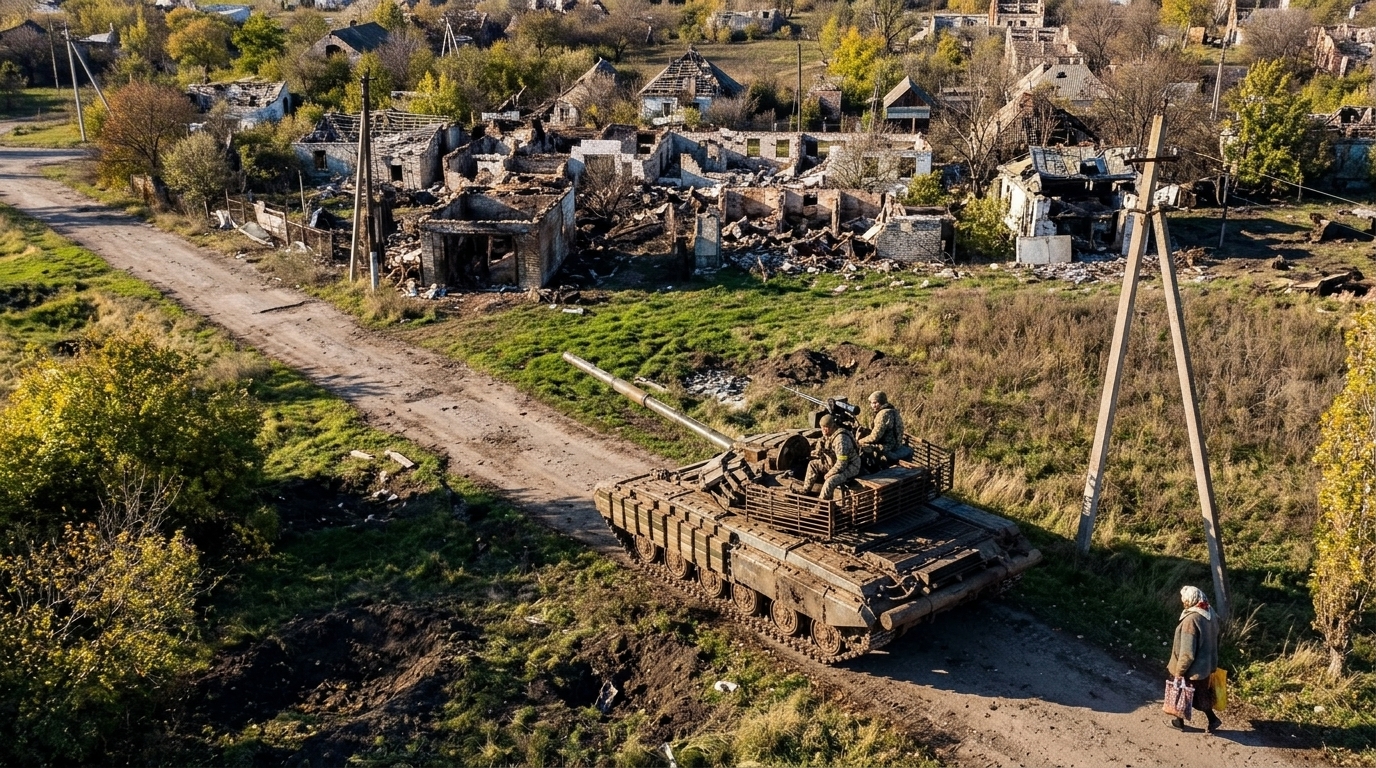
In a move blending technological ingenuity with strategic deception, Ukrainian forces launched 'Operation Vivaldi' in Donetsk, deploying so-called 'zombie cars' on the front lines for the first time. These are Soviet-era armored vehicles repurposed into unmanned kamikaze ground vehicles (UGVs).
The Strategy of Operation Vivaldi
According to Brigadier General Andrii Miletskyi, the 3rd Army Corps successfully recaptured 68 square miles north of the city of Lyman. The success hinged on a diversionary maneuver: troops feigned an attack on one village while the primary strike targeted the settlement of Nove. The use of 'zombie vehicles' allowed for the destruction of heavily fortified Russian positions without risking drivers.
"The enemy was deceived and missed the real blow," Miletskyi stated.
The operation's results are significant, with Ukraine capturing 250 Russian soldiers—one of the highest counts recorded in a single operation—while enemy fatalities reached 2,000.
Technology and Cost-Efficiency
The conversion of vehicles, such as the BTR-60, is handled by Ukrainian firms that install remote control systems via Starlink or 4G mobile networks. The advantages of these 'zombies' over smaller drones include:
- Speeds up to 31 mph, even when fully loaded with explosives.
- Better navigation through mud, which is critical for winter operations.
- Low conversion costs, totaling approximately $4,000 per system.
Engineer 'David' from the Drone Fight Group noted that the abundance of cheap, older vehicles on the market makes this technology instantly scalable and highly effective on the battlefield.