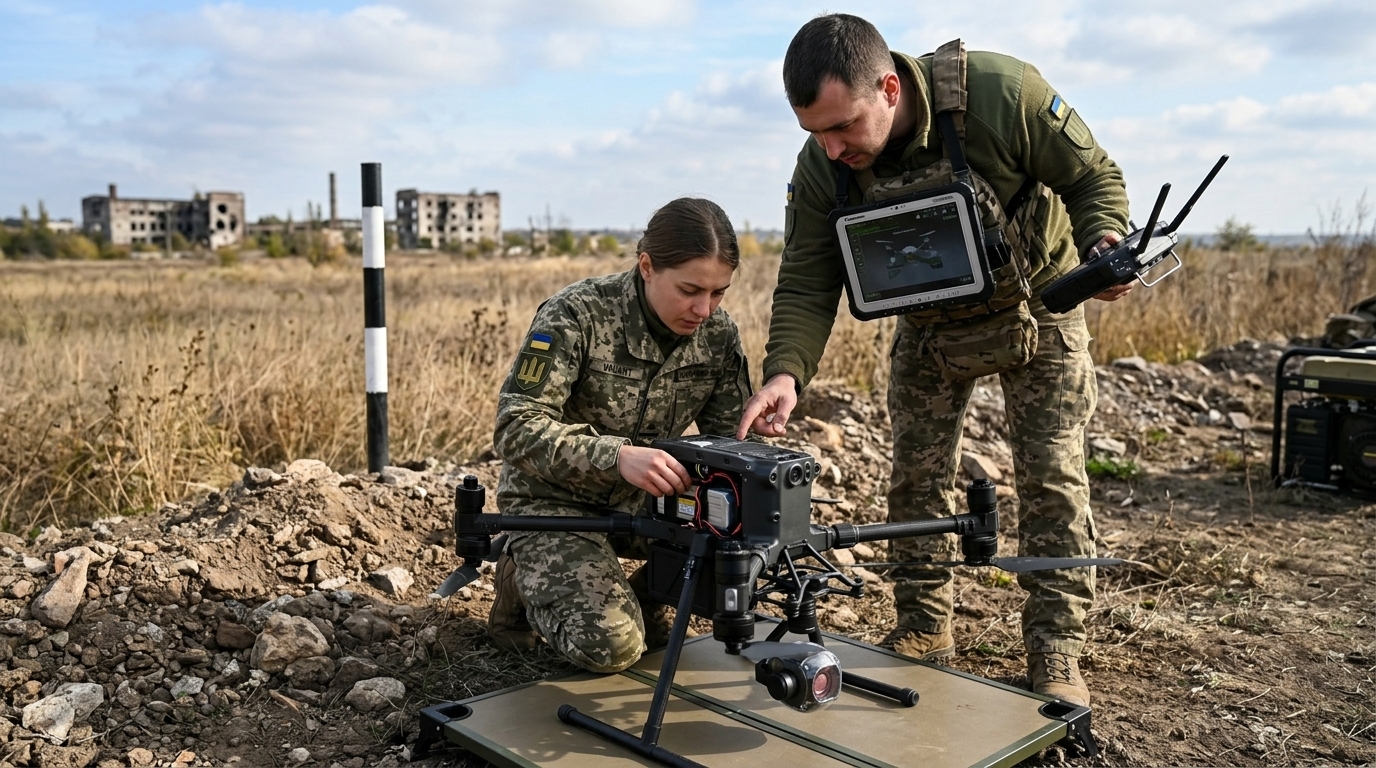
A previously classified military tactic, known as "Operation Vivaldi," is currently unfolding in the Donetsk region, highlighting the growing reliance on unmanned systems in modern warfare. The Ukrainian counter-offensive utilizes a synergy of aerial drones and ground-based robotic systems to strike Russian positions up to 12 miles behind the front lines.
The "Gryphon" Technology
At the heart of the operation are Unmanned Ground Vehicles (UGVs), nicknamed "Gryphon" by Ukrainian troops. These explosive-laden robots are airlifted by large drones, such as the "Baba Yaga" models. Once the drone penetrates Russian-controlled territory, it drops the robotic system, which is then remotely operated to locate and neutralize enemy personnel.
According to Ukraine's 3rd Army Corps, this method has proven highly effective, allegedly resulting in 3,000 Russian fatalities and the reclamation of 48 square miles of territory over several months.
Blinding the Enemy
The success of these missions hinges on the ability to "blind" Russian surveillance. Darwin, commander of the 2nd Mechanized Battalion, explained that the operation requires precise coordination:
- Electronic warfare (EW) to jam Russian reconnaissance drones.
- Artillery strikes to force infantry into cover, preventing them from spotting the aerial delivery.
- Operations conducted under the cover of night.
"The drone does not know fear," Darwin told the Telegraph, emphasizing that this approach makes warfare safer for Ukrainian soldiers, even though the advance remains slow and methodical.
"We move forward, set up a defensive line, wait for the artillery, drones, and robots to do their job, and then we move again," the commander noted.