In the high-stakes arena of global technological supremacy, a new fault line has emerged between Beijing and Silicon Valley. Alibaba, the Chinese e-commerce and cloud infrastructure titan, has issued an internal mandate strictly prohibiting employees from utilizing AI models developed by Anthropic, the San Francisco-based startup widely regarded as OpenAI’s most formidable challenger. This move transcends mere corporate security protocol; it signals a profound deepening of mistrust in the race for Generative AI dominance.
At the heart of this confrontation is a sophisticated technique known as a 'distillation attack.' In the realm of machine learning, model distillation is a legitimate architectural process where a compact, efficient 'student' model is trained using the outputs of a massive, high-performance 'teacher' model. However, when conducted without authorization between rival firms, it morphs into a form of high-tech industrial espionage. It allows a competitor to effectively 'siphon' the intelligence and reasoning capabilities of a model that cost billions to develop, using it as a mere data generator for their own training sets.
The Anatomy of Distillation and the IP Moat
The accusations surrounding Alibaba are multi-layered. Reports suggest the company fears its own researchers may have inadvertently—or intentionally—leveraged Anthropic’s Claude to refine Alibaba’s proprietary 'Qwen' models, potentially exposing the firm to legal liabilities and international condemnation. Conversely, the ban serves as a defensive bulwark. In the AI economy, while data is the raw material, a model’s inference is the refined product. If Alibaba employees input sensitive internal code or proprietary datasets into Claude to seek optimization, they are effectively training an American rival’s model with Chinese corporate intelligence.
Anthropic, backed by multi-billion dollar investments from Google and Amazon, maintains rigorous terms of service prohibiting the use of its outputs to train competing models. The revelation that Chinese tech giants might be using Claude to 'shortcut' their way to parity has sent ripples through Washington. U.S. policymakers are already debating tighter restrictions on cloud-based access to advanced AI, fearing that software exports are circumventing the hardware bans currently strangling China’s access to high-end Nvidia chips.
Geopolitics and the Quest for Digital Sovereignty
This incident is a hallmark of the 'Great Decoupling.' China is aggressively pursuing total AI self-reliance, with the central government pressuring domestic leaders like Alibaba, Baidu, and Tencent to build ecosystems that owe nothing to Western foundations. Allegations of distillation attacks undermine the narrative of Chinese indigenous innovation, suggesting that domestic models are merely 'shadows' of their American counterparts.
- Alibaba aims to insulate its Qwen model from claims of being a derivative work.
- U.S. regulators are scrutinizing whether 'Model-as-a-Service' (MaaS) platforms require stricter export licenses.
- Data sovereignty is becoming the primary justification for software-level protectionism.
The irony lies in the fact that the AI revolution was built on the back of open research. The core Transformer architecture was a public gift from Google researchers. However, as theory transforms into trillion-dollar products, the shutters are coming down. Alibaba’s ban on Anthropic is a stark reminder that in the age of artificial intelligence, trust is the scarcest commodity of all.
"This is no longer just about who has the best math; it's about who can build the highest wall around their weights and biases," noted a senior tech analyst in Hong Kong.
The Future of Fragmented AI Ecosystems
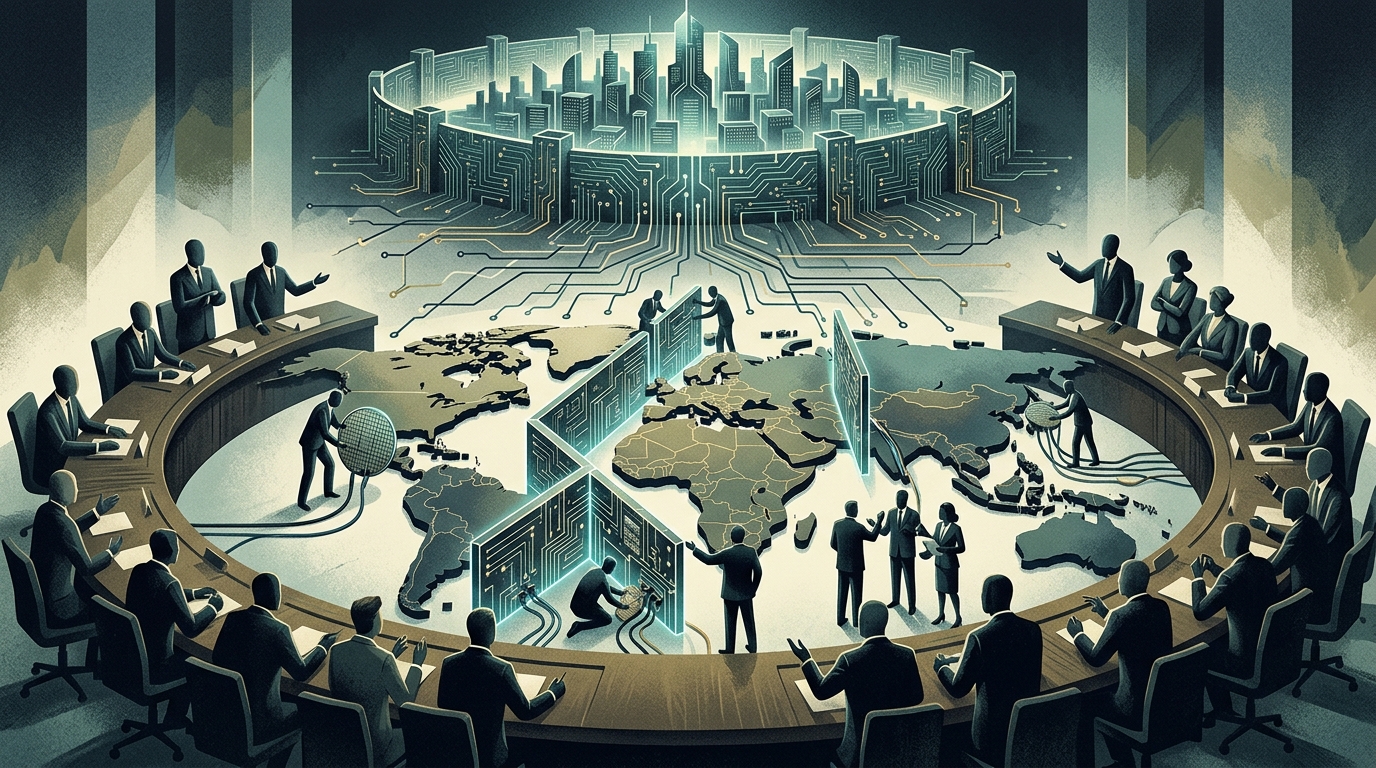
As we navigate the landscape of 2026, it is increasingly evident that the AI world is bifurcating into two distinct spheres of influence. The U.S.-led bloc is prioritizing safety, alignment, and export controls, while the Chinese bloc focuses on rapid deployment, scale, and strategic workarounds to Western sanctions. The 'distillation attack' will remain a persistent flashpoint because it is technically difficult to prove beyond a doubt but strategically devastating if successful.
For Alibaba, survival necessitates playing by the rules established in Beijing, even if it means denying its engineers access to the world's most sophisticated reasoning tools. This decision may throttle short-term development speed, but it secures the company’s geopolitical standing. The battle for AI intellectual property has moved beyond the courtroom and into the very architecture of the models themselves, and the Alibaba-Anthropic rift is likely just the beginning of a much larger fragmentation.