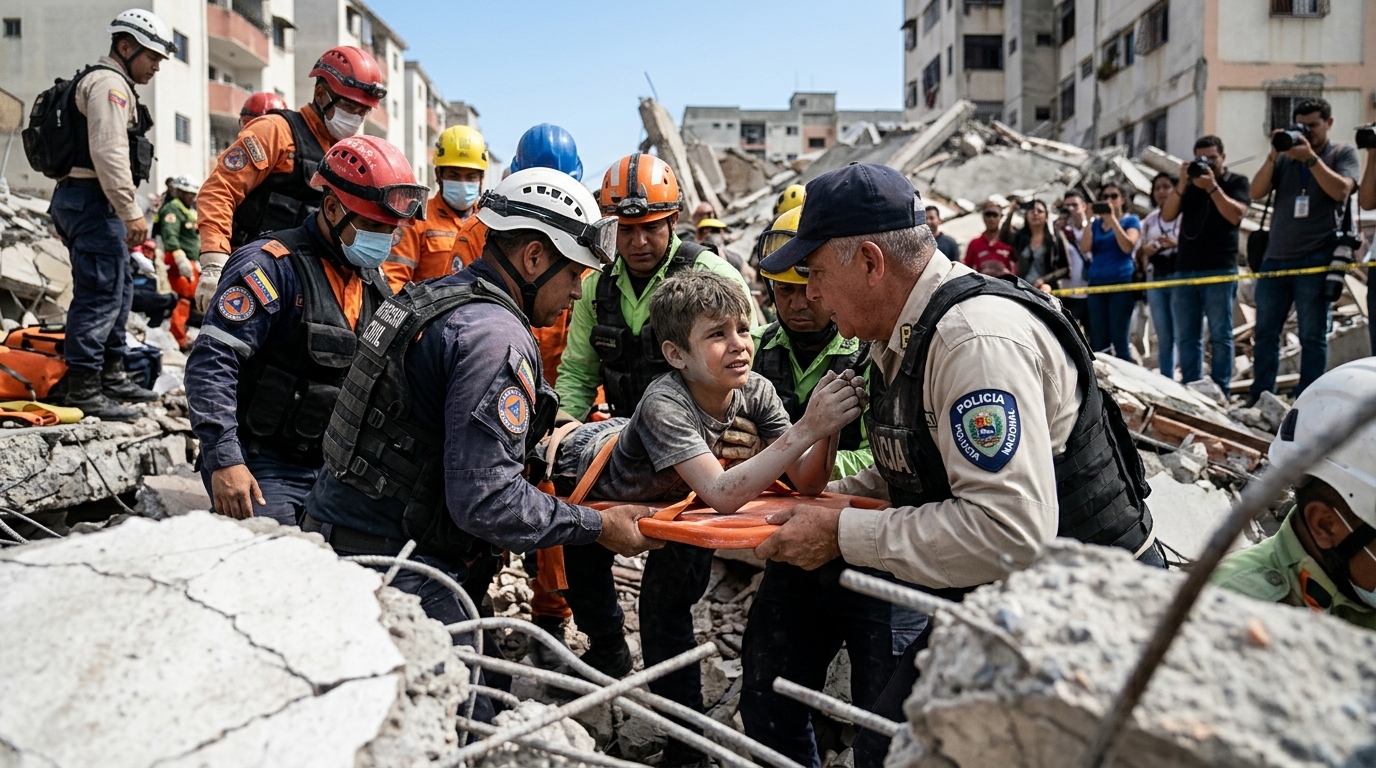
In a moment when despair had begun to overwhelm rescue teams and residents of Caraballeda in northern Venezuela, the news of an 11-year-old boy being pulled alive from the rubble acted as a 'beacon of hope' for a nation under immense trial. After 70 long hours trapped beneath tons of concrete and iron, the child managed to emerge, sparking emotional scenes among those present and providing a fresh impetus to the search efforts for the missing.
The Caraballeda area, known for its tourism and proximity to Caracas, suffered catastrophic damage from the powerful earthquake that struck the country three days ago. Images broadcast by local media show a crippled city, with apartment blocks collapsed like houses of cards and infrastructure suffering irreparable damage. The rescue of the young boy, who was rushed to a hospital with symptoms of dehydration and minor injuries, is considered by experts to be a 'medical and human miracle,' given the conditions and the time spent under the debris.
The Race Against Time and the Challenges of Rescue Operations
The first 72 hours following an earthquake are considered the most critical for finding survivors. In Venezuela's case, the challenge was twofold. On one hand, the region's geological instability triggered dozens of aftershocks, making the rescuers' work extremely hazardous. On the other, the country's economic situation and lack of modern equipment hindered the speed of response. Despite these difficulties, the mobilization of volunteers and state services has been unprecedented.
According to official reports, rescuers utilized specially trained dogs and acoustic sensors to detect signs of life. The 11-year-old's voice was faintly heard on the morning of the third day, prompting a coordinated operation that lasted over ten hours to safely remove the ruins covering him. The moment the child saw the sunlight was captured on video and immediately went viral, symbolizing the resilience of the human spirit in the face of natural disaster.
The Future of Seismic Resilience and Technology
This disaster brings the discussion regarding seismic resilience in Latin American cities back to the forefront. Venezuela, although possessing scientific talent in seismology, faces severe problems in maintaining and reinforcing old buildings. The need to integrate new technologies, such as Artificial Intelligence for seismic data analysis and the use of drones for rapid damage mapping, is now imperative.
- Use of IoT sensors for real-time structural integrity monitoring of buildings.
- Development of predictive algorithms for aftershock activity to protect rescue teams.
- Public education through digital platforms for crisis management.
Experts point out that if stricter building codes had been implemented and better planning existed, the loss of life could have been significantly lower. The international community is closely monitoring developments, with many countries offering humanitarian aid and expertise for recovery. However, the political situation in the country remains an unpredictable factor that could affect the distribution of aid.
"Every life saved is a victory against death, but the real challenge is to build cities that do not collapse," stated a member of the international rescue mission.
Geopolitical Implications and Humanitarian Aid
The response to the natural disaster in Venezuela is not devoid of political implications. The government in Caracas is trying to balance the need for international aid with the maintenance of national sovereignty. The arrival of rescue teams from neighboring countries, as well as from Europe and Asia, shows a spirit of solidarity that transcends political borders. The case of the 11-year-old boy united, if only temporarily, a divided society and turned the world's gaze toward the need for inclusive humanitarian action.
In the future, the use of advanced life-detection systems based on ground-penetrating radar and biometric sensors could reduce entrapment times in such incidents. Technology, combined with human self-sacrifice, remains our most powerful weapon against nature's fury. Caraballeda will take years to heal its wounds, but the story of this boy will remain etched in memory as a reminder that hope is the last thing to die.