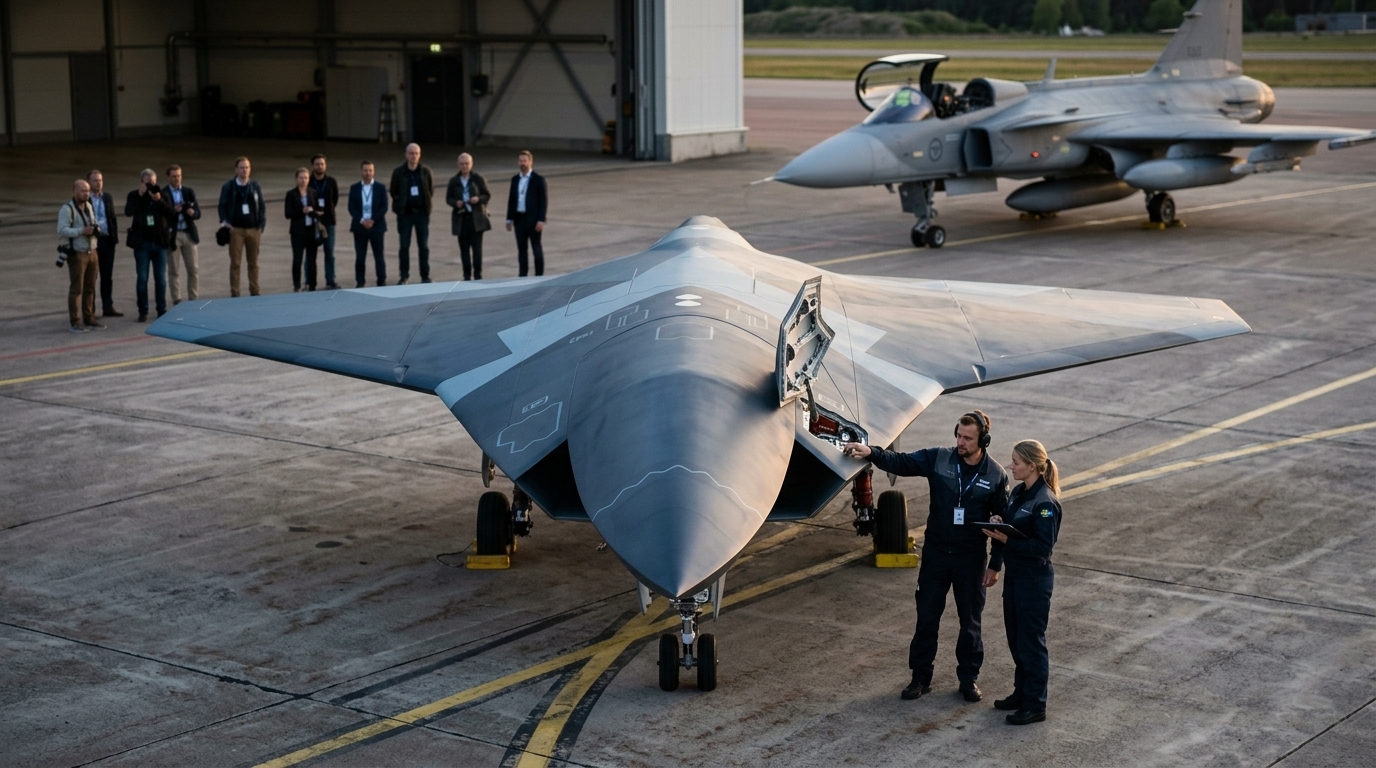
In a significant move for the future of aerial combat, Sweden's Saab has unveiled the A3-001 at the Malmen Air Base in Linköping. This next-generation stealth unmanned aerial vehicle (UAV) is designed to operate in tandem with manned fighters, specifically the Gripen E, marking a strategic shift toward integrated combat systems.
Stealth Design and Capabilities
The A3-001 has been engineered to minimize its radar cross-section through several innovative design choices. Most notably, the drone lacks the traditional vertical tail fin found on most fighters. It features specially shaped surfaces and air intakes designed to shield critical engine components from enemy radar. Saab is also investigating ways to reduce the aircraft's thermal signature to evade infrared sensors.
To maintain its stealth profile, the A3-001 is designed to carry fuel internally, eliminating the need for external tanks that would otherwise increase its visibility to defense systems.
Operational Roles in High-Risk Environments
The primary objective of the A3-001 is to undertake missions deemed too dangerous for human pilots. By acting as a forward element, the drone allows a manned Gripen to remain at a safer distance while the UAV engages in high-threat zones. Its intended roles include:
- Electronic Warfare: Jamming and confusing enemy radar systems.
- SEAD (Suppression of Enemy Air Defenses): Identifying and neutralizing anti-aircraft installations.
- Precision Strikes: Executing targeted attacks on high-value assets.
- Intelligence and Reconnaissance: Gathering data within heavily defended airspace.
Performance and Economic Outlook
The aircraft is expected to reach speeds of approximately Mach 1. Saab is considering the General Electric F414 engine or the Swedish RM16 variant, currently used in the Gripen E, as potential powerplants.
From a budgetary perspective, Saab estimates that the A3-001 could cost approximately half as much as a Gripen to purchase, while its total life-cycle operating costs could be as low as one-third. Should the Swedish government decide to fund the next phase of the program, Saab anticipates a first flight in the early 2030s.