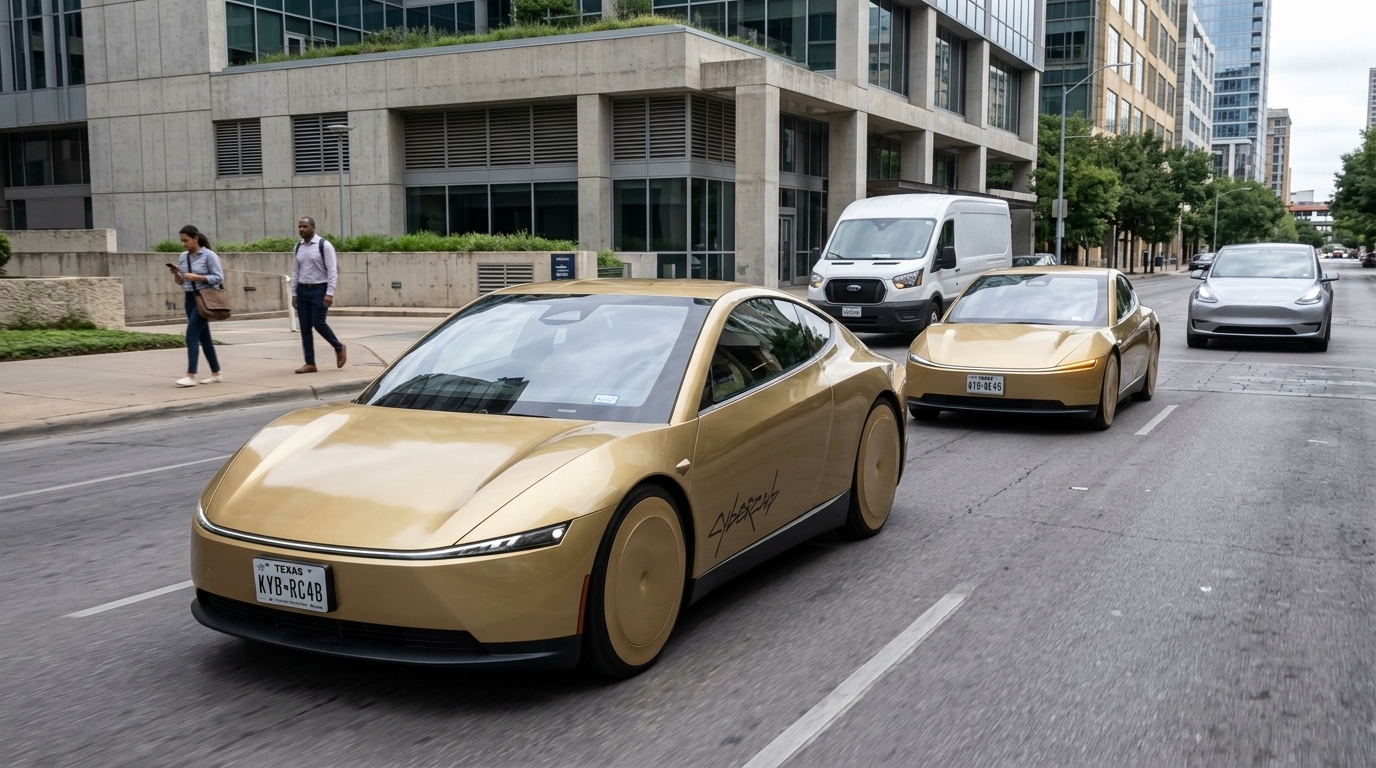
One month after its September 3 launch, Tesla is pushing to establish its presence in the robotaxi market with the Cybercab in Austin, Texas. Despite nearly quadrupling its fleet from 45 to 169 authorized vehicles, Elon Musk’s venture faces significant headwind. This pivot is seen as vital for Tesla, whose stock has dropped 18% this year under pressure from Chinese rivals like BYD and Xiaomi.
Technical Glitches and Passenger Feedback
The two-seater Cybercab, featuring no steering wheel, pedals, or mirrors, has elicited mixed reactions. While passengers praise the smooth ride and private cabin, many have reported malfunctions with the butterfly doors and trunk, alongside incorrect drop-off locations. Early users also faced wait times exceeding 45 minutes, raising concerns about operational efficiency.
The Waymo Giant and Regulatory Hurdles
Tesla remains an underdog compared to Alphabet’s Waymo, which operates over 4,000 vehicles and completes 500,000 weekly paid rides across the US. In Texas alone, Waymo deploys 1,154 vehicles and has logged 270 million miles of fully autonomous commercial driving.
“The total absence of controls creates safety blind spots,” warns Matt McElernie, a captain with the Austin Fire Department.
The NHTSA is currently investigating whether Cybercabs meet federal safety standards. Public sentiment remains wary, with 70% of respondents calling for a service pause pending the NHTSA probe. While licensing hurdles persist in California, Tesla is looking toward Nevada and Florida for expansion, seeking more favorable regulatory environments.