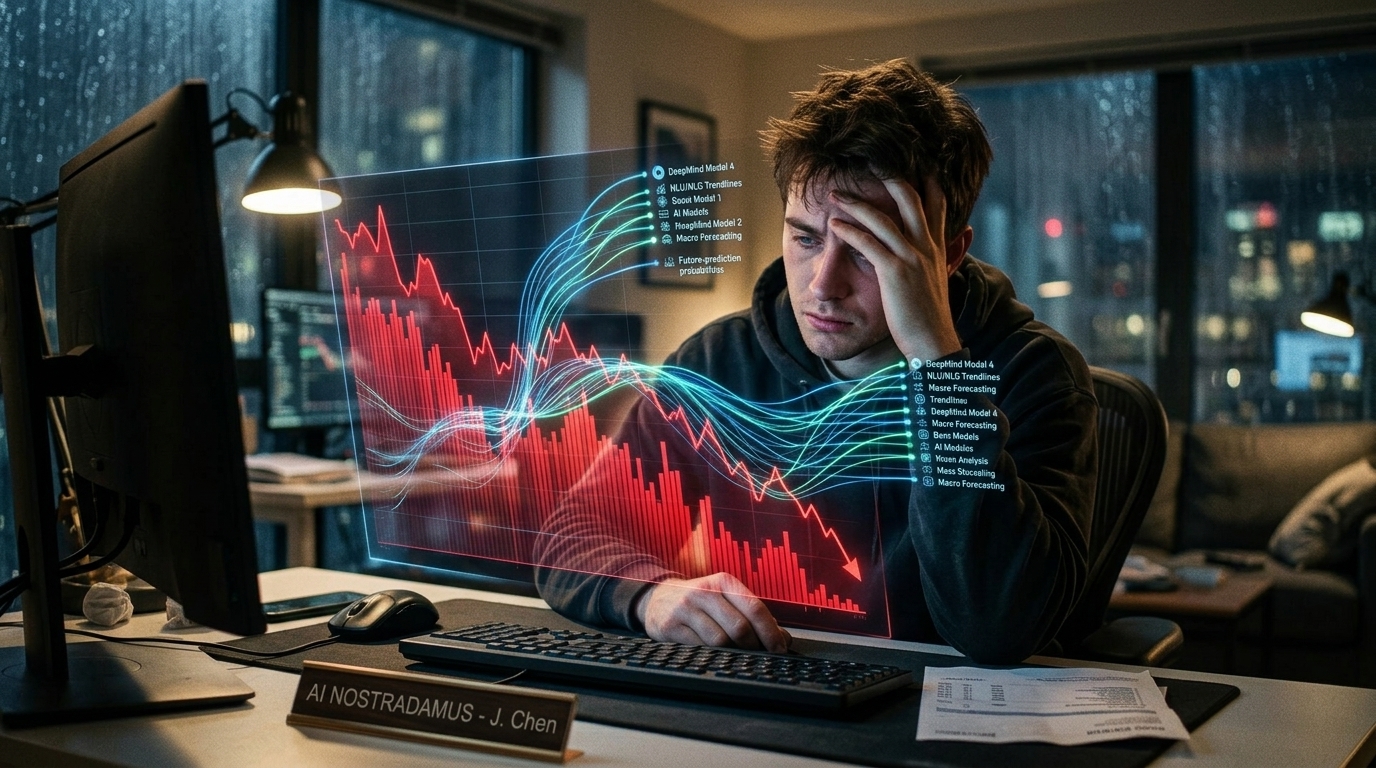
While the rest of the market focuses on the present, Leopold Aschenbrenner attempted to buy the future. The 24-year-old former OpenAI researcher, famous for his extensive essay "Situational Awareness," was hailed by many as the "Nostradamus of AI." His core thesis was bold: AI development would not be linear, and demand for infrastructure, energy, and processors would skyrocket, creating trillion-dollar giants.
From Theory to a $45 Billion Wager
Aschenbrenner did not stop at theory. He founded the hedge fund Situational Awareness, investing aggressively in backbone companies like Nvidia, Anthropic, and data center infrastructure. His strategy was quickly validated, with the fund growing to manage approximately $45 billion. However, this meteoric success was built on a dangerous foundation: high leverage.
The Leverage Trap and Citadel's Move
The irony of Aschenbrenner’s story is that he wasn't betrayed by his predictions, but by the mechanics of Wall Street. When AI stocks experienced a correction, the value of the fund's collateral dropped, triggering margin calls. Lacking immediate liquidity, the young manager was forced into aggressive liquidations.
According to reports, Ken Griffin’s Citadel stepped in as the primary opportunistic buyer, acquiring significant portions of the portfolio at a discount. Citadel didn't buy because they disagreed with Aschenbrenner’s vision, but because they knew he had no choice but to sell.
"Markets can remain irrational longer than you can remain solvent."
Aschenbrenner’s case serves as a stark lesson for Wall Street: accurately predicting the future is insufficient if you cannot survive the short-term volatility of the present.