

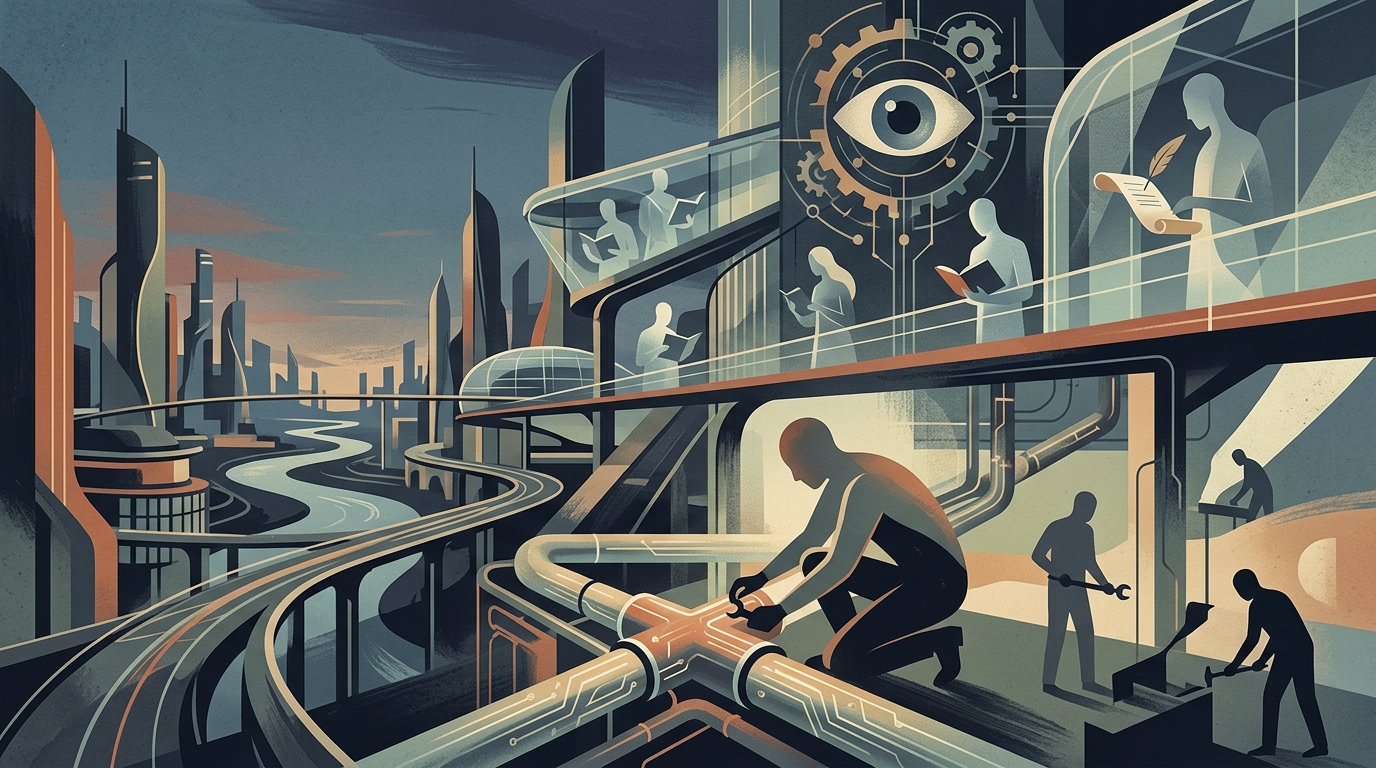
For years, we have been told that the future belongs to the digital—to the ethereal lines of code and the abstract logic of neural networks. But as I look at the landscape this August, I see a different story unfolding. It is a story of stone, copper, and sweat. We are witnessing what Jensen Huang calls the largest infrastructure build-out in human history, a $7 trillion pivot that is bringing us back to the physical world with a jolt.
The High Cost of Shoddy Foundations
I find it poetic, in a tragic sense, that while we debate the autonomy of AI agents, we are struggling to keep paint on a pool liner. The controversy surrounding the Lincoln Memorial Reflecting Pool—where a $14.7 million "American flag blue" renovation is literally peeling away—is a metaphor for our times. We rush to complete projects for the sake of optics, only to find that "shoddy construction" and a "rush to complete" undermine our grandest symbols. Whether it is a pool in Washington or a data center in the Mediterranean, the physical execution matters more than the press release.
This reality is hitting the labor market like a tidal wave. While entry-level white-collar hiring has plummeted by 50% since 2019, the demand for electricians and plumbers is driving salaries into the six-figure range. I ask you: have we spent too long educating our youth for cubicles that no longer exist, while the very "AI factories" we crave lack the tradespeople to wire them? As Larry Fink warned, we are running out of the people who actually know how to build things.
"The primary constraint on AI expansion may no longer be algorithmic, but the physical capacity to power and build data centers."
Security and Sovereignty in the Real World
This shift to the physical also brings new vulnerabilities. The recent cyberattacks on water systems in Michigan and Minnesota remind us that our most vital infrastructure is often the least protected. When hackers target operational technology to disrupt local utilities, the threat isn't just a data breach—it's a threat to the water our children drink. In Greece, we feel this tension acutely. As we implement the EU AI Act through the Hellenic Data Protection Authority, we are also dealing with the physical reality of our borders, documented by the recent infractions of Turkish drones in the Aegean. Technology does not erase geography; it complicates it.
A Mediterranean Perspective on Progress
We Greeks have always understood that wisdom (σοφία) must be paired with craft (τέχνη). The collapse of the Situational Awareness hedge fund—losing $35 billion in a month due to over-leveraged bets on semiconductors—is a classic tale of hubris. We cannot build a future on "software speculation" alone. We need the transparency mandated by the new EU regulations to ensure we know when we are interacting with a machine, and we need the humility to realize that even the most advanced AI agent can still be thwarted by a lack of skilled laborers or a supply chain crunch, as Apple recently discovered.
The future will not be found in a Silicon Valley cubicle, but on a construction site. It will be built by those who can bridge the gap between the digital dream and the physical reality. Are we ready to value the plumber as much as the programmer? Νομίζω πως είναι καιρός.