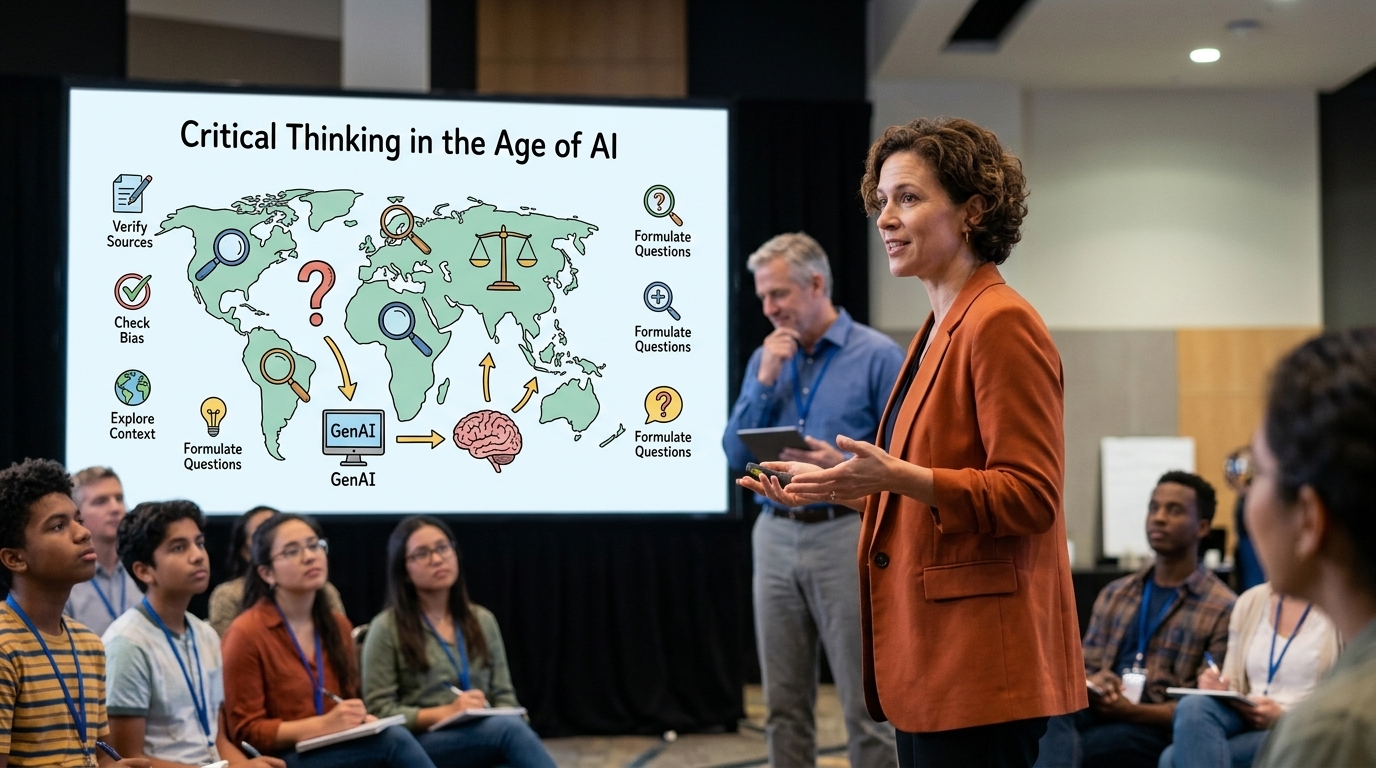
In a high school auditorium in Charleston, South Carolina, a group of educators watched with a mix of disbelief and laughter as an AI tool attempted to “create a map of the world.” The result was a cartographic disaster: Mali was spelled “Mail,” Egypt was identified as “Sopth,” and Libya was replaced by a generic label reading “Africa.”
From Bans to Experimentation
After initially attempting to ban AI, a growing number of U.S. public schools are shifting toward a strategy of controlled experimentation. The goal is to expose students to generative AI’s tendency to “hallucinate” or fabricate information. “If you ever want kids not to over trust these tools, try the map demo,” said Amanda Bickerstaff, CEO of AI For Education.
AI literacy has become the defining buzzword of this back-to-school season. However, as Rebecca Winthrop of the Brookings Institution points out, true literacy is about more than writing good prompts; it includes “knowing when not to use it.”
District vs. State Strategies
The Charleston County School District, the second-largest in South Carolina, had to build its own guidance after the state failed to provide a blueprint. Their program focuses on several key pillars:
- The necessity of verifying any factual information provided by GenAI.
- Data privacy training to prevent students from sharing personal information that could be leaked or used for training.
- Identifying AI bias and made-up academic studies.
In contrast, Utah has taken a top-down approach. In 2024, it became the first state to appoint a full-time AI education specialist, Matt Winters, who has already trained over 7,000 teachers. Supported by a $500,000 grant from a local healthcare provider, the state aims to ensure rural and under-resourced districts receive the same training and access as urban ones.
Shifting the Educational Mindset
The transition requires a change in how teachers view cheating. Kristina Yamada, a digital technology specialist for Utah’s Board of Education, argues that teachers must convince students that AI is not a shortcut to understanding. For younger children, the lesson is simple: “A program can lie.” For older students, the focus is on utility: while AI can write computer code, the student must possess the skills to fix it when it inevitably fails.