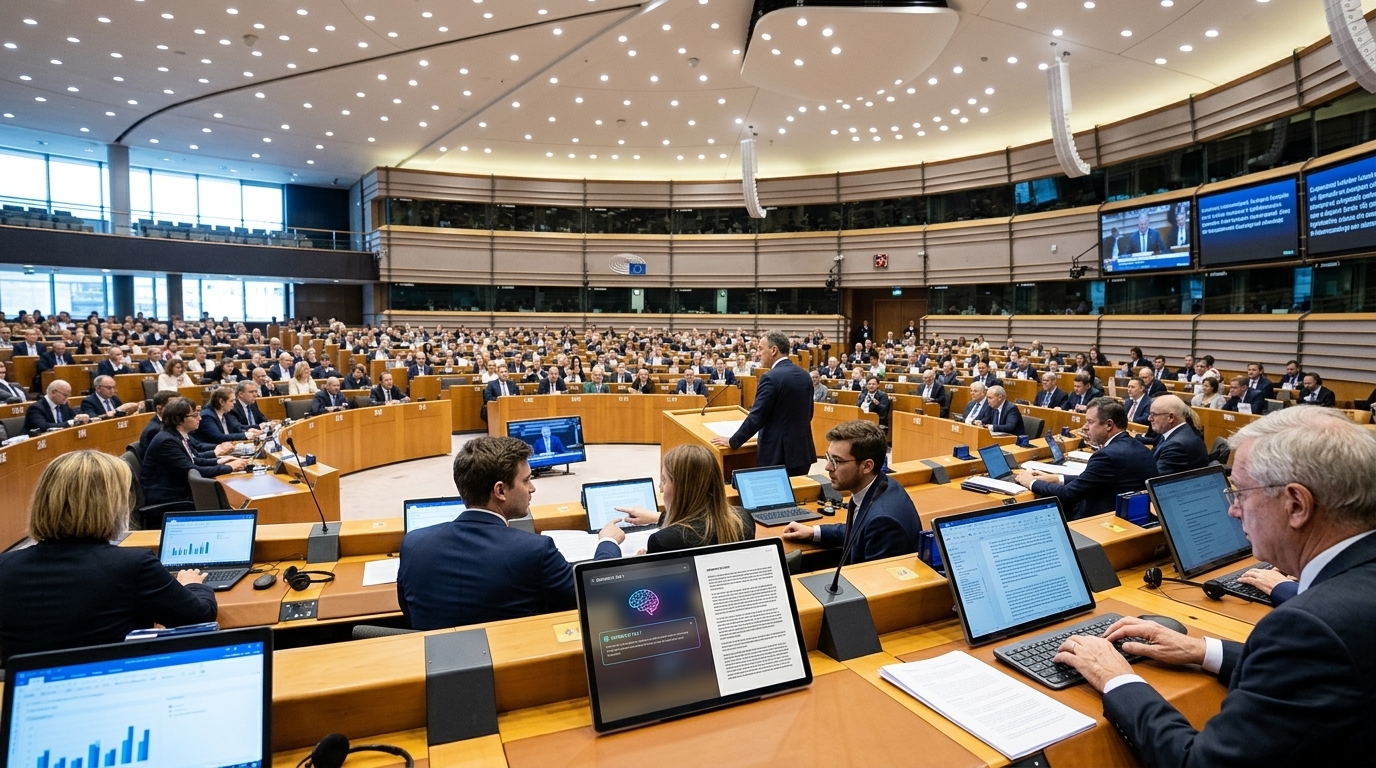
A new study from Chalmers University of Technology in Sweden and Edinburgh Napier University in the UK reveals a growing trend: politicians are increasingly utilizing generative AI to draft parliamentary texts without public disclosure.
The Rise of AI in Parliaments
The research, which analyzed thousands of documents from 2021 to April 2026, showed a significant surge in the use of Large Language Models (LLMs). In the United Kingdom, 15% of parliamentary statements examined in 2026 contained at least one paragraph classified as AI-generated, a sharp increase from 3.5% in 2022. Similarly, in Sweden, the percentage of proposals with AI-assisted content reached 9.4% for the 2025-2026 period, accounting for approximately 300 proposals.
The Transparency Gap
The most concerning finding for researchers is the complete lack of disclosure. In none of the texts classified as AI-generated was there any mention of the technology's use. Minerva Suvanto, the study's lead author, warns that this lack of transparency carries risks, as AI-generated texts are often highly persuasive, making it difficult even for the authors to detect potential errors.
Methodology and Reliability
To identify these texts, researchers developed specialized detection systems for both English and Swedish. To ensure the validity of the results, the system was tested on texts from 2021—prior to the widespread release of ChatGPT—where only one false positive was recorded per country. Professor Mattias Wahde emphasized that an "interpretable AI" approach allowed the team to pinpoint exactly which parts of the texts showed signs of algorithmic intervention.
Political Reactions
Some politicians have already begun to admit to using such tools. Swedish Prime Minister Ulf Kristersson revealed in 2025 that he uses ChatGPT and LeChat for a "second opinion," while Green Party MP Jan Riise confirmed the use of AI for research purposes, advocating for clear labeling when technology plays a substantial role in drafting proposals.