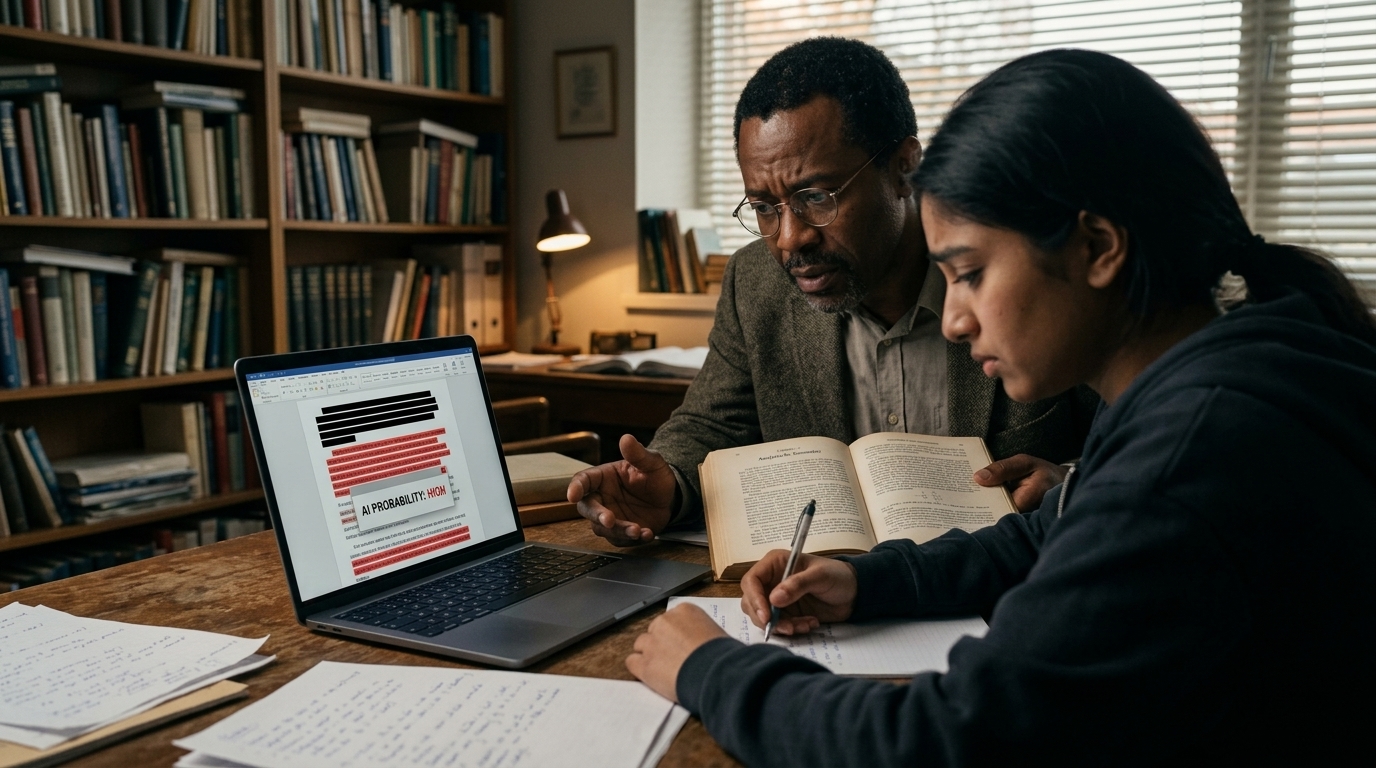
The hunt for copied content has evolved into a full-scale war on AI-generated work. Unlike traditional anti-plagiarism tools that match text against databases, modern AI detectors like GPTZero and Turnitin rely on models to guess whether a piece is human-written. These tools analyze wording, rhythm, and structural patterns—a process that is increasingly being called into question. A survey by the Center for Democracy and Technology found that 43 percent of U.S. teachers in grades 6-12 regularly used these detectors between 2024 and 2025.
A Flawed Science with Human Costs
Despite claims of high accuracy from developers, these tools often produce false positives. A 2023 Stanford study highlighted that AI detectors frequently flag essays written by non-native English speakers. The impact on reputations is significant: author Jerry Falade recently lost a $2 million book deal over AI accusations he denies, and students at universities like Yale and Adelphi have filed lawsuits after receiving failing grades based on detector results.
Institutional Pushback
The inherent uncertainty has led major institutions, including MIT, Yale, and Georgetown, to disable or restrict AI detection tools. MIT has gone as far as warning that "AI detectors don’t work." Instead of relying on flawed software, some universities are advising professors to rethink assignments by requiring in-class assessments or personal reflections that are harder for AI to replicate.
The Certification Era
As platforms like Substack and LinkedIn integrate AI-flagging features, a new movement for human certification is emerging. The Authors Guild is now offering "Human Authored" certifications, and badges like "Not by AI" are becoming common tools for writers to defend their work against the growing culture of distrust.