

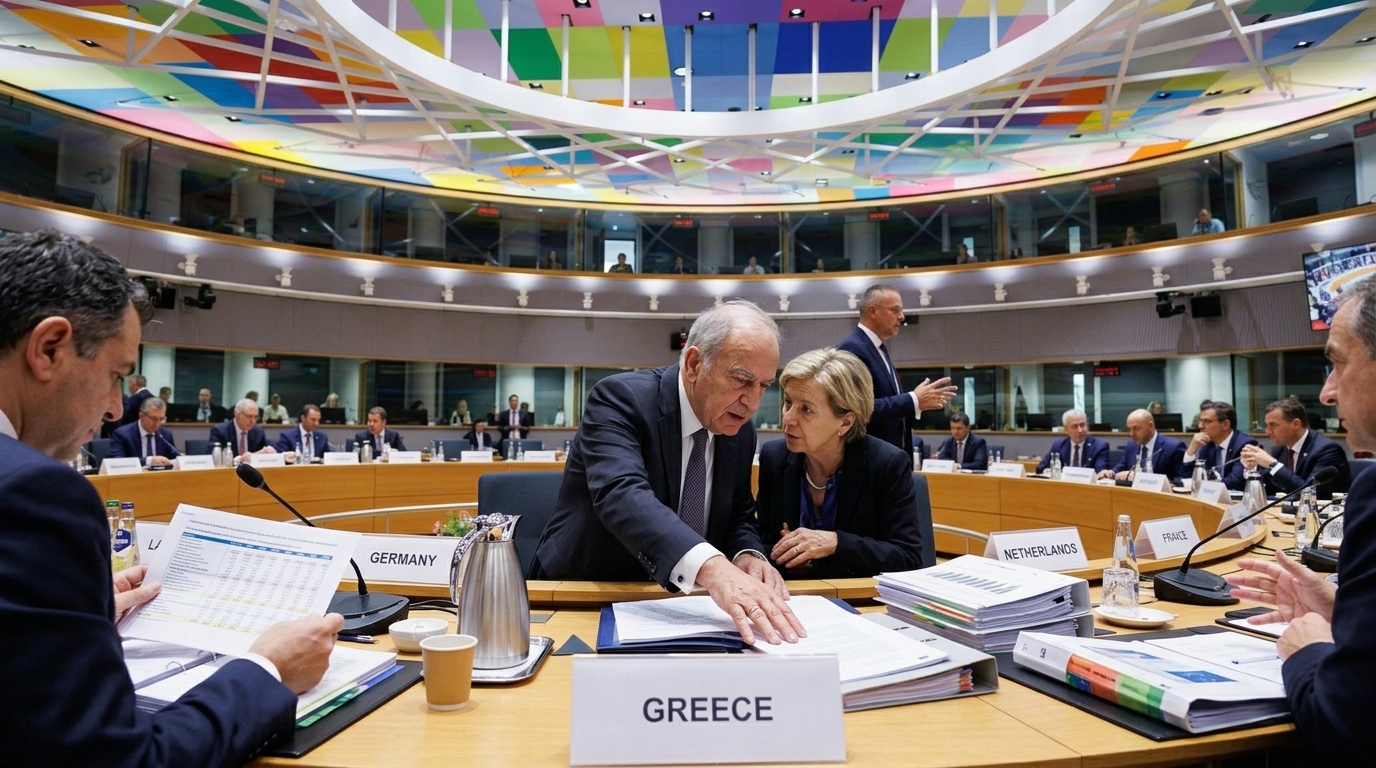
As we navigate the summer of 2026, the European Union faces one of the most existential fiscal challenges in its history. Brussels has transformed into a high-stakes arena for negotiations over the Multiannual Financial Framework (MFF) for the 2028-2034 period. The stakes are not merely a figure—expected to reach or exceed €2 trillion—but the very direction of the continent in a rapidly shifting global order. For Greece, this negotiation is not a routine accounting exercise; it is a critical battle to secure the resources that will underpin national economy and security for the next decade.
The Clash of Priorities: Cohesion vs. Innovation
The primary fault line in Brussels is forming between traditional EU policies and the new dictates of geopolitical reality. On one side, Southern and Eastern European nations, with Greece at the forefront, insist on maintaining funding for Cohesion Policy and the Common Agricultural Policy (CAP). These funds are the backbone of investment in the Greek provinces and the guarantee for the survival of the primary sector. However, the so-called "frugals" of the North, led by Germany and the Netherlands, are pushing for a radical restructuring.
The pressure to fund the "twin transition"—green and digital—alongside the necessity for a robust European defense industry, threatens to siphon off resources traditionally directed toward infrastructure and agricultural subsidies. The Greek side is attempting to argue that cohesion is not an "outdated" policy but a prerequisite for less developed economies to participate equally in the digital revolution. Without strong cohesion funds, the gap between North and South risks widening, undermining the stability of the Eurozone.
Defense and Migration at the Forefront
A significant shift in this year's negotiation is the emergence of defense as a top priority. Greece, already spending one of the highest percentages of GDP on defense within NATO, is advocating for the exclusion of defense expenditures from deficit calculations and the creation of a dedicated European Defense Fund. The argument is clear: protecting the EU's external borders is a European service and should not disproportionately burden the budgets of frontline member states.
Simultaneously, migration remains an open wound. Athens is demanding increased funds for flow management and border protection, emphasizing that solidarity cannot be merely rhetorical. The negotiation for the new budget will determine whether the EU is ready to fund a common asylum and return policy or if it will once again leave the burden on host countries. Greek diplomacy is working feverishly to build alliances with Italy and Spain to present a united front against pressures for cuts.
The Shadow of the Draghi Report and the RRF Gap
A decisive factor in the discussions is the legacy of Mario Draghi’s report on European competitiveness. Draghi warned that Europe needs additional investments of €800 billion annually to avoid falling behind the US and China. With the Recovery and Resilience Facility (RRF) nearing its expiration in 2026, the big question is what will replace it. Greece, having exemplary utilized the "Greece 2.0" resources, is pushing for a permanent investment mechanism based on common borrowing.
However, the idea of common debt remains a "red flag" for many northern capitals. The compromise reached will determine whether Europe chooses the path of fiscal austerity or investment boldness. For the Greek economy, which is on a recovery trajectory but remains vulnerable to external shocks, access to cheap financing through European tools is vital for maintaining growth rates and reducing public debt.
Conclusion: A Difficult Winter of Negotiations
The coming months will be decisive. The Greek government must balance national red lines with the need for a European compromise. Europe’s "bill" is substantial, and its distribution will show whether the Union remains a family of solidarity or is transforming into a closed club of fiscal management. Greece is not just claiming "more money" but the right to a fair transition and security in an unstable environment. The outcome of this battle will seal the country's prospects for the next decade.





